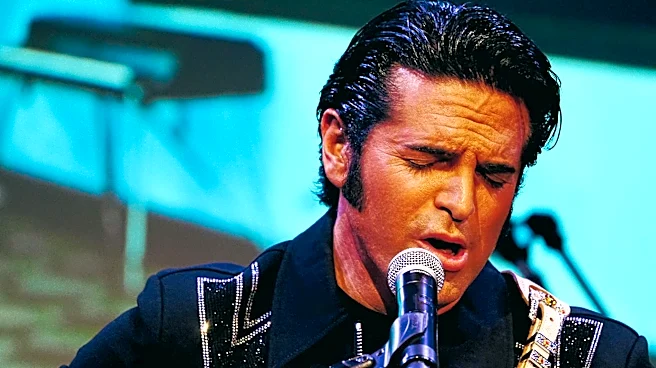









"Jailhouse Rock," a seminal 1957 hit for Elvis Presley, delves into a vibrant, albeit fictionalized, world within a prison setting. Penned by Jerry Leiber and Mike Stoller, the song's lyrics are rich with character and narrative, painting a picture of a jailhouse dance party. Beyond its catchy rock and roll rhythm, the song contains intriguing lyrical choices, including references to real individuals and cultural touchstones, and has even sparked
discussions about its underlying themes, particularly regarding homoerotic undertones. This exploration reveals a depth to the song that goes beyond a simple rock anthem.
Characters and Cultural References in the Lyrics
The lyrics of "Jailhouse Rock" introduce several characters, some of whom have roots in reality. For instance, Shifty Henry, mentioned in the song, was a well-known musician in Los Angeles, not a criminal as his name might suggest in the context of a jail. The Purple Gang, another entity referenced, was indeed a real mafia organization, adding a layer of historical authenticity to the fictional prison narrative. The term "Sad Sack" also appears, which was a U.S. Army nickname during World War II for a loser, and later became the name of a popular cartoon and comic book character. These inclusions demonstrate the songwriters' clever integration of real-world elements into their creative work.
According to *Rolling Stone*, Leiber and Stoller's primary song for Presley's third film was initially conceived as a playful, ironic joke, similar to the material they created for The Coasters. However, Elvis Presley's delivery transformed it into pure rock and roll. He reportedly overlooked the humorous aspects in the lyrics, such as the suggestion of gay romance when inmate Number 47 tells Number 3, "You're the cutest jailbird I ever did see," and instead delivered Scotty Moore's guitar solo with such intense passion that he nearly collapsed.
Homoerotic Interpretations and Censorship Concerns
The lyrical content of "Jailhouse Rock" has drawn attention from gender scholars and music critics alike for its perceived homoerotic references. Scholars specifically cite the song for its "famous reference to homoerotics behind bars." Music critic Garry Mulholland explicitly states that "'Jailhouse Rock' was always a 'queer' lyric, in both senses." These interpretations highlight a subtext within the song that was perhaps daring for its time, especially given the mainstream nature of Elvis Presley's appeal.
Douglas Brode, commenting on the filmed production number, expressed astonishment that the sequence managed to pass through the censors of the era. This suggests that the visual and lyrical elements combined to create a performance that pushed boundaries, even if the more subtle implications were not widely acknowledged or understood by all audiences at the time of its release. The fact that such themes could be embedded within a major hit song speaks to the evolving cultural landscape of the late 1950s and the subtle ways artists could introduce complex ideas.
The Song's Place in Rock and Roll History
Despite, or perhaps because of, its nuanced lyrical content and thematic depth, "Jailhouse Rock" remains a cornerstone of rock and roll. Its blend of catchy melody, powerful performance, and intriguing narrative elements has ensured its lasting appeal. The song's ability to spark discussion and interpretation decades after its release underscores its artistic merit and its role in the broader cultural conversation surrounding music and identity. It stands as a prime example of how popular music can carry multiple layers of meaning, engaging listeners on various levels, from simple enjoyment to deeper critical analysis.