







Charles Darwin's *On the Origin of Species* is renowned for presenting a compelling case for evolution driven by natural selection. The book, first published in 1859, meticulously builds its argument across various chapters, starting with observations of variation and culminating in a comprehensive theory that sought to explain the diversity of life. Darwin's central thesis revolved around the idea that a struggle for existence in nature leads to the preservation
of individuals with advantageous traits, a process he likened to artificial selection practiced by humans.
Variation and Selection: From Domestication to Nature
Darwin dedicated the initial chapters of his book to establishing the concept of variation. Chapters 1 and 2 discuss variation under domestication and under nature, respectively, highlighting the inherent differences found within a species. He observed that breeders could select for specific traits in domesticated animals and plants, leading to distinct varieties. This process, which he termed "selection under domestication," served as an analogy for the more complex process occurring in the wild. The first four chapters of the book lay out Darwin's case that selection in nature, driven by the struggle for existence, is analogous to this human-directed selection of variations.
The Struggle for Existence and Natural Selection
Chapters 3 and 4 delve into the core concepts of the struggle for existence, natural selection, and divergence. Darwin noted that all species produce a large number of offspring, yet populations tend to remain relatively constant. This observation led him to conclude that there is a constant struggle for resources, space, and mates among members of the same species and between different species. This "struggle for survival" naturally eliminates less fit individuals, while those possessing favorable variations survive and reproduce. This mechanism is what Darwin called natural selection, or "survival of the fittest," a phrase he later adopted from Herbert Spencer in the fifth edition of the book.
Explaining Complexities: Instincts, Hybrids, and the Geological Record
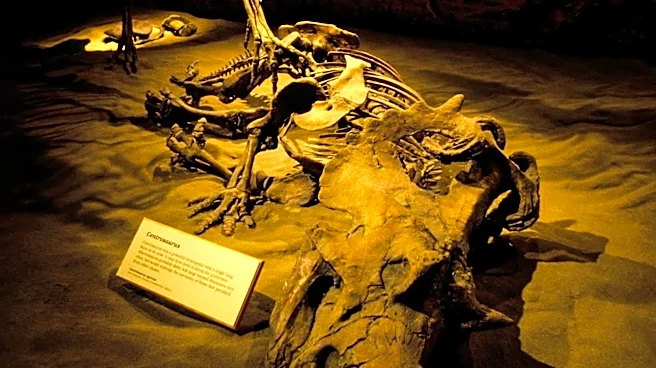
Darwin's theory also addressed complex biological phenomena. Chapter 7, for instance, deals with the inheritance of instincts, exploring how intricate behaviors could evolve through natural selection. Chapter 8 discusses the viability or infertility of hybrids between species and varieties, a topic that presented a challenge to the idea of gradual change. He argued that the traditional notion of a strict barrier between species was undermined by cases where hybrids were not always sterile and where no rigorous distinction existed between varieties and species. Furthermore, Chapters 9 and 10 examine the geological record and fossils, providing evidence for past life forms and the immense timescales required for evolutionary change. Darwin's theory aimed to explain how these observations, along with biogeography, classification, morphology, embryology, and rudimentary organs, could be understood through a unified framework of descent with modification.