





The Ford GT is a legendary sports car that has captured the imagination of car enthusiasts around the world. Its journey from concept to production is a fascinating tale of innovation and homage to its racing heritage. This article explores the historical development of the Ford GT, highlighting its evolution from the original GT40 to the modern iterations that continue to impress with their performance and design.
The Birth of a Legend
The Ford GT's story begins with the
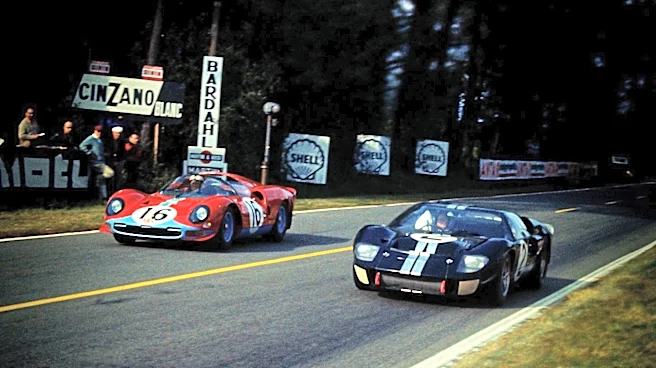
GT40, a racing car developed in the 1960s to challenge Ferrari's dominance in endurance racing. The GT40 was a response to Ford's desire to enhance its prestige by winning the 24 Hours of Le Mans, a feat it achieved four times consecutively from 1966 to 1969. The GT40's success on the track established it as a symbol of American engineering prowess and set the stage for future developments.
In the early 2000s, Ford sought to revive the spirit of the GT40 with a new concept car. The GT40 Concept was unveiled at the 2002 North American International Auto Show, capturing the essence of the original while incorporating modern technology. This concept car was part of Ford's "Living Legends" series, which aimed to celebrate the company's rich history by reimagining iconic models like the Mustang and Thunderbird.
From Concept to Production
The transition from concept to production was swift, with Ford announcing a limited production run of the new GT shortly after the concept's debut. The production model, simply named the Ford GT, was introduced for the 2005 model year. It retained the mid-engine layout and two-seater configuration of its predecessor, but with a larger and more powerful design.
The first-generation Ford GT was powered by a 5.4-liter V8 engine, capable of producing 550 horsepower. This engine, combined with advanced aerodynamics and lightweight materials, allowed the GT to achieve impressive performance figures, including a top speed of 205 mph. The car's design paid homage to the original GT40, with a similar silhouette and distinctive styling cues.
The Modern Era
In 2015, Ford unveiled the second generation of the GT at the North American International Auto Show, with production beginning in 2016. This new iteration featured a twin-turbocharged V6 engine, producing over 600 horsepower, and a focus on advanced aerodynamics and lightweight construction.
The modern Ford GT continued to build on the legacy of its predecessors, incorporating cutting-edge technology and design elements. Its performance on the track and the road reaffirmed its status as a top-tier sports car, capable of competing with the likes of Ferrari and Lamborghini.
The Ford GT's evolution is a testament to Ford's commitment to innovation and excellence. From its origins as a racing icon to its current status as a high-performance supercar, the GT remains a symbol of American automotive achievement.