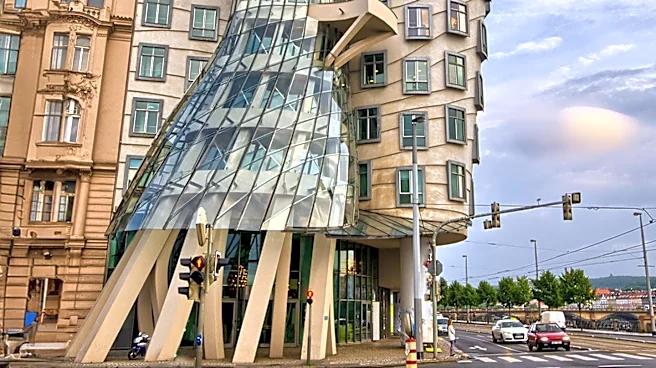









Prague, the capital of the Czech Republic, is a city characterized by its historic buildings, narrow winding streets, and a complex urban layout shaped by centuries of development. Understanding how the city is organized and how to move within it is key to experiencing its unique charm. From its distinct district systems to its comprehensive public transport network and pedestrian-friendly historic core, Prague offers a variety of ways to explore
its rich tapestry of old and new.
Understanding Prague's Districts and Quarters
Prague utilizes several district systems, which can sometimes be confusing due to their historical origins and overlapping purposes. A simplified version of the "old" district system divides Prague into ten numbered districts, Praha 1 through Praha 10. This system is commonly seen on street signs and house numbers, making it useful for orientation. Praha 1, the oldest part of the city, contains the largest concentration of attractions, with Praha 2 also featuring important historic areas.For a more detailed understanding of the central historic areas, traditional city "quarters" are often used. These quarters, while sometimes spanning multiple "old" districts, are well-known and correspond to cadastral areas found on street signs. Key quarters include Old Town (Staré Město), the nucleus of the right bank; Josefov, the old Jewish ghetto within Old Town; Hradčany, the area around Prague Castle; Malá Strana (Lesser Town), between the castle and the river; Nové Město (New Town), adjacent to Old Town; and Vyšehrad, the site of an old castle south of medieval Prague. These divisions highlight the city's layered historical development.
Public Transportation: The Backbone of the City
Prague boasts a highly convenient and efficient public transportation system, essential for navigating its expansive urban area. This network includes three metro lines (A, B, C), over twenty tram lines (numbered 1–31 for day and 91–99 for night trams), trolleybuses, buses, ferries, and several train lines. All these modes of transport operate under a unified time-ticket system managed by Pražská Integrovaná Doprava (PID).Public transport schedules are posted at stops, with the metro running from early morning until approximately midnight. Buses and trams extend their operating hours to connect with the metro. For night travel, specific night trams and buses (lines starting with 9) run every 30 minutes, converging at central exchange stops like Lazarská, allowing for easy transfers. It's important to note that public transport buses do not enter historic districts to minimize pollution, requiring transfers to electric trams or the metro for access to these areas.
Walking and Pedestrian Considerations
Prague is renowned as a very walkable city, especially its historic center. Visitors can easily stroll from Wenceslas Square to Old Town Square, or from Old Town to Charles Bridge and the Castle District. However, the prevalence of cobblestone streets can make walking challenging for disabled or elderly travelers, and comfortable walking shoes are highly recommended for everyone.Pedestrians in Prague should exercise caution at crossings, as drivers may not yield as readily as in other European cities. Jaywalking, including crossing on a "don't walk" signal even when no cars are present, is punishable by a fine. Pedestrians are obligated to use designated pedestrian crossings. This emphasis on pedestrian rules underscores the need for awareness when exploring the city on foot.
Alternative Modes of Transport: Funicular, Taxis, and Boats
Beyond the extensive public transport, Prague offers unique ways to get around. A funicular runs every 15 minutes to the top of Petřín Hill, providing scenic views during its five-minute journey. Standard public transport tickets are valid on the funicular, but proper validation is crucial to avoid fines.For those considering taxis, using ride-hailing apps like Liftago, Uber, or Bolt is generally recommended over flagging down cabs on the street, as these apps offer transparent pricing and card payments, reducing the risk of fraud. Traditional taxi operators are expected to use meters and provide printed receipts, with official maximum rates set by the city council.
Travel by boat on the Vltava River offers a different perspective of Prague. The Prague Steamboat Company provides sightseeing cruises and trips to attractions like the Prague Zoo. Smaller passenger ferries, integrated into the public transport tariff, also cross the river, with some even being free. These river journeys allow visitors to appreciate the city's iconic bridges and riverside architecture from a unique vantage point.