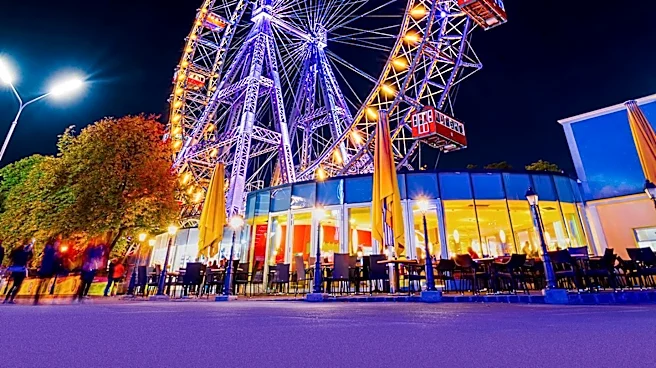







The Ferris Wheel, a staple of amusement parks today, had its grand debut at the 1893 World's Columbian Exposition in Chicago. Designed by George Washington Gale Ferris Jr., this engineering marvel was conceived as a response to the Eiffel Tower, aiming to surpass it in both originality and daring. The Ferris Wheel not only captivated the fair's visitors but also set a precedent for future amusement rides.
The Vision Behind the Wheel
In 1891, the directors of the World's Columbian
Exposition issued a challenge to American engineers to create a monument that would rival the Eiffel Tower, the centerpiece of the 1889 Paris International Exposition. George Washington Gale Ferris Jr., a civil engineer, rose to the occasion with a bold proposal: a giant wheel that would offer visitors a panoramic view of the fairgrounds. Ferris's vision was to create something that would "out-Eiffel Eiffel," a structure that was not only grand in scale but also innovative in design.
Ferris's proposal was initially met with skepticism. However, he managed to secure endorsements from established engineers and gathered local investors to fund the $400,000 construction cost. This financial backing and professional support convinced the exposition committee to greenlight the project, setting the stage for the Ferris Wheel's construction.
The Ferris Wheel's Grand Debut
The Ferris Wheel featured 36 cars, each equipped with 40 revolving chairs and capable of holding up to 60 people, allowing for a total capacity of 2,160 passengers. When the fair opened, the wheel became an instant attraction, drawing approximately 38,000 passengers daily. The ride consisted of two revolutions: the first involved six stops to allow passengers to board and disembark, while the second was a continuous nine-minute rotation. For this experience, visitors paid 50 cents, a significant sum at the time.
The Ferris Wheel's operation was a testament to Ferris's engineering prowess. It took 20 minutes to complete the two revolutions, providing a unique and thrilling experience for its passengers. The ride's success was evident in the 2.5 million passengers it carried during the fair, cementing its place in history as a groundbreaking amusement ride.
Legacy and Impact
The Ferris Wheel's impact extended beyond the fair. It demonstrated the potential of large-scale amusement rides and inspired future developments in the industry. Despite its eventual demolition in 1906, the original Ferris Wheel left a lasting legacy, influencing the design and construction of Ferris wheels worldwide.
George Washington Gale Ferris Jr.'s creation was more than just an attraction; it was a symbol of innovation and ambition. The Ferris Wheel not only fulfilled the exposition's challenge but also set a new standard for amusement rides, showcasing the possibilities of engineering and design. Today, Ferris wheels continue to be a beloved feature of amusement parks, a testament to Ferris's enduring vision.