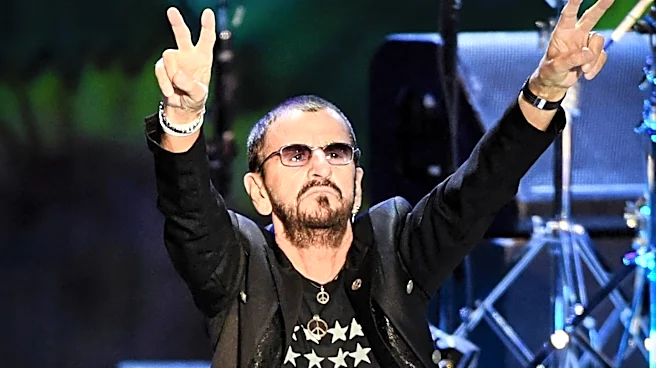








Ringo Starr's 1981 album, "Stop and Smell the Roses," stands as a testament to the enduring collaborative spirit among rock music's elite, particularly his former bandmates. Despite facing commercial challenges, the album is notable for its impressive roster of contributors, including George Harrison, Paul McCartney, Harry Nilsson, Ronnie Wood, and Stephen Stills. This gathering of talent underscores the respect and camaraderie Starr commanded within
the music industry, even as his solo career navigated a difficult period.
The Beatles' Enduring Support
Perhaps the most significant contributions came from Starr's fellow Beatles. George Harrison not only wrote but also produced the album's lead single, "Wrack My Brain." This track, backed with "Drumming Is My Madness," was released on October 27, 1981, and managed to become Starr's final U.S. Top 40 hit, reaching number 38. Harrison's involvement extended to recording sessions at his own Friars Park Studio, Henley-on-Thames, where "Wrack My Brain" and "You Belong to Me" were recorded. Paul McCartney also lent his talents, contributing the song "Private Property," which was later released as the album's second single in January 1982. McCartney's presence was further highlighted in an 11-minute promotional film, "The Cooler," which featured both Paul and Linda McCartney alongside Starr and Barbra Bach.
Tragically, John Lennon had also intended to participate, offering Starr the songs "Life Begins at 40" and "Nobody Told Me." However, Lennon's murder a month before the scheduled sessions prevented his involvement, leaving Starr too upset to record the tracks. This planned collaboration speaks volumes about the continued bond among the former Beatles and their willingness to support each other's musical endeavors.
A Diverse Array of Musical Friends
Beyond the Beatles, "Stop and Smell the Roses" benefited from a diverse group of acclaimed musicians. Harry Nilsson, a close friend and frequent collaborator of Starr's, not only contributed the album's title track but also served as a producer for songs like "Drumming Is My Madness," "Stop and Take the Time to Smell the Roses," and a re-recording of "Back Off Boogaloo." His influence was so significant that the album was renamed after his donated song, moving away from its original title, "Can't Fight Lightning."
Ronnie Wood of the Rolling Stones was another key contributor, recording with Starr at Cherokee Studios and co-producing tracks such as "Dead Giveaway" and "Brandy." Stephen Stills also played a role, producing songs like "You've Got a Nice Way," "Red and Black Blues," and "Wake Up." This extensive network of collaborators provided a rich tapestry of musical styles and influences, showcasing Starr's ability to bring together top-tier talent. The album's initial pressing even featured a unique scratch-and-sniff design by John Kosh, adding another layer of creative input to the project.