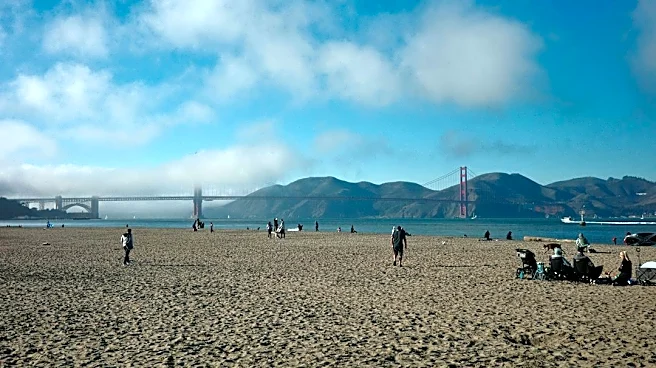








The Summer of Love, occurring in San Francisco during the summer of 1967, stands as a pivotal social phenomenon in American history. This period witnessed an unprecedented convergence of young people, estimated at as many as 100,000 individuals, primarily hippies, beatniks, and figures from the 1960s counterculture. They gathered in the Haight-Ashbury district and Golden Gate Park, creating a vibrant, albeit temporary, cultural hub. This event was
not confined to San Francisco alone; its influence spread across the West Coast and even reached New York City, embodying a broader movement characterized by hippie culture, spiritual exploration, drug use, anti-war sentiment, and the concept of free love.
The Influx and the Ideals
The Summer of Love represented a significant migration of young people, described by the PBS documentary series *American Experience* as "the largest migration of young people in the history of America." These individuals were drawn to San Francisco by the promise of a cultural utopia, seeking to participate in a popularized version of hippie culture. The movement was fueled by ideals of communal living, political decentralization, and a rejection of mainstream societal norms. The Haight-Ashbury district became the epicenter of this gathering, attracting a diverse group that included teenagers, college students, middle-class vacationers, and even military personnel.
This massive influx, however, presented significant challenges. The neighborhood struggled to accommodate the sheer number of people, leading to issues such as overcrowding, homelessness, hunger, drug problems, and an increase in crime. Despite these difficulties, the spirit of the Summer of Love persisted, characterized by a collective exploration of new ways of expression and an awareness of one's existence, as noted by Grateful Dead guitarist Bob Weir, who emphasized that the period was about exploration rather than solely about drugs.
The Dispersal and the Symbolic End
As the summer of 1967 drew to a close, the concentrated energy of the Summer of Love began to dissipate. Many participants chose to leave San Francisco, embarking on new paths. Some joined the back-to-the-land movement, seeking a more rural and self-sufficient lifestyle. Others returned to their academic studies or sought conventional employment, integrating back into society in different ways. The departure of these individuals marked a natural transition from the intense communal experience of the summer.
For those who remained in the Haight-Ashbury district, there was a desire to formally acknowledge the conclusion of the event. This led to the staging of a mock funeral ceremony on October 6, 1967, titled "The Death of the Hippie." The organizer, Mary Kasper, explained that the ceremony was intended to signal the end of the concentrated phenomenon in San Francisco. The message was a call for participants to stay in their own communities and to bring the revolution to where they lived, rather than continuing to converge in one place. This symbolic act marked a shift from a centralized gathering to a more decentralized spread of countercultural ideals.
Lasting Cultural and Legal Repercussions
The end of the Summer of Love in San Francisco did not signify the end of its cultural impact. Shortly after the mock funeral, the rock musical drama "Hair" premiered Off-Broadway in New York on October 17, 1967. This musical vividly portrayed the hippie counterculture and the sexual revolution of the 1960s, demonstrating how the themes and spirit of the Summer of Love were being interpreted and disseminated through popular art forms. This indicated a broader cultural integration of the movement's ideas, even as its initial physical manifestation concluded.
However, the period also brought about significant legal responses, particularly concerning drug use. The increased consumption of cannabis and LSD during the Summer of Love prompted the enactment of new laws to control these substances. While users organized various sessions, such as "smoke-ins," to oppose these laws, their efforts to achieve repeal were unsuccessful. This legal aftermath highlighted the societal friction generated by the counterculture's practices and the enduring challenges faced by those who sought to challenge established norms.