




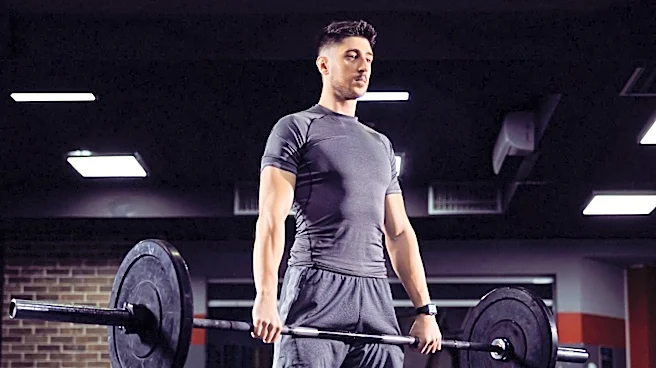

The hack squat is a unique and effective lower body exercise that stands apart from other squat variations due to its distinct barbell placement. Unlike traditional squats where the weight rests on the shoulders, the hack squat involves holding the barbell behind the body, a position that can be likened to a deadlift. This specific setup targets different muscle groups and places unique demands on the lifter. While it shares a name with the hack squat machine,
the barbell version is a free-weight exercise that requires careful attention to form and can be adapted using various pieces of equipment to suit different training needs and preferences.
The Core Mechanics of the Barbell Hack Squat
The fundamental characteristic of the barbell hack squat is the placement of the weight. The barbell is held in the hands just behind the legs, often resting behind the ankles at the start of the movement. This positioning shifts the center of gravity and alters the biomechanics compared to a front or back squat. The exercise involves squatting down while maintaining control of the barbell behind the body, then returning to a standing position. This movement pattern emphasizes the quadriceps and glutes, while also engaging the hamstrings and core for stability.Proper form is crucial to safely and effectively perform the hack squat. Lifters typically use a double pronated grip to secure the barbell behind them. The depth of the squat can vary, but the key is to maintain balance and control throughout the entire range of motion. The unique loading position can challenge balance more than other squat variations, making it important to start with lighter weights and gradually increase the load as strength and technique improve.
Equipment Options for Performing the Hack Squat
The versatility of the hack squat is evident in the range of equipment that can be utilized to perform it. While the classic version involves a standard barbell, lifters can adapt the exercise to their available equipment or specific training goals. One common alternative is using a dip belt, which allows for weight to be attached and hung between the legs, mimicking the rear-loaded position without directly holding a barbell. This can be particularly useful for those who find gripping a barbell behind them challenging or uncomfortable.Another option is the kettlebell hack squat. A kettlebell can be held by its handle, allowing it to hang behind the body, providing a similar loading stimulus. This can be a more accessible option for beginners or for those looking for a different feel than a barbell. Additionally, the hack squat can be performed within a Smith machine. While a Smith machine provides a fixed bar path, which changes the nature of the exercise by reducing the need for stabilization, it can still be used to simulate the rear-loaded squat movement, offering a controlled environment for focusing on muscle contraction.
Differentiating from the Machine Hack Squat
It is essential to distinguish the free-weight hack squat, whether performed with a barbell, dip belt, kettlebell, or even in a Smith machine, from the dedicated hack squat machine. The machine version typically involves a platform where the user stands, with their back supported against a padded carriage that moves along a fixed track. The resistance is usually provided by weight plates loaded onto the machine.While both exercises aim to work the lower body, particularly the quadriceps, the free-weight hack squat demands greater involvement from stabilizer muscles and offers a more natural, albeit challenging, range of motion. The machine, by contrast, provides more support and can allow for heavier loads with less emphasis on balance. Understanding these differences is key for athletes and fitness enthusiasts to choose the most appropriate variation for their training objectives.