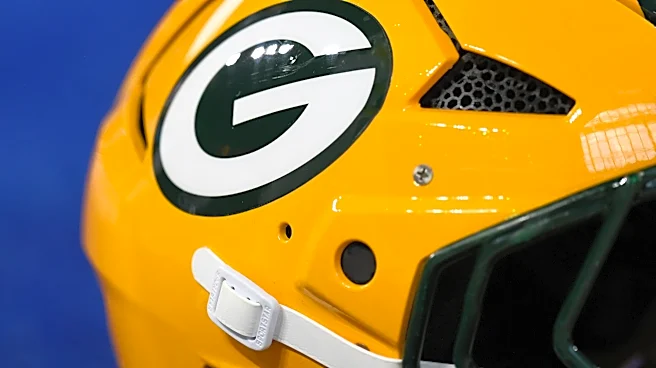



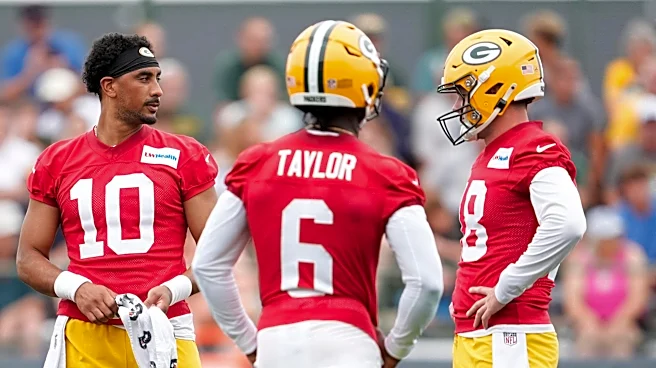
The Green Bay Packers stand as a unique and storied franchise in American professional football, distinguished not only by their remarkable record of championships but also by their unconventional community ownership structure. Founded in 1919 by Curly Lambeau and George Whitney Calhoun, the team has evolved from a local Wisconsin club into an NFL institution. Their history is punctuated by periods of dominance, innovative coaching, and a deep connection
to their fan base, all while maintaining a public ownership model that sets them apart in professional sports.
Early Dominance Under Curly Lambeau
From their inception, the Packers quickly established themselves as a formidable force. Under the leadership of player-coach Curly Lambeau, the team achieved an impressive 19–2–1 record in 1919 and 1920 before joining the American Professional Football Association (which became the NFL in 1922). Lambeau's strategic brilliance, particularly his pioneering use of the forward pass with players like quarterback Arnie Herber and receiver Don Hutson, revolutionized the game and propelled the Packers to early success.
This era saw the Packers secure six NFL championships: in 1929, 1930, 1931, 1936, 1939, and 1944. Notably, they were the first team in NFL history to win three consecutive titles (1929–1931), a testament to their consistent excellence. Lambeau's tenure, which lasted until 1949, laid the foundational winning culture for the franchise, establishing a legacy of innovation and championship football that would endure for decades.
The Vince Lombardi Era: A Second Dynasty
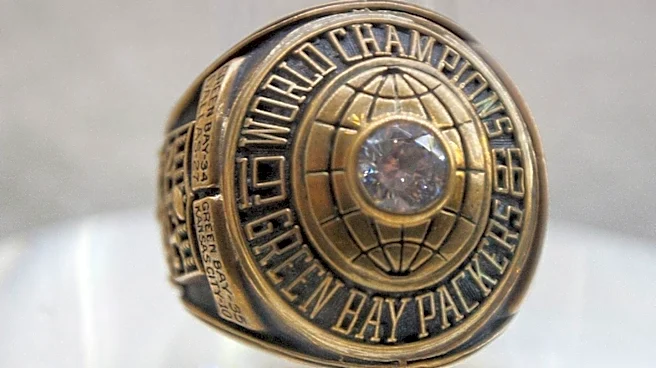
After a period of struggle following Lambeau's departure, the Packers entered their second golden age with the arrival of head coach Vince Lombardi in 1959. Lombardi's leadership ushered in an era of unparalleled success, marked by five NFL Championships and victories in the first two Super Bowls. From 1961 to 1967, the Packers were a dominant force, securing championships in 1961, 1962, 1965, 1966 (Super Bowl I), and 1967 (Super Bowl II).
Under Lombardi, the Packers once again achieved the remarkable feat of winning three consecutive NFL Championships (1965–1967), mirroring the success of the Lambeau era. This period cemented the Packers' reputation as one of the most successful franchises in professional sports and established many of the traditions and expectations that continue to define the team today. Lombardi's name became synonymous with excellence, and the Super Bowl trophy itself was eventually named in his honor.
Modern Success and Enduring Community Ownership
Following the Lombardi era, the Packers experienced another period of mixed results, but re-emerged as a consistent contender in the 1990s. Under head coaches like Mike Holmgren, Mike McCarthy, and Matt LaFleur, the franchise has continued its tradition of success, reaching the playoffs 23 times since 1993 and securing two more Super Bowl victories in 1996 (Super Bowl XXXI) and 2010 (Super Bowl XLV). The 2011 season, in particular, saw the team achieve a franchise record of 15 wins, further solidifying their modern-era success.
Crucially, the Green Bay Packers maintain a unique public ownership structure. Facing financial hardships in 1923, local businessmen, known as "The Hungry Five," formed the Green Bay Football Corporation (now Green Bay Packers, Inc.). This publicly-owned, non-profit organization was established through a stock sale that raised $5,000. Additional stock sales in 1935 and 1950 were vital in preventing insolvency. This model means the team is run by a board of directors elected annually, ensuring that the franchise remains deeply rooted in its community rather than being controlled by a single wealthy owner. This structure has not only saved the team from financial ruin on multiple occasions but has also fostered an unparalleled bond between the team and its dedicated fan base, making the Green Bay Packers a true community treasure in the landscape of American professional sports.