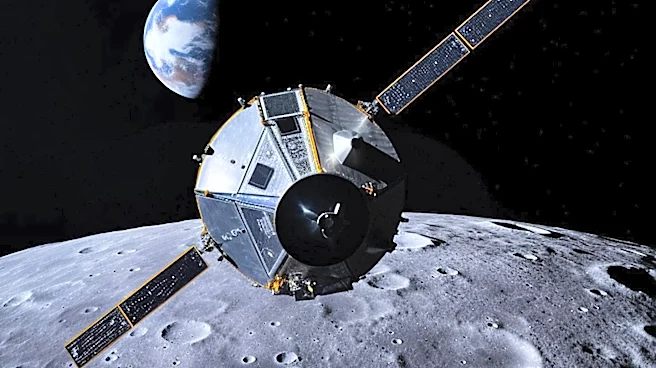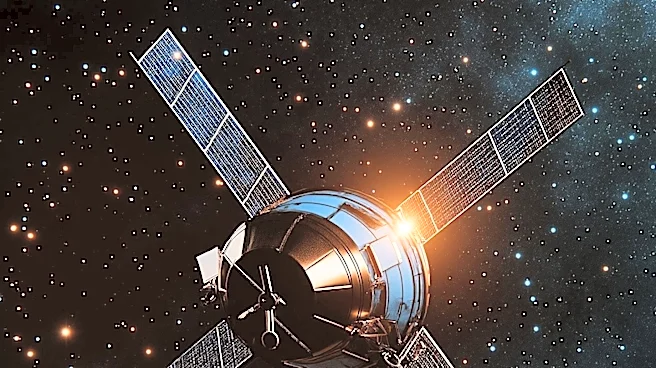





The Pioneer 6, 7, 8, and 9 space probes, launched by NASA as part of the broader Pioneer program, were specifically designed to unlock the mysteries of the interplanetary environment. Their mission was not merely to travel through space, but to act as sophisticated scientific observatories, meticulously measuring the forces and particles that permeate the vast distances between celestial bodies. Through a suite of specialized instruments, these probes aimed
to provide the first detailed global measurements of the solar wind, the Sun's magnetic field, and cosmic rays, fundamentally changing humanity's understanding of our star and its influence.
Instruments for Interplanetary Measurement
To achieve their ambitious scientific goals, the Pioneer probes were equipped with a range of instruments tailored for the space environment. Key among these were plasma measuring devices, designed to study the positive ions (cations) and electrons that constitute the solar wind. Understanding the composition and dynamics of this continuous flow of charged particles from the Sun was a central objective. Additionally, the probes carried cosmic ray detectors, which were crucial for measuring both solar and galactic cosmic rays. These high-energy particles, originating from the Sun or beyond our solar system, pose significant questions about astrophysical processes and potential hazards for space travel.
Another vital experiment involved radio propagation, which allowed for the measurement of interplanetary electron density. By analyzing how radio signals traveled through the space plasma, scientists could infer the density of electrons in the vast regions between planets. Furthermore, the probes were outfitted to measure the interplanetary magnetic field. This field, originating from the Sun and carried outward by the solar wind, plays a critical role in shaping the space environment and influencing the paths of charged particles. Together, these instruments provided a comprehensive toolkit for characterizing the complex and dynamic conditions of the inner solar system.
Unraveling the Solar Wind and Magnetic Fields
The primary scientific output of the Pioneer 6-9 series was an unprecedented collection of data on the solar wind and the solar magnetic field. Before these missions, understanding of these phenomena was limited. The probes' continuous measurements from widely separated points in space allowed scientists to map the large-scale magnetic phenomena and the distribution of particles and fields across the interplanetary medium. This extensive dataset was then utilized to gain a deeper comprehension of stellar processes, offering insights into how stars, including our own Sun, generate and interact with their surrounding environments.
Specifically, the data helped to clarify the structure and flow of the solar wind, revealing its variability and complex interactions with planetary magnetic fields. The measurements of the interplanetary magnetic field provided crucial evidence for its spiral shape, a consequence of the Sun's rotation and the outward flow of the solar wind. By observing these phenomena directly and continuously, the Pioneer probes provided empirical evidence that validated theoretical models and opened new avenues for research into heliophysics, the study of the Sun and its influence throughout the solar system.
The First Space-Based Solar Weather Network
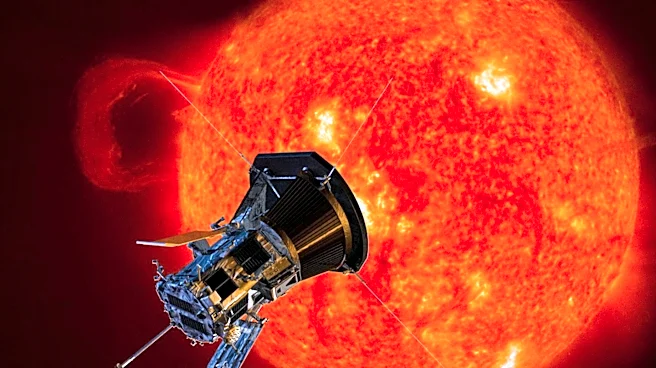
Beyond their contributions to fundamental science, the Pioneer probes served a highly practical purpose: they operated as the world's first space-based solar weather network. This network was designed to obtain practical data on solar storms, which are powerful eruptions from the Sun that can have significant consequences for Earth. These events, such as solar flares and coronal mass ejections, can disrupt radio communications, damage satellites, and even cause power grid outages on Earth.
The unique orbital configurations of the Pioneer probes, with some orbiting closer to the Sun than Earth and others further out, allowed them to observe solar activity from different perspectives. Crucially, probes like Pioneer 7 and 8, with orbits slightly longer than Earth's, could sometimes face parts of the Sun that were not yet visible from Earth. This enabled them to sense and report on solar disturbances several days before the Sun's rotation would bring those active regions into view for Earth-based or Earth-orbiting observatories. This early warning capability was invaluable for protecting terrestrial infrastructure and space assets, marking a significant advancement in space weather forecasting and demonstrating the immediate societal relevance of interplanetary exploration.