



Traffic lights have become an essential part of modern road systems, guiding vehicles and pedestrians safely through intersections. Their history is a fascinating journey from simple semaphore signals to sophisticated computerized systems. This article explores the evolution of traffic lights, highlighting key milestones and technological advancements that have shaped their development.
Early Beginnings: Semaphores and Gas Lanterns
The first traffic signals were introduced in London in December
1868. These manually-operated signals were designed by J. P. Knight, a railway engineer, and installed outside the Houses of Parliament. The system used semaphore arms and a gas lantern to indicate stop and go commands. At night, the lantern showed red and green lights to guide pedestrians and vehicles. Despite its initial success, the system was short-lived due to a gas explosion in January 1869.
By the late 19th century, semaphore traffic signals had spread across the United States, with each state developing its own design. In Toledo, Ohio, a signal with "Stop" and "Go" commands was introduced in 1908, using kerosene lamps for illumination at night. These early systems relied heavily on manual operation by traffic officers.
The Advent of Electric Traffic Lights
The transition to electric traffic lights began in the early 20th century. In 1912, Lester Wire, a police officer in Salt Lake City, Utah, created the first electric traffic light. This innovation marked a significant shift from manual to automated systems. The American Traffic Signal Company installed the first electric traffic signal in Cleveland, Ohio, in 1914, featuring red and green lights and a buzzer for warnings.
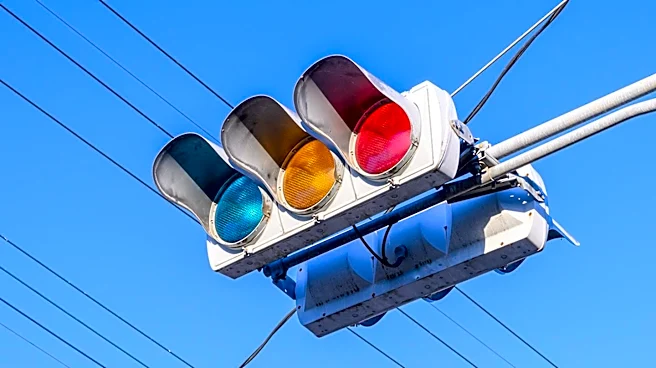
William Potts, a police officer in Detroit, Michigan, further advanced traffic light technology in 1920 by introducing the first four-way, three-color traffic light. Potts added an amber light to help coordinate signals at busy intersections, using a timer to synchronize the lights.
Computerized Control and Modern Innovations
The rise of computers in the 1950s revolutionized traffic light control. In Denver, 1952, a computer system managed 120 traffic lights, using pressure-sensitive detectors to measure traffic flow. This innovation improved traffic management and reduced congestion.
By 1967, Toronto implemented advanced computer systems to control 159 signals, enhancing vehicle detection and traffic flow. The introduction of countdown timers in the 1990s further improved pedestrian safety, allowing them to gauge crossing times accurately.
Today, traffic lights continue to evolve, incorporating new technologies like LED lights and automated systems. These advancements ensure efficient traffic management and enhance road safety for all users.