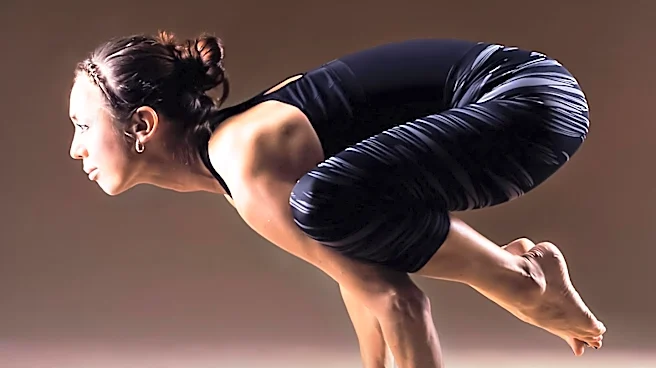

Parsva Bakasana, also known as the Side Crane Pose, is a fascinating yoga posture that challenges both strength and balance. This pose is an asymmetric variation of the more commonly known Bakasana, or Crane Pose.
In Parsva Bakasana, one thigh rests on the opposite upper arm, requiring the practitioner to balance with straight arms. This article delves into the unique aspects of Parsva Bakasana and its role in yoga practice.
Characteristics of Parsva Bakasana
Parsva Bakasana is a hand-balancing pose that requires a combination of strength, flexibility, and concentration. Unlike the traditional Bakasana, where both shins rest on the upper arms, Parsva Bakasana involves a lateral twist. This twist adds an extra layer of complexity, as it requires the practitioner to engage their core muscles more intensely to maintain balance.
The pose begins with the practitioner placing their hands firmly on the floor, similar to the setup for Bakasana. However, in Parsva Bakasana, one thigh is positioned on the opposite upper arm, while the other leg is stacked on top of the first. This configuration demands a strong core and stable shoulders to hold the position without tipping over.
The Role of Parsva Bakasana in Yoga Practice
Parsva Bakasana is often practiced as part of a sequence of arm-balancing poses in hatha yoga and modern yoga as exercise. It serves as a progression from simpler poses, helping practitioners build the necessary strength and balance for more advanced asanas. The pose is particularly beneficial for strengthening the arms and shoulders, as well as improving core stability.
Incorporating Parsva Bakasana into a yoga routine can also enhance mental focus and concentration. The balance required in this pose demands a calm and steady mind, making it an excellent practice for developing mindfulness. As practitioners work to maintain their balance, they learn to focus their attention and control their breath, which are essential skills in yoga.
Preparing for Parsva Bakasana
To prepare for Parsva Bakasana, practitioners can engage in a series of preparatory poses that build strength and flexibility. Moving from High Plank to Low Plank is an effective way to strengthen the arms and shoulders. Other beneficial poses include Downward Dog Pose, which stretches the shoulders and hamstrings, and Virasana (Hero Pose), which opens the hips.
Malasana (Garland Pose) is another excellent preparatory pose, as it helps to open the hips and stretch the lower back. By incorporating these preparatory poses into their practice, practitioners can gradually build the strength and flexibility needed to successfully perform Parsva Bakasana.
In conclusion, Parsva Bakasana is a challenging yet rewarding pose that offers numerous benefits for both the body and mind. By understanding its characteristics and incorporating it into a regular yoga practice, practitioners can enhance their strength, balance, and mindfulness.