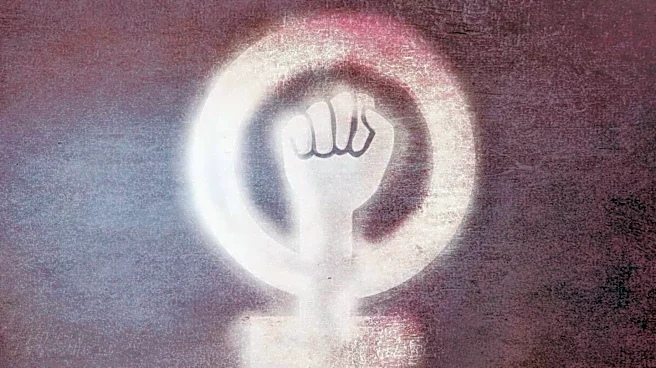







The #MeToo movement, an international internet campaign dedicated to raising awareness about sexual abuse and harassment, gained significant global traction in October 2017. While the phrase "Me Too" was first used by activist Tarana Burke in 2006 to promote empowerment among women of color who had experienced sexual abuse, it was actress Alyssa Milano who popularized the hashtag on social media over a decade later. Milano's call to action encouraged
women to tweet #MeToo and share their personal experiences, leading to an unprecedented outpouring of stories and a dramatic increase in public awareness regarding the prevalence of sexual misconduct.
The Genesis of a Movement: Tarana Burke's Vision
Tarana Burke, a social activist and community organizer, initiated the phrase "Me Too" in 2006 on the social network Myspace. Her original intent was to foster "empowerment through empathy" specifically among women of color who had endured sexual abuse. Burke, who grew up in poverty in the Bronx, New York, and experienced sexual assault as a child and teenager, was inspired to use the phrase after an encounter with a 13-year-old girl who confided in her about being sexually assaulted. Burke later reflected that she wished she had simply told the girl, "Me too," to convey solidarity and shared experience. This foundational work aimed to provide resources for healing and advocate for policy changes, including processing untested rape kits, re-examining school policies, improving teacher vetting, and updating sexual harassment guidelines. Burke also championed sex education that teaches children to report predatory behavior immediately and supported legislation to remove bureaucratic hurdles for federal government staffers reporting harassment.
Burke's vision for the movement has evolved, and she now refers to it as an international movement for justice for marginalized people. She has emphasized that the movement seeks to affirm that survivors of sexual violence are not alone and should not feel shame. She also highlights the importance of early education about consent, including the right to refuse unwanted sexual contact regardless of the perpetrator's relationship to the individual. Burke has encouraged men to engage in discussions about consent, challenge inappropriate behavior, and listen to survivors' experiences.
Alyssa Milano's Role in Popularizing #MeToo
In October 2017, following widespread accusations of predatory behavior against Harvey Weinstein, actress Alyssa Milano played a pivotal role in bringing the "Me Too" phrase into the mainstream as a viral hashtag. On October 15, 2017, Milano tweeted, "If you've been sexually harassed or assaulted write 'me too' as a reply to this tweet." She also reposted a suggestion from Charlotte Clymer: "If all the women who have been sexually harassed or assaulted wrote 'Me too.' as a status, we might give people a sense of the magnitude of the problem." Milano's intention was to draw attention to the sheer scale of sexual assault and harassment.
The response was immediate and overwhelming. The hashtag was used over 200,000 times on October 15 and more than 500,000 times by October 16. On Facebook, the hashtag was used by over 4.7 million people in 12 million posts within the first 24 hours, with Facebook reporting that 45% of its U.S. users were friends with someone who had posted using the term. Tens of thousands of women, and some men like actors Terry Crews and James Van Der Beek, came forward with their own stories. Milano herself later acknowledged Burke's earlier work, tweeting on October 16, 2017, "I was just made aware of an earlier #MeToo movement, and the origin story is equal parts heartbreaking and inspiring," and provided a link to Burke's site. Milano attributes her personal connection to the movement to experiencing sexual harassment at a concert when she was 19. The widespread use of the hashtag in at least 85 countries contributed to the downfall of numerous powerful men, including Harvey Weinstein, and significantly increased public awareness of sexual violence and fostered solidarity among survivors.
Expanding Scope and Impact Across Industries
After millions of people began using the phrase and hashtag, and it spread to dozens of other languages, the movement's purpose expanded, coming to mean different things to different people. Tarana Burke has noted that the movement has grown to include both men and women of all backgrounds and ages, continuing to support marginalized individuals in marginalized communities. The #MeToo movement has sparked discussions about sexual harassment and abuse not only in Hollywood but also in the music industry, sciences, academia, technology, the service industry, and politics.
Legislatures in states like California, Illinois, Oregon, and Rhode Island responded to the allegations that emerged from the campaign. Several female politicians, including U.S. Senators Heidi Heitkamp, Mazie Hirono, Claire McCaskill, and Elizabeth Warren, shared their experiences with sexual harassment. Congresswoman Jackie Speier introduced a bill to simplify the reporting of sexual harassment on Capitol Hill. In November 2017, Senator Kirsten Gillibrand of New York specifically referenced the "Me Too movement" when addressing accusations of sexual misconduct against politicians. The movement has also led to discussions about the roles men can play, with some men reflecting on past behaviors and others expressing a desire to keep a greater distance from women due to fears of misinterpretation. The #MeToo movement has undeniably reshaped conversations around sexual harassment and assault, pushing for greater accountability and systemic change across various sectors of society.