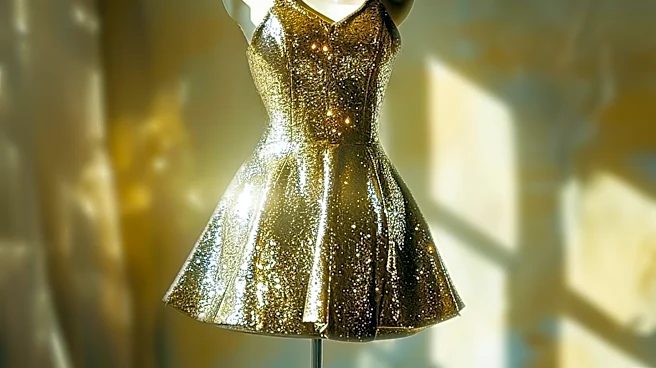








Sequins, those small, shiny, disk-shaped ornaments, have a surprisingly long and rich history, stretching back thousands of years. While today they are often associated with glamorous fashion and performance wear, their origins are rooted in practical uses and displays of wealth. From ancient civilizations to the runways of haute couture, sequins have consistently captured attention, evolving in material and application while maintaining their inherent
appeal as a decorative element. This journey through time reveals how these shimmering adornments have adapted to changing cultures and technologies, cementing their place in the world of textiles and style.
The term "sequin" itself has an interesting etymology, deriving from the Venetian colloquial noun "zechin," which referred to a Venetian ducat coin. This connection highlights an early association with currency and value. After the Napoleonic invasion of Italy, the ducat ceased to be minted, and the original meaning of "sequin" began to fade. It was in France that the name was later adopted to describe the shiny metal ornaments we recognize today, particularly as 19th-century sequins were often made of metal. This linguistic shift mirrors the transformation of sequins from literal wealth to symbolic adornment.
Ancient Origins and Early Adornment
The earliest evidence of sequin-like adornments dates back an astonishing 12,000 years, with sequins made from nautilus shells discovered in Indonesia. This suggests a very ancient human fascination with shiny, decorative elements. Further historical records indicate that gold sequins were used as clothing decoration or paraphernalia in the Indus Valley as early as 2500 BC, during the Kot Diji phase. These early examples demonstrate that the desire to embellish garments with shimmering objects is a deeply ingrained human practice, predating many other forms of textile decoration.
The use of precious metals for sequins continued into antiquity. Solid gold sequins, for instance, were found sewn into royal garments within the tomb of Tutankhamun, underscoring their status as symbols of wealth and power in ancient Egypt. Across various parts of the world, attaching metal coins and ornaments to clothes served not only to display wealth or status but also, in some cases, to keep items tightly secured. This dual function of decoration and practicality highlights the multifaceted role these early adornments played in different societies.
European Nobility and the Rise of Metal Spangles
In Europe, the use of spangles, an early form of sequins, became prominent during the late medieval and early modern periods. For the coronation of Henry VII of England in 1485, London goldsmiths supplied "spangles" and "oylets" of silver and gilt. This indicates their use in ceremonial and high-status garments. By June 1502, Elizabeth of York paid a coppersmith for various metallic pieces, including "spangelles, settes, square pieces, stars, drops, and points," to be used for costumes in "disguysings" at the Tudor court, showcasing their role in elaborate courtly entertainment.
By the 17th century, the modern sequin, a small, thin metal disk known as a spangle, had appeared in Europe. These were created by punching out the desired shape from thin metal sheets. These reflective metal bits, sewn into jackets, bonnets, and dresses, were highly popular among the European nobility and upper class from the 17th to the 19th centuries. The Edwardian era saw an increasing popularity of spangles, with haute-couture designers like Callot Soeurs creating evening dresses fully covered in sequins, often using different colors to form intricate patterns, marking a significant step in their integration into high fashion.
Technological Advancements and Modern Popularity
The 20th century brought significant innovations in sequin manufacturing, moving beyond heavy metal disks. In the 1930s, lightweight electroplated gelatin sequins were introduced. While much lighter than their metal predecessors, these had a notable drawback: they would melt if they got wet or too warm. This limitation spurred further development. Algy Trimmings Co., an apparel manufacturing company, collaborated with Kodak to produce clear plastic sequins, though these often suffered from brittleness.
Eventually, polyester film was used to encase plastic sequins, making them safely washable. However, vinyl plastic ultimately largely replaced both film and clear plastic due due to its superior durability and cost-effectiveness. These material advancements made sequins more accessible and practical for widespread use. The late 1960s saw sequins gain significant traction among popular musicians, such as The Supremes, further cementing their place in popular culture. Their popularity continued through the 1970s and early 1980s, and they also featured prominently in Y2K fashion, demonstrating their cyclical resurgence in style and their enduring appeal as a dazzling decorative element.