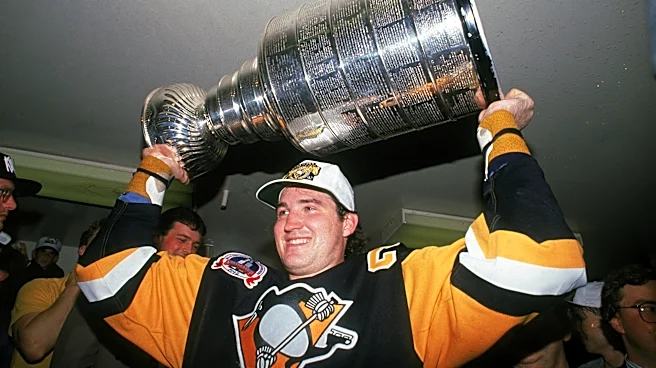




Mario Lemieux, a Canadian former professional ice hockey player, is widely recognized as one of the greatest players in the history of the sport. However, his illustrious career with the Pittsburgh Penguins, spanning parts of 17 seasons from 1984 to 2005, was consistently overshadowed by a series of severe health problems. These ailments not only limited his time on the ice but also forced him into two retirements, making his numerous comebacks and
continued high-level play a testament to his extraordinary resilience and dedication to the game.
A Career Plagued by Persistent Ailments
From the very beginning of his NHL career, which started on October 11, 1984, Lemieux struggled to maintain a full season's presence. He played in 70 or more games in a season on only six occasions, with four of those instances occurring before he even turned 25. Over his entire career, from the opening of the 1984–85 campaign to the conclusion of the 2005–2006 campaign, Lemieux missed a staggering 515 out of a possible 1,430 regular season games due to various health issues. These included a spinal disc herniation, chronic tendinitis in a hip-flexor muscle, and chronic back pain so severe that he sometimes needed assistance to tie his skates. These physical challenges were a constant backdrop to his athletic achievements.
The Fight Against Hodgkin Lymphoma
Perhaps the most significant health battle Lemieux faced was his diagnosis with Hodgkin lymphoma. This life-threatening illness was announced on January 12, 1993, and required aggressive radiation treatments. The treatments forced him to miss two months of play during the 1992–93 season. Despite the severity of his condition and the grueling treatment, Lemieux made a remarkable return to the ice. Upon his comeback, he was 12 points behind Buffalo's Pat LaFontaine in the scoring race, a deficit he quickly began to close. His fight against cancer also led to him missing the entire 1994–95 season, further highlighting the profound impact of his health on his playing time.
Multiple Retirements and Unwavering Comebacks
Lemieux's health issues led to two distinct retirements during his career. His first retirement came in 1997, following his battle with lymphoma. During this period, his number 66 jersey was initially retired by the Pittsburgh Penguins on November 19, 1997. However, his passion for the game and his ability to perform at a high level despite his past health struggles led him to return to play in 2000. His number 66 was unretired when he made his comeback on December 27, 2000. He continued to play until his second and final retirement in 2006, which was prompted by a diagnosis of atrial fibrillation. Even with these lengthy absences, his play remained exceptional; he won the Hart Trophy and scoring title in 1995–96 after missing the entire previous season, and was a finalist for the Hart Trophy upon his return in 2000.
Beyond the Ice: Ownership and Legacy
Even after his initial retirement, Lemieux's connection to the Pittsburgh Penguins remained strong. In 1999, he took a significant step by purchasing the then-bankrupt Penguins and their top minor-league affiliate, the American Hockey League's Wilkes-Barre/Scranton Penguins. He served as the team's principal owner until 2021, when he sold a controlling interest to Fenway Sports Group, though he remains a part-owner and chairman of the board. This transition from player to owner further cemented his legacy within the organization, demonstrating his commitment to the team even when he could no longer play. His jersey, number 66, was re-retired on October 5, 2006, after his final playing retirement, symbolizing his enduring impact on the sport.