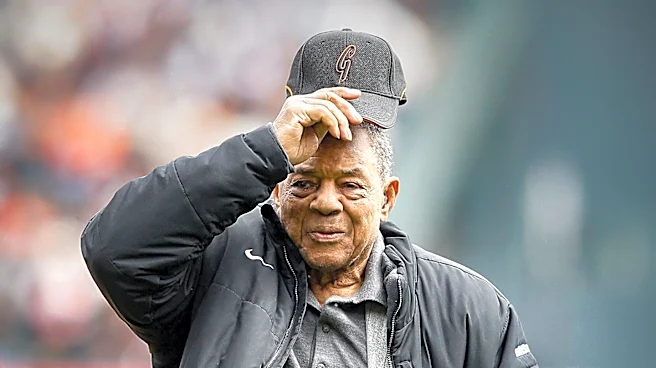




The 1973 baseball season marked the concluding chapter of Willie Mays' legendary playing career, culminating in a memorable, albeit challenging, appearance in the World Series with the New York Mets. At 42 years old, Mays found himself part of a Mets team that defied expectations, reaching the postseason despite having the lowest winning percentage of any playoff team at that time. His final moments on the field were characterized by both flashes
of his enduring brilliance and the inevitable struggles that come with age, particularly under the intense spotlight of baseball's biggest stage. The Series provided a dramatic backdrop for the farewell of one of the game's all-time greats.
A Veteran's Role in an Unexpected Playoff Run
By 1973, Willie Mays was a seasoned veteran, 42 years old, and his role with the New York Mets reflected this stage of his career. He often alternated in center field with Don Hahn, a testament to the team's strategic management of its aging superstar. Despite his advanced age for a professional athlete, Mays was an integral part of a Mets squad that made an improbable run to the World Series. This team, composed of a mix of established players and emerging talent, achieved a postseason berth with a regular-season record that, at the time, represented the lowest winning percentage for any team to reach the playoffs.
Mays' experience and leadership were undoubtedly valuable to this underdog team. His presence in the lineup, even if not every day, provided a psychological boost and a link to baseball's golden era. When the Mets faced the Oakland Athletics in the 1973 World Series, Mays was called upon to start Game 1. He batted third in the lineup, filling in for the injured Rusty Staub. This particular start would prove to be a historic one, as it marked Willie Mays' final big league start, a poignant moment in a career filled with countless milestones. His participation in the Series underscored his enduring commitment to the game, even as his physical capabilities had naturally diminished.
Challenges and Defining Moments in the Series
The 1973 World Series presented Willie Mays with unique challenges, particularly during Game 2, which became known as one of the "longest and weirdest games in World Series history," according to Curt Gowdy. This marathon contest, lasting four hours and 13 minutes, set a new record for the longest game in Series history at the time. A significant factor contributing to the game's unusual nature, and a particular difficulty for Mays, was the "blinding sunshine" that turned "every fly ball into adventure," especially for a 42-year-old outfielder.
During Game 2, Mays experienced firsthand the difficulties posed by the sun. In the ninth inning, Deron Johnson lifted a fly ball to center field that Mays lost in the sun, causing him to fall while chasing it, allowing Johnson to reach second base. Later in the bottom of the 12th inning, Reggie Jackson reached third base after Mays lost yet another fly ball in the sun. Despite these defensive struggles, Mays also delivered a moment of offensive brilliance in the same game. In the top of the 12th inning, he drove in Bud Harrelson with a single, which would ultimately be recorded as the final hit and final run batted in of his storied career. He later scored another run in that inning, contributing to the Mets' 10-7 victory. The game also saw Mays involved in a heated exchange with manager Yogi Berra and umpire Augie Donatelli in the 10th inning, following a controversial call at the plate.
The End of an Era
Following the conclusion of the 1973 World Series, Willie Mays officially retired from professional baseball. His final playing season with the New York Mets brought his illustrious career to a close, marking the end of an era for one of the sport's most dynamic and beloved figures. While his performance in his final year and the World Series showed glimpses of the "Say Hey Kid" that fans had adored for decades, it also highlighted the natural progression of time and the physical toll of a long career.
Mays' retirement did not sever his ties with the Mets organization entirely. He transitioned into a coaching role, serving the team from 1974 to 1979. This continued involvement allowed him to impart his vast knowledge and experience to a new generation of players, further solidifying his legacy within the franchise. The Mets later honored Mays by retiring his number 24, a tribute that recognized his immense contributions to the game and his special connection to the New York baseball community. His final chapter with the Mets, culminating in a World Series appearance, provided a fitting, if challenging, farewell for a true baseball icon.