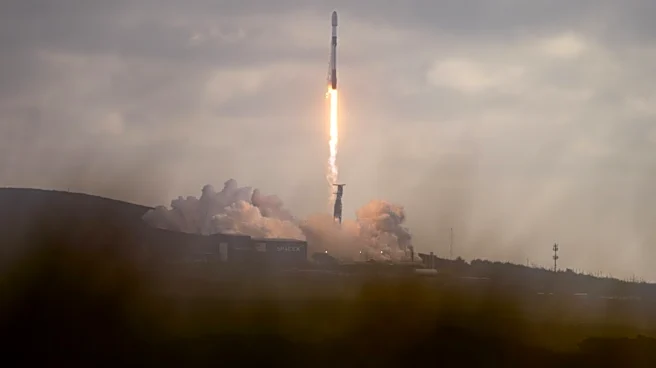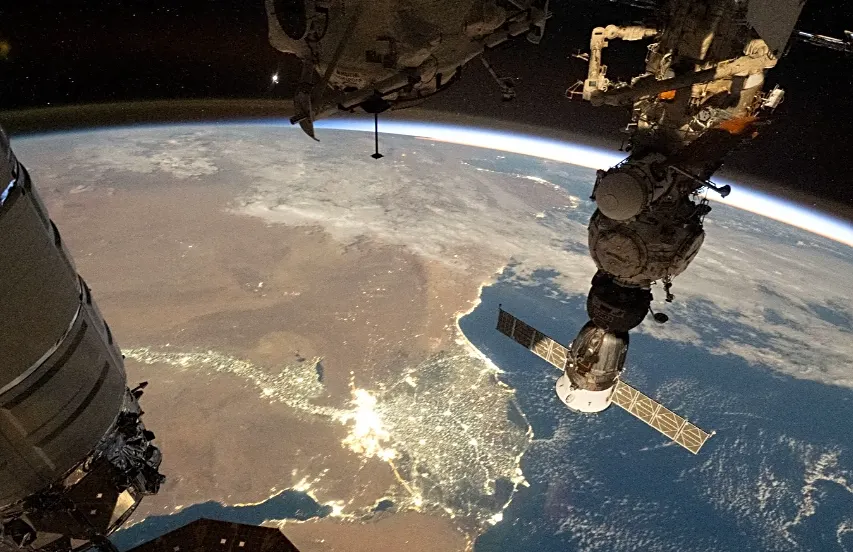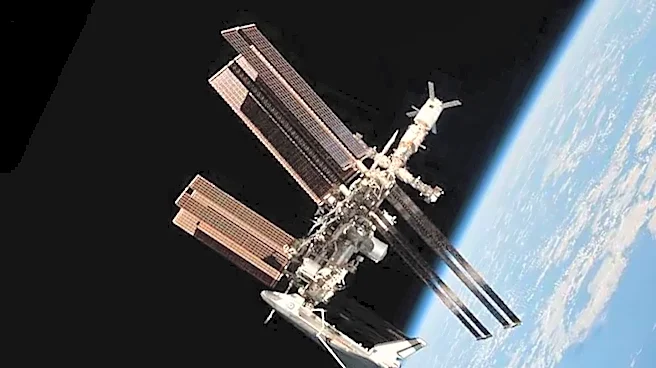









The SpaceX Crew-8 mission, launched on March 4, 2024, was initially planned as a standard 180-day rotation to the International Space Station (ISS). However, unforeseen challenges with the Boeing Crew Flight Test (CFT) transformed Crew-8 into a mission defined by its adaptability and extended duration. This mission not only transported four crew members to the ISS but also played a critical role in ensuring the safety and operational continuity of
the station during a period of uncertainty for another commercial crew vehicle. The Crew Dragon Endeavour, carrying the Crew-8 astronauts, ultimately spent 235 days, 3 hours, and 35 minutes in space, completing 3,760 orbits and traveling approximately 100 million miles.
Responding to Starliner's Challenges
The primary reason for the Crew-8 mission's extension and its subsequent role in ISS operations stemmed from problems encountered by the Boeing Crew Flight Test. The Boeing Starliner spacecraft, Calypso, docked with the ISS on June 6, 2024, but experienced anomalies with its thrusters. This led to an unplanned extended stay for its two-person crew on the ISS while NASA and Boeing evaluated the issues. Given the uncertainties surrounding Starliner's return capabilities, NASA made the decision to send the Starliner back to Earth uncrewed in September 2024.
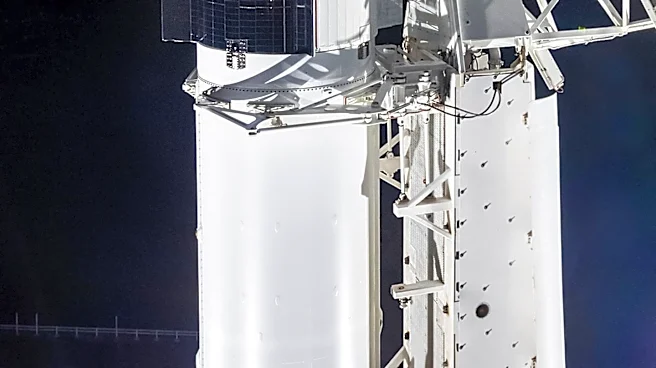
This decision created a critical need for a "lifeboat" function on the ISS. Each ISS crew member requires a contingency spacecraft for emergency evacuation. With Starliner returning uncrewed, its crew would be without this vital safety measure. To address this, NASA directed the Crew-8 astronauts to outfit their Crew Dragon capsule with two extra crew positions in the cargo area. These temporary seat structures, built using foam, straps, and other station soft goods, were designed to accommodate the two Starliner astronauts if an emergency occurred before the arrival of the Crew-9 mission.
Mission Extension and Relocation Maneuvers
Originally, Crew-8 was slated to return to Earth in early August, adhering to a nominal 180-day mission profile. However, the mission was extended multiple times. The initial extension allowed NASA to thoroughly investigate the CFT situation. A further extension was implemented to maintain the crucial lifeboat function while Boeing worked on reconfiguring Starliner for its uncrewed return. The standard maximum mission time for a Crew Dragon is typically 210 days, but for Crew-8, NASA extended this limit to 240 days, highlighting the mission's critical importance.
Beyond the extended duration, the Crew-8 mission also involved a significant relocation maneuver of the Crew Dragon Endeavour. To prepare for the planned May 6, 2024, Boeing Crew Flight Test docking to the forward port of the Harmony module, the Crew-8 crew relocated their spacecraft to the zenith port of Harmony on May 2, 2024. This docking to the zenith port occurred at 13:46 UTC. This strategic repositioning ensured that the ISS had the necessary docking ports available for incoming spacecraft while maintaining the Crew-8's presence and its newly assigned emergency support role.
The Longest Dragon Mission and Return
The cumulative delays and extensions ultimately made Crew-8 the longest Dragon mission at 236 days, a record later surpassed by SpaceX Crew-12. The return of Crew-8 was further delayed for several weeks due to adverse weather conditions in the splashdown zones around Florida, specifically caused by Hurricane Milton and other storms. Despite these challenges, the Crew-8 mission successfully undocked from the ISS on October 23, 2024, at 21:05 UTC.
After its extensive journey, the Crew Dragon Endeavour splashed down in the Gulf of Mexico, near Pensacola, Florida, on October 25, 2024, at 07:29:02 UTC. During the parachute deployment sequence, a delay in the main parachute's opening was observed, along with drogue debris strikes. However, NASA stated that the entry and splashdown were normal, and the recovery of the crew and spacecraft by the MV Megan was without incident. Following medical evaluations, one astronaut required hospitalization but was released the next day in good health, marking the successful conclusion of a truly adaptable and extended mission.