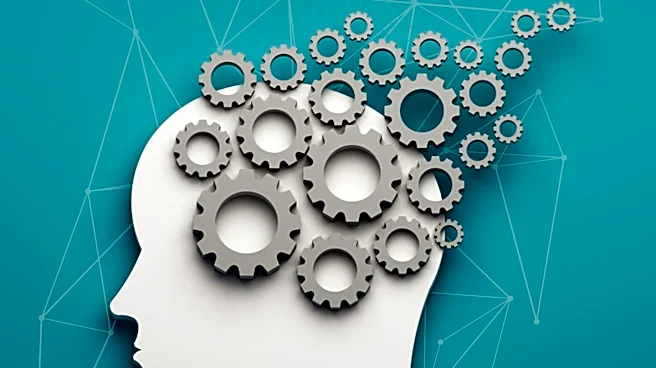







In the realm of information technology, a reasoning system is a sophisticated software system designed to generate conclusions from available knowledge using logical techniques. These systems are crucial for the implementation of artificial intelligence (AI) and knowledge-based systems, aiming to replicate or assist human-like thought processes. From early theorem provers to modern expert systems and the Semantic Web, the evolution of reasoning systems reflects
a continuous effort to enable machines to understand, interpret, and act upon information in increasingly intelligent ways. Their applications span a wide array of fields, demonstrating their growing importance in our technologically advanced world.
Early Developments: Theorem Provers and General Problem Solvers
The earliest reasoning systems were primarily theorem provers. These systems represented axioms and statements using First Order Logic and then applied rules of logic, such as modus ponens, to infer new statements. Alongside these, general problem solvers emerged, exemplified by systems like the General Problem Solver (GPS) designed by Newell and Simon. These aimed to provide a generic planning engine capable of representing and solving structured problems by breaking them down into smaller sub-problems, solving each, and then assembling the partial answers.
Another early example was the SOAR family of systems. However, these initial theorem provers and general problem solvers often proved impractical for real-world applications, typically requiring specialized users with deep knowledge of logic. Their utility was often limited to research demonstrations rather than widespread practical use, highlighting the challenges of translating complex logical frameworks into functional AI.
The Rise of Expert Systems and Inference Engines
The first practical application of automated reasoning came with the advent of expert systems. Unlike their predecessors, expert systems focused on much more well-defined domains, such as medical diagnosis or analyzing aircraft faults. They also employed more limited implementations of logic, typically focusing on modus-ponens implemented via IF-THEN rules, rather than attempting to handle the full range of logical expressions. This focused approach significantly improved their performance, making them practical for real-world use.
The automated reasoning engine within expert systems was commonly referred to as an inference engine. These engines applied the knowledge stored in a knowledge base (comprising facts and rules about a problem domain) to answer questions and solve problems. While more general logical inferencing systems were called theorem provers, the success of expert systems demonstrated the power of applying automated reasoning to specific, constrained problems, paving the way for broader AI applications.
Modern Applications and the Semantic Web
Today, reasoning systems have a wide field of application, including scheduling, business rule processing, problem-solving, complex event processing, intrusion detection, predictive analytics, robotics, computer vision, and natural language processing. Many modern reasoning systems employ deductive reasoning, supporting both forward and backward chaining to infer conclusions. Some also incorporate abductive, inductive, defeasible, and other types of reasoning, often using heuristics to find acceptable solutions for complex problems.
Knowledge representation and reasoning (KRR) is a key enabling technology for the Semantic Web. This initiative aims to add a layer of semantics (meaning) to the internet, moving beyond keyword-based searches to allow for logical queries and the discovery of pages based on conceptual understanding. Languages based on the Frame model, with automatic classification, provide this semantic layer. Classifiers, which are automated reasoning components, infer new classes and dynamically change ontologies as new information becomes available. This capability is ideal for the ever-changing and evolving information space of the internet, allowing for more intelligent and context-aware information retrieval and processing.