

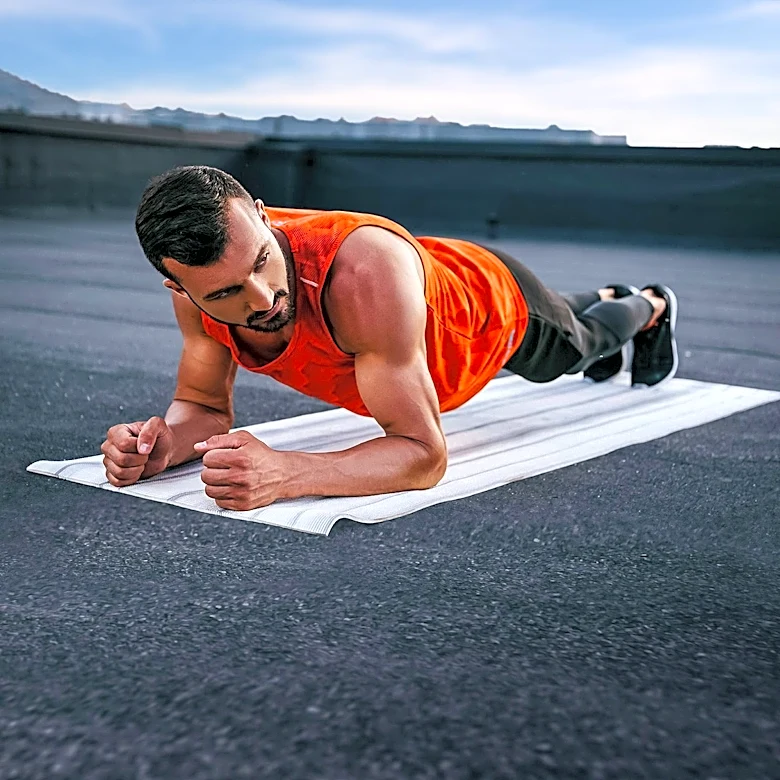



The push-up, known as a press-up in British English, stands as a foundational calisthenics exercise, widely recognized for its effectiveness in building upper body strength. Originating from a prone position, the exercise involves raising and lowering the body using the arms, with the legs providing support. This movement primarily engages the pectoral muscles, triceps, and anterior deltoids, while also offering ancillary benefits to other muscle groups
such as the rest of the deltoids, serratus anterior, coracobrachialis, and the entire midsection. Its simplicity, requiring no equipment, makes it a common component in civilian athletic training, physical education, and military physical training, and it has even been used as a form of punishment due to its demanding nature.
Core Mechanics and Muscle Engagement
The fundamental action of a push-up involves a complex interplay of various muscle groups. The pectoral muscles, specifically the pectoralis major and minor, are the primary chest muscles and the main drivers of the pushing motion in the upper body. As the body is pushed up and lowered, the pectoralis major performs most of the work, leading to increased strength and definition in these muscles with regular practice. The anterior portion of the deltoid muscle, a major shoulder-joint horizontal adductor, moves the upper arms toward the chest during the upward phase and helps control the speed of movement during the downward phase. This muscle attaches to parts of the clavicle and scapula, just above the shoulder joint, and to the outside of the humerus bone, assisting with flexion and internal rotation of the humerus within the shoulder socket.
The triceps brachii muscles, or triceps, are also heavily involved, extending the elbow joints to fully extend the arms during the upward phase and controlling the speed of elbow-joint flexion during the downward phase. The closer the hands are placed during a push-up, the more intensely the triceps are worked. The triceps muscle is divided into three heads: the lateral, long, and medial heads. The lateral and medial heads attach to the back of the humerus bone, while the long head attaches just behind the shoulder socket. All three heads combine to attach to the back of the elbow. Beyond these primary movers, inner muscles supporting the fingers, wrists, forearms, and elbows are worked isometrically, and some modifications that require arms at different heights can effectively engage the rotator cuff.
Stabilizer Muscles and Body Support
Push-ups rely significantly on stabilizer muscles to maintain proper body alignment and control throughout the movement. The erector spinae, composed of the spinal, longissimus, and iliocostalis muscles, serves as the main stabilizer in the back. The spinal muscle runs adjacent to the spine, the longissimus runs alongside the spinal, and the iliocostalis runs adjacent to the longissimus and over the ribs. Additionally, the gluteus medius and gluteus minimus, located beneath the gluteus maximus, stabilize the upper leg. Wrist and forearm muscles, knee extensors, and hip/spine flexors all work isometrically to maintain a proper plank position in the standard prone push-up.
The rectus abdominis and transversus abdominis muscles contract continuously during push-ups to keep the body off the floor and ensure the legs and torso remain aligned. The rectus abdominis, the most prominent abdominal muscle, spans the front of the abdomen, while the transversus abdominis lies deep within, wrapping around the entire abdominal area. Both muscles compress the abdomen, though the rectus abdominis's function of flexing the spine forward is not engaged during a push-up. A study published in The Journal of Strength and Conditioning Research indicated that test subjects, on average, supported 69.16% of their body mass in the up position and 75.04% in the down position during traditional push-ups. In modified push-ups, where knees are used as the pivot point, subjects supported 53.56% and 61.80% of their body mass in the up and down positions, respectively.
Diverse Variations for Targeted Training
The versatility of the push-up is evident in its numerous variations, each designed to target specific muscle groups or increase the challenge. The "full push-up" maintains a straight back and legs off the floor. Variations like wide-arm and diamond push-ups emphasize different muscles; diamond push-ups, where thumbs and index fingers touch, place greater stress on the triceps. When hands are unbalanced or on uneven surfaces, the exercise engages the body's core more intensely. Elevating the feet or hands on surfaces can shift the emphasis to the upper (minor) or lower (major) pectorals, respectively. Using push-up bars or dumbbells allows for a greater range of motion, further stressing the muscles.
Less difficult versions exist to accommodate varying fitness levels. "Wall" push-ups involve pushing away from a wall, with difficulty increasing as one moves further from the wall. "Table" or "chair" push-ups use a stable object for support, with lower objects increasing difficulty.