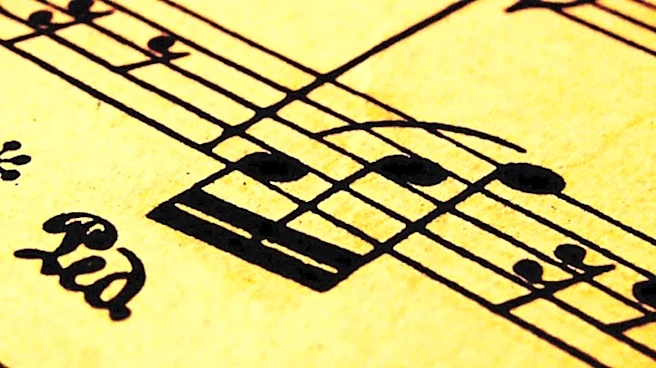








Scott Joplin's "Maple Leaf Rag," published in 1899, is not merely a popular tune but a foundational work that significantly shaped the ragtime genre. Its intricate structure and innovative musical elements set a new standard for compositions of its kind, earning it the designation of the "archetypal rag." This piece served as a blueprint for countless subsequent ragtime works, influencing composers and defining the expectations for the form. Understanding
its musical architecture provides insight into Joplin's genius and the evolution of ragtime as a distinct American musical style.
Multi-Strain Form and Harmonic Sophistication
The "Maple Leaf Rag" is characterized as a multi-strain ragtime march, a common form in the genre, yet executed with remarkable precision and depth. Each of its four distinct parts features a recurring theme, providing a sense of unity and familiarity throughout the composition. A hallmark of its structure is the striding bass line, which provides a rhythmic foundation, often incorporating copious seventh chords. These harmonic choices were quite sophisticated for the time, adding a rich texture to the piece. The careful construction of the "Maple Leaf Rag" surpassed almost all previous rags, demonstrating a level of compositional foresight that was rare.
Syncopation and Technical Demands
One of the most notable aspects of the "Maple Leaf Rag" is its innovative use of syncopation, particularly evident in the transition between the first and second strains. These rhythmic complexities were novel at the time of its publication, contributing to its fresh and engaging sound. While considered moderately difficult to play, the piece demands a high level of coordination from the pianist, especially in the left hand. The trio section, for instance, requires leaps of two octaves, a technical challenge that was significantly more demanding than the average Tin Pan Alley and early ragtime sheet music prevalent at the era. This technical rigor contributed to its reputation as a serious musical work.
A Model for Future Compositions
Joplin's "Maple Leaf Rag" not only set a standard but also directly influenced his own later works. For example, "Gladiolus Rag," a subsequent composition by Joplin, is considered a developed variant of the "Maple Leaf Rag," showcasing his increasing musical sophistication. "Gladiolus Rag" is typically played at a somewhat slower tempo, allowing for a different expressive quality. Furthermore, the first strains of several other Joplin compositions, including "The Cascades," "The Sycamore," "Leola," and "Sugar Cane," are explicitly modeled on the structural framework Joplin established for the first strain of the "Maple Leaf Rag." The piece begins in the key of A-flat major, modulates to D-flat major during the first part of the trio, and then returns to A-flat major, demonstrating a thoughtful harmonic progression that further solidifies its architectural brilliance.