







Bing Crosby, the renowned American singer and entertainer, played a surprisingly pivotal role in the early development and widespread adoption of magnetic tape recording technology in the United United States. His involvement, driven by both personal convenience and a keen eye for innovation, helped transform how music and radio broadcasts were produced. Crosby's early investment and advocacy for this nascent technology were instrumental in bringing
high-fidelity sound recording to the mass market, ultimately shaping the future of the entertainment industry.
The Genesis of an Investment
Crosby's interest in magnetic tape recording stemmed from a practical need. As a busy entertainer with demanding schedules, he sought a way to avoid performing his radio shows twice—once for each coast of the United States. This desire for efficiency, and more time for personal pursuits like golf, led him to explore new recording methods. The existing recording technologies of the time were not sufficient for his needs, prompting him to look for more advanced solutions that could capture and reproduce sound with high fidelity.
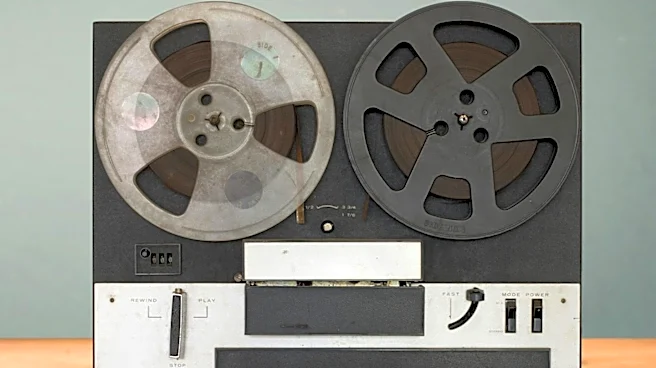
His crucial entry into the world of magnetic tape began in 1947. An associate from Bing Crosby Enterprises witnessed a demonstration of a Magnetophon tape recorder, a German innovation, and recognized its potential. This demonstration sparked Crosby's interest, leading him to become an early investor in Ampex Corporation, a company that would become a leading manufacturer of tape recorders in the United States. This strategic investment was not just about personal gain; it was a commitment to a technology he believed could revolutionize broadcasting and music.
Revolutionizing Broadcast and Music Production
Crosby's investment in Ampex proved to be a game-changer for the company and the industry. Ampex tape recorders, influenced by the Magnetophon technology, were subsequently adopted by the thousands across various sectors. The broadcast industry, audio recording studios, and even the movie industry began to utilize these advanced machines. The ability to record and edit sound with unprecedented quality and flexibility offered immense advantages over previous methods.
Before the widespread availability of these high-fidelity tape recorders, recording quality was often limited, and editing was a cumbersome process. The introduction of Ampex machines, backed by Crosby's financial support and influence, meant that radio programs could be pre-recorded with superior sound, eliminating the need for live, repeat performances. This not only saved time and resources but also allowed for greater creative control and polish in productions. Crosby's own shows benefited immensely from this technology, allowing him to maintain his demanding schedule while delivering high-quality content to his audience.
Lasting Impact and Personal Wealth
Crosby's foresight in investing in Ampex had significant financial implications for him personally. His ownership in Ampex increased his personal wealth considerably as the company's products became indispensable to the entertainment world. Beyond the financial aspect, his involvement cemented his legacy not just as a performer, but also as a technological pioneer in the entertainment industry.
The widespread adoption of Ampex tape recorders, spurred by Crosby's early backing, laid the groundwork for modern audio recording. The technology he helped champion became fundamental to how music was produced, distributed, and consumed for decades. From studio albums to radio broadcasts, magnetic tape recording became the standard, and Crosby's early recognition of its potential was a key factor in its rapid ascent. His influence extended beyond just recording; he also played a similar role in the early development of video tape recorders (VTR), also with Ampex, further demonstrating his commitment to advancing media technology.