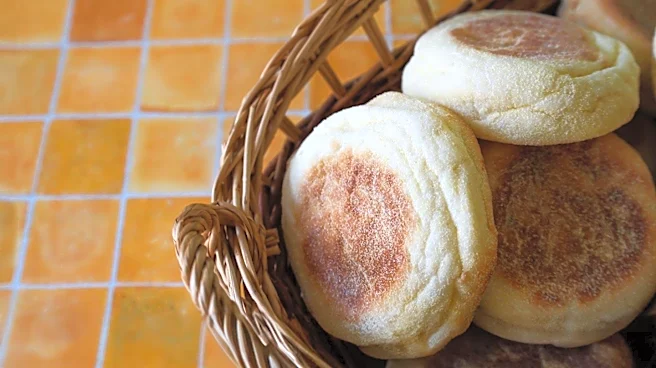








The English muffin, a small, round, and flat yeast-leavened bread, holds a distinctive place in breakfast traditions, particularly in the United States. Typically measuring about 4 inches in diameter and 1.5 inches tall, this unsweetened bread is characterized by its unique preparation method and its versatility as a base for a wide array of toppings. Unlike many other baked goods, the English muffin is not entirely oven-baked, a detail that significantly
contributes to its signature texture and shape.
Its common usage involves splitting it horizontally and toasting it, which enhances its appeal. This simple preparation allows it to be paired with both sweet and savory accompaniments, making it a flexible component of any morning meal. From its origins to its modern-day applications, the English muffin has evolved into a beloved item, recognized for its specific qualities that set it apart from other breads.
Distinguishing Features and Preparation
A key characteristic that sets the English muffin apart is its cooking process. Rather than being fully baked in an oven, English muffins are cooked on a griddle on the stovetop. During this process, they are flipped from side to side, which results in their flattened shape. This method contrasts sharply with the baking of rolls or cake-type muffins, which typically develop a rounded top due to oven baking. The griddle cooking technique is crucial to achieving the English muffin's distinct texture and form.
Another notable feature is its internal structure. While some might confuse it with a crumpet, the English muffin has its holes primarily on the inside, rather than extending all the way to the top as seen in crumpets. This internal honeycomb-like structure, as described in early cookery books, is part of what makes it so appealing when toasted, creating pockets for butter and other toppings to melt into. The bread itself is unsweetened, providing a neutral canvas for various flavors.
Versatile Toppings and Culinary Applications
The unsweetened nature of the English muffin makes it incredibly versatile, allowing it to be paired with a broad spectrum of toppings. For those with a sweet tooth, it can be enjoyed with butter, fruit jam, or honey. These classic combinations highlight the muffin's ability to absorb and complement sweet flavors, making it a comforting breakfast choice.
On the savory side, English muffins are frequently served with eggs, sausage, bacon, or cheese. These pairings transform the muffin into a hearty and satisfying meal. Beyond simple toppings, the English muffin is a fundamental ingredient in iconic dishes such as eggs Benedict. Its sturdy yet porous structure provides the perfect foundation for poached eggs, Canadian bacon, and hollandaise sauce. Furthermore, it serves as the base for various breakfast sandwiches, including popular fast-food items like the McMuffin, demonstrating its widespread influence in contemporary breakfast cuisine. The availability of varieties like whole wheat, multigrain, cinnamon raisin, cranberry, and apple cinnamon further expands its appeal and culinary uses.
Historical Context and Naming
The term "muffin" itself has an interesting linguistic history, thought to derive from the Low German word "muffen," meaning "little cakes." The Oxford English Dictionary also suggests a possible connection to the Old French "moflet," referring to a type of bread. Historically, the word encompassed various kinds of bread or cake. The first recorded use of the word "muffin" dates back to 1703, with recipes appearing in British cookery books as early as 1747.
In the United States, this particular bread is specifically called an "English muffin" to differentiate it from the sweeter, cupcake-shaped quick breads that are also known as muffins. While in the United Kingdom, they might simply be referred to as "muffins" or "breakfast muffins," the "English" designation in other regions helps clarify its distinct identity and origin. This naming convention underscores its unique characteristics and its place in the broader world of baked goods.