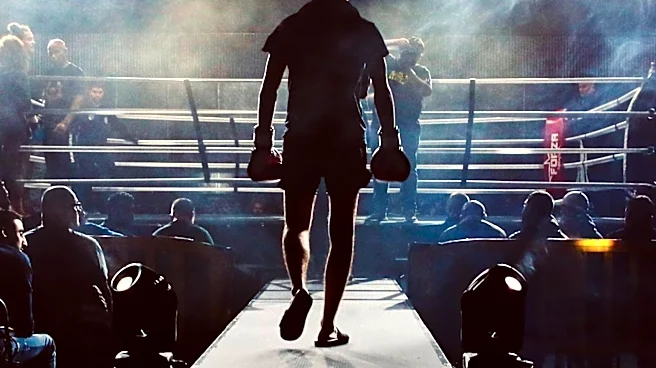




The boxing encounters between Aaron Pryor and Alexis Argüello, particularly their first bout in 1982, transcended mere sporting events to become defining moments in both fighters' careers and in boxing history. Billed as "The Battle of the Champions," their initial contest for the WBA world Junior Welterweight title was a brutal, back-and-forth affair that culminated in a 14th-round TKO victory for Pryor. However, the story did not end with the final
bell; it unfolded into a complex narrative involving controversies, retirements, comebacks, and an eventual deep friendship that highlighted the human element behind the athletic rivalry. The fight itself was recognized as the "Fight of the Decade" by The Ring magazine, cementing its place in boxing lore.
Lingering Controversies and the Rematch
Immediately following their first epic encounter, several controversies emerged that cast a shadow over Aaron Pryor's victory. The most prominent involved the peculiar actions in Pryor's corner, specifically the use of a second, seemingly "mixed" water bottle. Pryor's cornerman, Panama Lewis, was reportedly heard requesting "the other bottle. The one I mixed" between rounds, a detail that fueled speculation about unsanctioned substances. Further adding to the controversy was the report that Pryor did not undergo a drug test after the bout, with his team stating that no one had approached them for a urine sample. These incidents led to widespread discussion and calls for a rematch.
A rematch was indeed ordered and took place ten months after the initial bout. Both fighters entered the second contest with new trainers. Argüello had fired Eddie Futch, blaming him for his loss, though he later apologized to Futch, calling it "the biggest mistake of my life." Pryor also had a change in his corner; Panama Lewis had lost his license for removing padding from Luis Resto's gloves in a separate fight. As a result, Pryor initially hired Richie Giachetti, but disagreements led to Emanuel Steward taking over as his trainer. The rematch, while still exciting, saw Pryor secure another victory, this time by a 10th-round knockout, sending Argüello to the canvas three times. Argüello did manage to stagger Pryor briefly in the second round, but Pryor ultimately dominated.
Retirements, Comebacks, and Personal Struggles
Following their rematch, both Aaron Pryor and Alexis Argüello announced their retirements from boxing. However, the allure of the ring, coupled with personal challenges, proved too strong to resist for both champions. Driven by financial problems and struggles with cocaine addiction, both men eventually came out of retirement. Their comebacks met with varying degrees of success. Argüello, during his return, notably knocked out former champion Billy Costello in four rounds, demonstrating flashes of his old form.
Pryor's comeback was also largely successful, though it was during this period that he suffered the only loss of his professional career. His boxing career ultimately ended when a medical test revealed significant vision loss in one of his eyes, leading to the denial of a boxing license. These post-retirement struggles and attempts to reclaim past glory highlighted the demanding nature of the sport and the personal battles many athletes face outside the spotlight. Both fighters' journeys after their initial retirements underscored the complex realities of life after a high-profile boxing career.
A Friendship Forged in Rivalry and Lasting Legacies
Despite the intense rivalry and the controversies that surrounded their fights, Aaron Pryor and Alexis Argüello developed a deep and enduring friendship in the years following their bouts. This bond became a testament to the respect and camaraderie that can emerge even from the fiercest competition. Pryor notably traveled to Nicaragua to support Argüello's political career, demonstrating the depth of their connection. The two met several times a year, maintaining their friendship until Argüello's death in 2009, which was apparently by a self-inflicted gunshot. Pryor himself passed away on October 9, 2016.
Both Argüello and Pryor are recognized for their significant contributions to boxing, with both being inducted into the International Boxing Hall of Fame. In 2018, they were also inducted into the Nevada Boxing Hall of Fame, with their respective sons, Alexis Argüello, Jr. and Aaron Pryor, Jr., representing them. Argüello went on to enter politics in his native Nicaragua, even serving as the flag carrier for Nicaragua in the 2008 Summer Olympics. Pryor, after his boxing career, became a Christian minister. The enduring legacy of their rivalry, transformed into a profound friendship, continues to be a compelling chapter in boxing history, illustrating how two competitors can forge a lasting bond beyond the heat of battle.