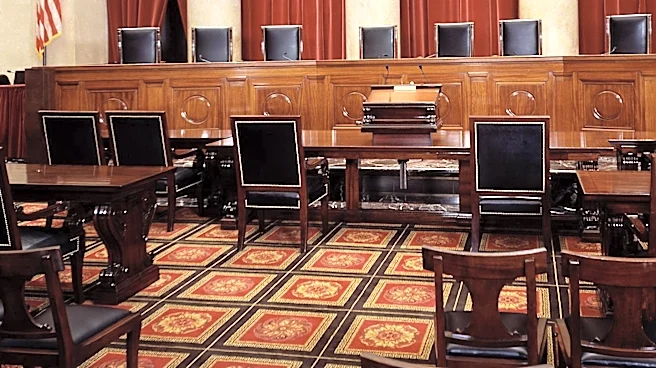







David Hackett Souter, who served as an Associate Justice of the Supreme Court of the United States from 1990 to 2009, continued his judicial career even after retiring from the nation's highest court. Upon his retirement, Souter maintained his status as a judge, which entitled him to sit by designation on lower courts. This unique arrangement allowed him to remain active in the legal system, contributing his extensive experience to the federal judiciary.
His post-Supreme Court activities offer a glimpse into the continued engagement of a former justice with the legal and public spheres, particularly his commitment to judicial work and his observations on American civic life.
Continued Service on the First Circuit Court of Appeals
Following his retirement from the Supreme Court, Justice Souter regularly sat by designation on panels of the First Circuit Court of Appeals. This court is based in Boston and covers a significant region, including Maine, Massachusetts, Puerto Rico, Rhode Island, and Souter's adopted home state of New Hampshire. His service on this appellate court was a consistent part of his post-Supreme Court life, occurring generally in February or March of each year until 2020. This commitment demonstrates a dedication to the judicial process beyond the Supreme Court bench, allowing him to apply his legal expertise to a range of cases at the appellate level.
His continued presence on the First Circuit Court of Appeals meant that Souter, despite no longer being a Supreme Court Justice, remained an active participant in the federal judiciary. This practice of retired Supreme Court justices sitting on lower courts is a notable aspect of the American legal system, enabling the judiciary to benefit from their seasoned judgment. Souter's consistent engagement in this capacity for over a decade after his Supreme Court tenure highlights his enduring commitment to public service and the rule of law. His work on these panels involved reviewing decisions from district courts within the First Circuit's jurisdiction, contributing to the finality and consistency of legal interpretations in the region.
Maintaining a Low Public Profile and Addressing Civic Ignorance
Despite his continued judicial work, David Souter largely maintained a low public profile after retiring from the Supreme Court. This approach contrasted with some other former justices who have remained more visible in public discourse. However, Souter did make an exception in 2012 when he appeared at the Capitol Center for the Arts in New Hampshire. During this appearance, he engaged in discussions that touched upon various topics, notably including what he described as "the pervasive civic ignorance" of Americans.
This public commentary, though rare, provided insight into Souter's concerns about the state of civic understanding in the United States. His remarks at the Capitol Center for the Arts underscored a broader concern about the public's knowledge of governmental functions and civic responsibilities. Such an observation from a former Supreme Court Justice carries significant weight, reflecting a perspective shaped by years of interpreting and upholding the nation's laws. His decision to speak on this topic, despite his general preference for a low public profile, suggests the importance he placed on civic education and awareness for the health of American democracy.