


The Apollo 12 mission, while building on the success of Apollo 11, featured specific spacecraft components and minor modifications designed to enhance crew comfort and scientific capabilities. The mission's vehicles were largely similar to their predecessors, but subtle improvements were implemented based on lessons learned from earlier flights. Additionally, the crew chose distinctive call signs for their modules, reflecting their naval backgrounds
and adding a personal touch to their historic voyage.
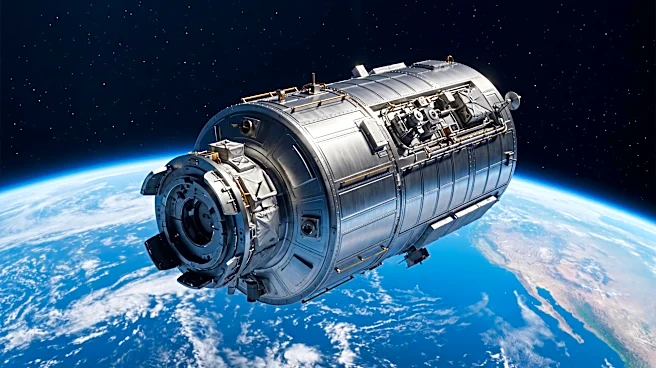
The Apollo 12 spacecraft assembly comprised several key elements: Command Module 108 and Service Module 108, which together formed CSM–108; Lunar Module 6 (LM–6); a Launch Escape System (LES); and Spacecraft-Lunar Module Adapter 15 (SLA–15). The LES was equipped with three rocket motors, designed to propel the Command Module to safety in the event of an abort shortly after launch. The SLA, identical to Apollo 11's, housed the LM and provided a structural connection between the Saturn V rocket and the LM. The LES itself saw a minor upgrade, featuring a more reliable motor igniter compared to its Apollo 11 counterpart.
Minor Enhancements for Crew and Science
While the overall design of the Command and Service Module (CSM) and Lunar Module (LM) for Apollo 12 remained largely consistent with Apollo 11, a few minor but significant changes were incorporated. One notable modification to the CSM was the addition of a hydrogen separator. This device was installed to prevent gaseous hydrogen from entering the potable water tank, a problem that had caused severe flatulence for the Apollo 11 crew. Although Apollo 11 had a hydrogen separator, it was mounted on the water dispenser inside the CM's cabin, indicating a refinement in its placement for Apollo 12.
Further improvements included strengthening the recovery loop attached to the Command Module after splashdown. This enhancement meant that the swimmers involved in the recovery operation would no longer need to attach an auxiliary loop, streamlining the post-landing procedure. For the Lunar Module, structural modifications were made to allow it to carry scientific experiment packages for deployment on the lunar surface. Additionally, two hammocks were added inside the LM to provide Conrad and Bean with a more comfortable resting arrangement during their stay on the Moon. A color television camera was also substituted for the black and white one used on Apollo 11, aiming to improve the visual quality of transmissions from the lunar surface.
Nautical Call Signs: Yankee Clipper and Intrepid
The Apollo 12 crew, composed entirely of Navy personnel, selected sea-related call signs for their spacecraft modules. The Command and Service Module was designated "Yankee Clipper," while the Lunar Module was named "Intrepid." These names were chosen from thousands of proposals submitted by employees of the prime contractors for each module. George Glacken, a flight test engineer at North American Aviation, the builder of the CSM, suggested Yankee Clipper, noting that such ships had "majestically sailed the high seas with pride and prestige for a new America." Robert Lambert, a planner at Grumman, the LM's builder, proposed Intrepid, which he felt was evocative of "this nation's resolute determination for continued exploration of space, stressing our astronauts' fortitude and endurance of hardship." These call signs not only served practical communication purposes but also imbued the mission with a sense of maritime tradition and national resolve.