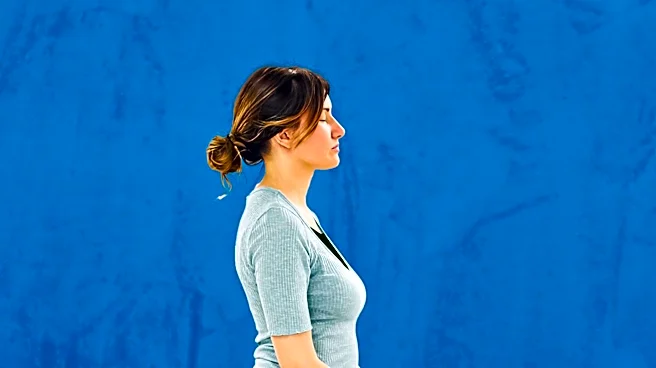

Meditative postures, or asanas, are body positions primarily used to facilitate meditation. These postures, often sitting but sometimes standing or reclining, have deep roots in Buddhist and Hindu traditions,
where forms like the lotus and kneeling positions are well-known. Over centuries, these practices have evolved, adapting to different cultural contexts and individual needs, moving from strict traditional forms to more accessible modern adaptations, including the use of chairs and specialized benches.
Traditional Foundations in Ancient India
The practice of using specific body positions for meditation is ancient, with sitting postures, often cross-legged, providing a stable base for centuries in Buddhism and Hinduism. Key examples include Padmasana, known as the full lotus, and Ardha Padmasana, the half lotus. Other traditional sitting postures are Siddhasana or Muktasana, sometimes called the Burmese posture, where practitioners sit with knees on the ground and feet tucked close to the body. Sukhasana, or easy pose, represents any comfortable cross-legged position. Beyond these, kneeling postures like Virasana, sitting between the heels, and Vajrasana or Seiza, sitting on the heels, are also part of the traditional repertoire.
Another significant sitting posture is Baddha Konasana, or Cobbler's Pose, which is suitable for individuals who can sit with their feet together and both knees on the ground. B. K. S. Iyengar, a renowned yoga teacher, noted that meditating in this position often involves holding the palms in a prayer position over the chest, a practice that requires some balance. Seymour Ginsburg, in his descriptions of Gurdjieff meditation, suggested that these compact positions help meditators to