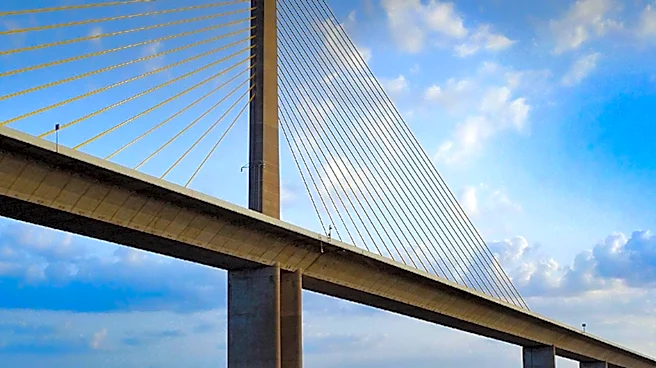











The Evergreen Point Floating Bridge, connecting Seattle to the Eastside, has played a crucial role in the region's development since its opening in 1963. By providing a direct route across Lake Washington, the bridge facilitated the growth of suburban communities and contributed to the economic expansion of the Seattle metropolitan area. This article explores the bridge's impact on the region's growth and development.
Connecting Communities
Before the Evergreen Point Floating
Bridge, travel between Seattle and the Eastside communities of Bellevue, Kirkland, and Redmond was limited to ferries or lengthy drives around the lake. The bridge's opening in 1963 provided a direct and efficient route, significantly reducing travel time and making the Eastside more accessible.
This improved connectivity spurred the growth of suburban communities on the Eastside, transforming them into desirable residential areas for those working in Seattle. The bridge facilitated the movement of people and goods, contributing to the economic integration of the region. As a result, cities like Bellevue and Redmond experienced rapid population growth and development.
Economic Expansion
The Evergreen Point Floating Bridge also played a vital role in the economic expansion of the Seattle metropolitan area. By providing a reliable transportation link, the bridge supported the growth of businesses and industries on both sides of Lake Washington. The Eastside became a hub for technology companies, with Redmond emerging as the headquarters for major corporations like Microsoft.
The bridge's impact on the region's economy was further amplified by the increase in daily traffic, which rose from 17,400 vehicles in 1964 to nearly 100,000 by 1987. This growth in traffic underscored the bridge's importance as a critical transportation artery, facilitating commerce and trade across the region.
Modern Developments
The replacement of the original bridge with a new structure in 2016 continued to support the region's growth. The new Evergreen Point Floating Bridge, with its expanded capacity and modern design, accommodates the increased demand for cross-lake transportation. It features six lanes of traffic and a multi-use trail, catering to the needs of both commuters and recreational users.
The new bridge's construction was part of a broader effort to improve the SR 520 corridor, enhancing connectivity and supporting future growth. By addressing the limitations of the original bridge, the new structure ensures that the region can continue to thrive and develop, maintaining its status as a vibrant and dynamic metropolitan area.