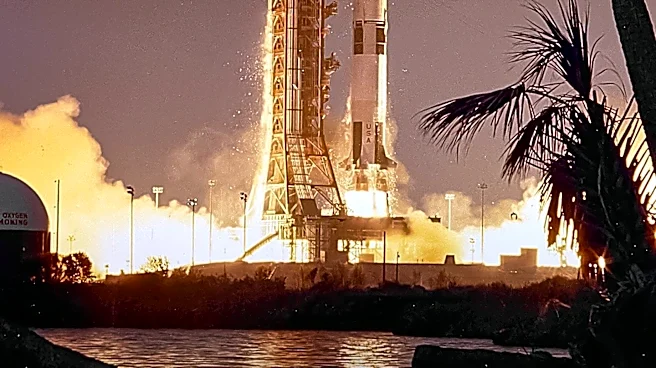

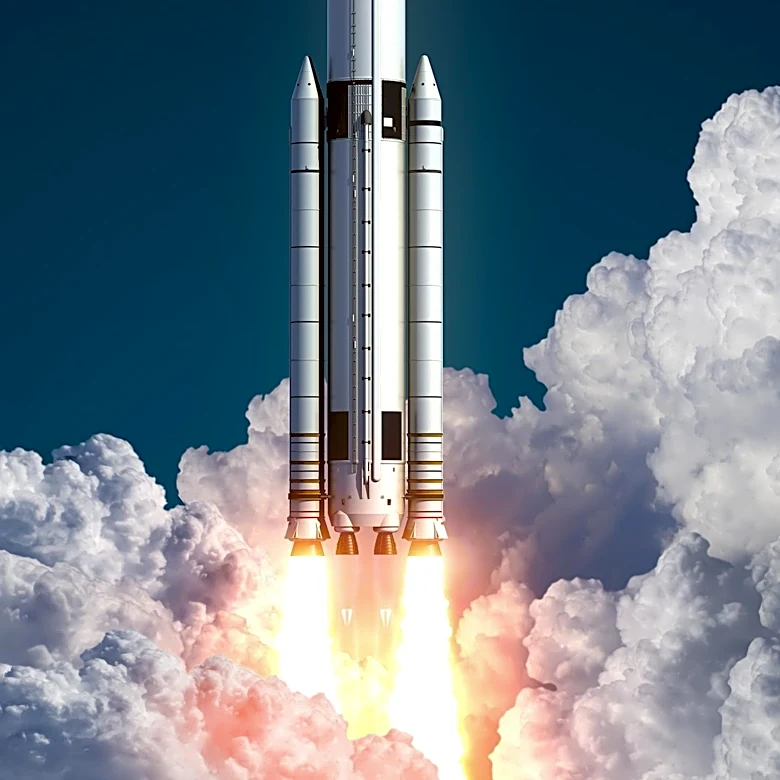



The Saturn IB rocket played a crucial role in the Apollo program, serving as a medium-lift launch vehicle that bridged the gap between earlier rockets and the more powerful Saturn V. Developed as an upgrade to the Saturn I, the Saturn IB was instrumental in testing the Apollo spacecraft and launching significant missions like Skylab and the Apollo-Soyuz Test Project. This article delves into the historical development and technical evolution of the Saturn IB,
highlighting its contributions to space exploration.
Early Development and Design
The Saturn IB's development began as an upgrade to the Saturn I, which was initially used for Earth orbital test missions. The need for a more powerful launch vehicle became apparent as the Apollo program progressed, leading to the decision to enhance the Saturn I. The primary modifications included replacing the S-IV second stage with the S-IVB, which was also used as the third stage of the Saturn V. Additionally, the S-I first stage was upgraded to the S-IB by improving engine thrust and reducing weight.
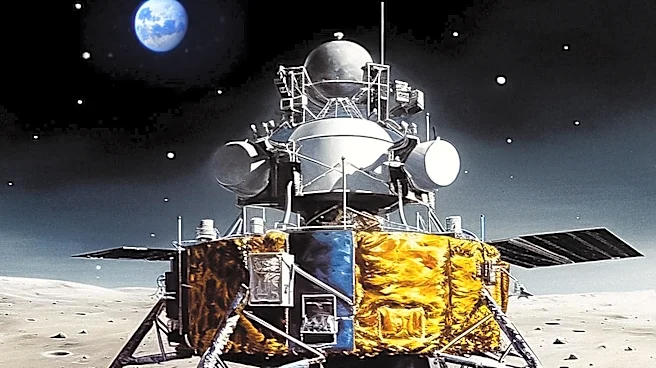
These changes significantly increased the payload capacity of the Saturn IB, allowing it to carry at least 35,000 pounds into Earth orbit. This capability was essential for testing the Apollo command and service modules with a partial fuel load and for launching the lunar excursion module separately for both uncrewed and crewed Earth orbital testing. The Saturn IB thus became a vital component in the preparation for the eventual lunar missions.
Key Missions and Achievements
The Saturn IB was used for several important missions between 1973 and 1975. It launched three crewed Skylab flights, which were pivotal in advancing human spaceflight and conducting scientific research in space. The Skylab missions demonstrated the feasibility of long-duration space habitation and provided valuable data on the effects of microgravity on the human body.
In addition to the Skylab missions, the Saturn IB was also used for the Apollo-Soyuz Test Project, a historic joint mission between the United States and the Soviet Union. This mission marked the first international human spaceflight and symbolized a thaw in Cold War tensions. The Saturn IB's role in these missions underscored its versatility and reliability as a launch vehicle.
Technical Innovations and Legacy
The Saturn IB featured several technical innovations that contributed to its success. The use of the S-IVB stage, with its single J-2 engine, was a significant advancement over the earlier cluster of RL-10 engines. This design choice improved the efficiency and reliability of the rocket, making it well-suited for its intended missions.
The Saturn IB's legacy extends beyond its immediate contributions to the Apollo program. It provided valuable experience and data that informed the development of future launch vehicles. The technical advancements and mission successes of the Saturn IB helped pave the way for more ambitious space exploration endeavors, cementing its place in the history of spaceflight.