


Uttana Shishosana, often translated as the "extended puppy pose" or "great 'puppy'," is a significant asana in the practice of yoga. This pose, recognized across various Wikipedia editions, offers a unique combination of stretching and grounding. Its name itself provides insight into its nature, drawing from ancient Sanskrit terms that describe its form and intention. Understanding the etymology and the precise physical description of Uttana Shishosana is key
to appreciating its place within the broader spectrum of yoga practices.
Etymology and Naming of the Pose
The name Uttana Shishosana is rooted in Sanskrit, a classical Indo-Aryan language that is the liturgical language of Hinduism and Jainism. The term "uttana" translates to "stretched," indicating the elongating action involved in the pose. "Shisu" refers to a "puppy," evoking the image of a young dog stretching its front paws forward while keeping its hindquarters raised. Finally, "asana" is the Sanskrit word for "pose" or "posture," a fundamental component of yoga terminology.
Together, these words form "Uttana Shishosana," literally meaning "stretched puppy pose." This descriptive naming convention is common in yoga, where the names of poses often reflect their appearance, the benefits they offer, or the animals they mimic. The Welsh Wikipedia also mentions it as an advanced asana, suggesting its complexity or the depth of stretch it provides.
Detailed Description of the Pose
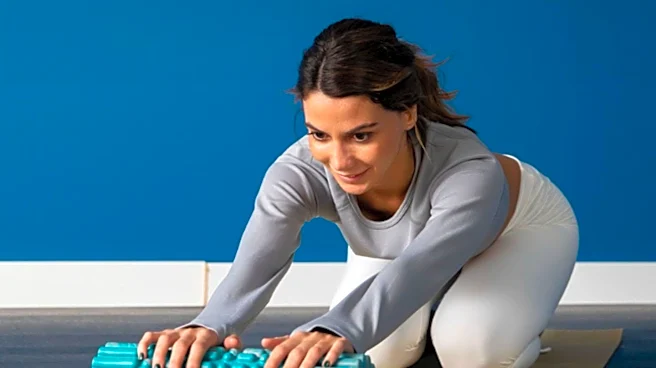
The execution of Uttana Shishosana begins from the cat pose, a foundational kneeling posture. From this starting point, practitioners transition from supporting themselves on their palms to resting on their elbows. These elbows are positioned directly beneath the shoulders, ensuring proper alignment and stability. The hands are then carefully stretched forward, extending the reach of the upper body.
The next crucial step involves lowering the chest towards the ground. As the chest descends, the head can be supported by either the forehead or the chin resting on the floor. Throughout this movement, it is essential to maintain the position of the knees directly under the hips, preventing them from splaying out or moving too far forward or backward. This alignment helps to deepen the stretch in the spine and shoulders while protecting the lower back. The pose is designed to create a significant stretch in the spine and shoulders, making it a beneficial posture for opening the chest and improving flexibility.
Classification and Related Asanas
Uttana Shishosana is categorized among various asanas, or yoga postures. While the Czech Wikipedia describes it as one of the asanas, the Welsh Wikipedia specifically notes it as an advanced asana, suggesting a level of proficiency may be required to perform it fully and safely. This classification highlights its potential for deeper physical engagement compared to more basic poses.
Within the broader context of yoga, Uttana Shishosana shares characteristics with other poses that focus on spinal extension and shoulder opening. For instance, it can be seen as a preparatory pose for deeper backbends or as a counter-pose for forward folds. The inclusion of Uttana Shishosana in lists of asanas alongside others like Balasana (Child's Pose) and various inverted or seated poses underscores its integral role in a comprehensive yoga practice. Its emphasis on stretching and lengthening the spine makes it a valuable addition to sequences aimed at improving posture and releasing tension in the upper body.