





The men's 100 meter freestyle event at the 1964 Olympic Games in Tokyo was a meticulously structured competition designed to identify the fastest swimmer through a series of elimination rounds. Held over two days, October 11 and 12, the event utilized a three-round format that had been in place since 1952, ensuring that only the most consistently high-performing athletes advanced. This format, involving heats, semifinals, and a final, was crucial
in managing a large field of international competitors and building anticipation for the ultimate showdown.
The Competition Structure: Heats and Advancement
The initial stage of the competition consisted of nine heats. Each heat featured either seven or eight swimmers, all vying for a chance to move forward. A key aspect of the advancement rule, introduced in 1952, was that a swimmer's specific place within their heat was not the sole determinant for progression. Instead, advancement was based on the fastest times recorded across all heats in a given round. This system ensured that even a swimmer in a particularly fast heat who might not have placed first or second could still advance if their time was among the overall quickest.
From these nine heats, the top 24 swimmers, based on their times, earned a spot in the semifinals. This rigorous selection process meant that athletes had to perform at their peak from the very beginning of the competition. The emphasis on time rather than heat placement added an extra layer of pressure, as swimmers were not just competing against those in their lane but against the entire field. This format also allowed for swim-offs to be used if necessary to break any ties in times, ensuring fairness in advancement.
Semifinals and the Path to the Final
Following the heats, the 24 qualifiers were divided into three semifinals, with each semifinal comprising eight swimmers. Similar to the heats, the goal in the semifinals was to achieve one of the fastest times to secure a coveted spot in the final. The top eight swimmers from across these three semifinal races, again determined by their recorded times, were the ones who advanced to the ultimate final round. This stage was particularly intense, as the field had been significantly narrowed, and the competition was even fiercer.
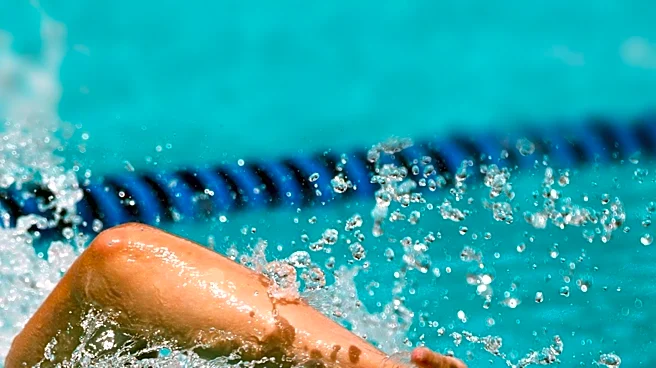
This structured progression meant that swimmers had to maintain their speed and consistency through multiple races. The 100 meter freestyle event itself involved swimming two lengths of an Olympic-sized 50-meter pool. The competition used freestyle swimming, which, unlike backstroke, breaststroke, or butterfly, does not regulate the method of stroke. Consequently, nearly all competitors employed the front crawl or a variation of it, a technique known for its efficiency and speed. The final race, featuring the eight fastest swimmers, was the culmination of this multi-stage process, ultimately determining the Olympic medalist in this prestigious event.