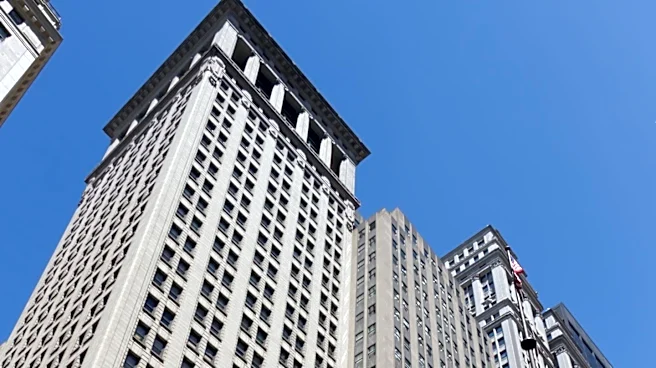



280 Broadway, a prominent structure in Manhattan's Civic Center, holds a storied place in New York City's historical landscape. Known by several names throughout its existence—the A. T. Stewart Company Store, the Marble Palace, and The Sun Building—it has witnessed significant transformations since its construction between 1845 and 1848. This building is celebrated as the site of the United States' first department store, a revolutionary concept introduced
by Alexander Turney Stewart. Its architectural evolution, from an Italianate commercial pioneer to a modern office and retail space, mirrors the dynamic growth of New York City itself. Designated a National Historic Landmark in 1978, 280 Broadway's history is a microcosm of urban development and commercial innovation.
From Dry Goods to Department Store: The A. T. Stewart Era
The story of 280 Broadway begins with its original purpose as the A. T. Stewart Dry Goods Store. Built between 1845 and 1846, the building was designed by John B. Snook in the Italianate style, marking it as the city's first commercial structure in this architectural mode. Initially located at the intersection of Broadway and Reade Street, the store quickly expanded its footprint, growing down Broadway and along Chambers Street. This expansion was a direct result of the success of Stewart's innovative retail model, which offered a wide array of goods, effectively creating the nation's first department store. The building's distinctive cladding in Tuckahoe marble, combined with the pioneering use of cast-iron supports on the ground floors after 1850, earned it the evocative nickname "The Marble Palace," reflecting its grandeur and advanced construction for the mid-19th century.
A New Chapter: Warehouse, Offices, and The Sun Building
In 1862, the A. T. Stewart store relocated to a new, larger building uptown, leaving 280 Broadway to embark on a new phase of its existence. The building was repurposed as a warehouse, adapting to the evolving commercial needs of the city. This period of transition was followed by another significant change in 1884, when Edward D. Harris designed an addition that saw two floors added to the original five. This renovation transformed the structure into office spaces, demonstrating its versatility and capacity for adaptation. A major shift occurred in 1917 when *The New York Sun* newspaper acquired the building, subsequently renaming it The Sun Building. For decades, it served as the headquarters for this influential publication, becoming a landmark in the city's media landscape.
Public Ownership and Modern Rehabilitation
The mid-20th century brought another significant change in ownership and purpose for 280 Broadway. In 1966, New York City acquired the building as part of a planned Civic Center redevelopment initiative. Although the broader redevelopment plan did not come to fruition, the city retained ownership of the historic structure. Decades later, between 1995 and 2002, the building underwent a comprehensive rehabilitation project, overseen by the architectural firm Beyer Blinder Belle. This extensive renovation ensured the building's structural integrity and modernized its facilities while preserving its historical character. Today, the upper floors of 280 Broadway are utilized by the city's Department of Buildings, continuing its role in civic administration. The first and second floors remain dedicated to retail stores, maintaining a connection to its commercial origins. Its dual designation as a New York City landmark and a National Historic Landmark underscores its enduring significance and the successful efforts to preserve its rich history for future generations.
Architectural Details and Landmark Status
The construction of 280 Broadway spanned from 1845 to 1848, with John B. Snook as the primary architect. Joseph Trench & Co. also contributed to additions made between 1850 and 1852. The building's historical importance was formally recognized on June 2, 1978, when it was added to the National Register of Historic Places and simultaneously designated a National Historic Landmark. This status acknowledges its pioneering role in American retail and its architectural significance as an early example of the Italianate style in commercial buildings, as well as its innovative use of materials like Tuckahoe marble and cast-iron.