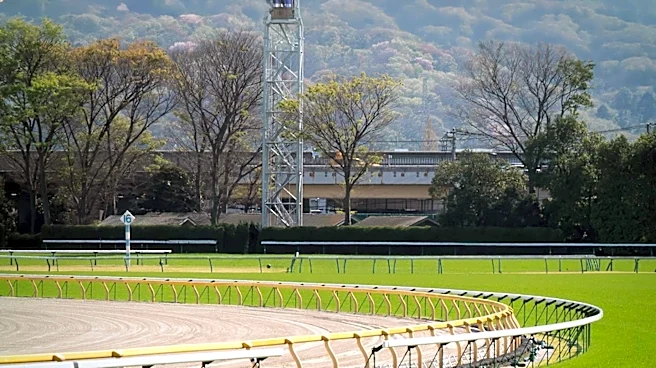









Pimlico Race Course, a renowned thoroughbred horse racing track in Baltimore, Maryland, boasts a rich history spanning over 150 years. Officially opening its gates on October 25, 1870, the track quickly established itself as a significant venue in American horse racing. Its name, derived from Olde Ben Pimlico's Tavern in London, reflects a connection to English heritage, while its nickname, "Old Hilltop," refers to a small rise in the infield that
became a popular gathering spot for trainers and enthusiasts. From its inaugural race to its recent ownership changes and renovations, Pimlico has continuously evolved while maintaining its status as a cornerstone of the sport.
The Grand Opening and Early Years
The inaugural event at Pimlico Race Course on October 25, 1870, was a memorable occasion, drawing approximately 12,000 attendees. Many arrived via special race trains arranged by the Northern Central Railway, highlighting the event's importance. The first running of the Dinner Party Stakes saw the colt Preakness emerge victorious. This horse would later be honored when the 1873 Preakness Stakes was named after him, cementing his place in the track's early lore.
Just a few years after its opening, Pimlico hosted a remarkable event known as "The Great Race" on October 24, 1877. So significant was this race that the United States Congress reportedly shut down for the day to allow its members to attend. The event featured a 2½-mile match race between three champions: Ten Broeck, the Kentucky champion; Tom Ochiltree, the Eastern champion and 1875 Preakness Stakes winner; and Parole, a gelding. An estimated 20,000 people crowded into Pimlico to witness Parole, with jockey William Barrett, prevail with a late run, finishing three lengths ahead of Ten Broeck and six ahead of Tom Ochiltree. This historic race is commemorated by a four-ton stone bas relief, copied from a Currier & Ives print and sculpted by Bernard Zuckerman, which hangs over the clubhouse entrance. The 30-foot long, 10-foot high artwork is gilded in 24-karat gold leaf.
Navigating Challenges and Architectural Evolution
Pimlico Race Course demonstrated resilience throughout the 20th century, weathering significant challenges such as the 1904 Great Fire of Baltimore and an anti-gambling movement in 1910. Its enduring importance was perhaps best articulated by Alfred G. Vanderbilt, who stated, "Pimlico is more than a dirt track bounded by four streets. It is an accepted American institution, devoted to the best interests of a great sport, graced by time, respected for its honorable past." The track also gained fame as the site of the iconic match race on November 1, 1938, where Seabiscuit famously defeated War Admiral in the second Pimlico Special before a crowd of 43,000.
The original racetrack featured a notable architectural element: the members' Clubhouse, a "steamboat Gothic-era" design located on the first turn. This Clubhouse was topped by a weathervane, which was repainted annually in the colors of the Preakness winner. In 1956, the old Clubhouse underwent restoration, with private rooms on the third floor named after Triple Crown winners. The President's room housed racing archives, and the second floor contained the Jockey's Hall of Fame. This richly decorated building, home to a significant collection of racing art, tragically burned down on June 17, 1966, after a fire started in its front rooms. The only item salvaged was the weathervane, which was subsequently relocated to a replica Victorian cupola in the infield.
Modern Era and Future Renovations
The 21st century brought significant changes in ownership and operations for Pimlico. In 2010, an agreement was reached to sell the Maryland Jockey Club tracks, including Pimlico and Laurel Park, to MI Development from Magna Entertainment Corporation. Penn National Gaming later joined MI Development in jointly owning and operating the Maryland Jockey Club. By June 2011, The Stronach Group, owned by Canadian horse breeder Frank Stronach, took control after buying out Penn National Gaming's minority stake. The Stronach Group owned Pimlico until 2024, when ownership transferred to the state-run Maryland Thoroughbred Racetrack Operating Authority (MTROA).
In September 2024, Pimlico closed for extensive renovations. As part of this project, all of Pimlico's racing dates, with the exception of the 2025 Preakness Stakes, were transferred to Laurel Park until the renovations are complete. This period marks another significant chapter in Pimlico's long history, as the track prepares for its next phase, aiming to continue its legacy in thoroughbred racing.