







The White Sands National Park in New Mexico holds a remarkable collection of fossilized human footprints, offering an unparalleled glimpse into North America during the last Ice Age. These ancient tracks, estimated to be up to 23,000 years old, challenge previously held beliefs about when humans first arrived on the continent. Discovered in 2021 and further confirmed by studies in 2023, these footprints are not isolated finds but are part of a larger
tapestry of fossilized tracks that include those of extinct megafauna, providing a unique record of human and animal interactions in a dramatically different landscape.
A Prehistoric Landscape Revealed
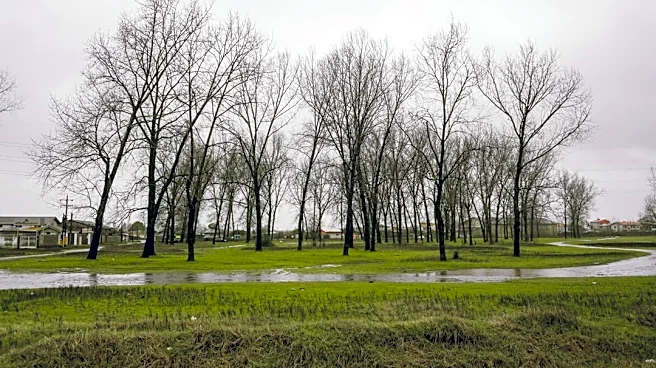
The 61 human footprints were found along the shore of what was once Lake Otero, a large ice age era lake in the Tularosa Basin. During that period, the climate in the region was far less arid than it is today. Instead of the gypsum dunes that characterize White Sands National Park now, the area boasted extensive grasslands and abundant vegetation. This lush environment supported a diverse array of wildlife, including the now-extinct Columbian mammoths, ground sloths, American lions, and dire wolves, whose tracks are also preserved alongside those of humans. The human prints themselves are notable for their "good anatomical definition," showing visible heel impressions, medial longitudinal arches, and toe pads, and are described as flatter-footed, similar to ancient footprints found in Namibia.
The prints are not confined to a single layer but are found in seven different soil layers, indicating human occupation spanning approximately 2,000 years. This multi-layered evidence suggests a sustained presence of people in the region over a significant period, rather than just a fleeting visit. The preservation of these tracks in the gypsum-rich sediments of the ancient lakebed provides an extraordinary record, allowing researchers to reconstruct aspects of daily life and environmental conditions from millennia ago.
Insights into Daily Life and Interactions
The fossilized footprints offer several compelling insights into the lives of the people who made them. One particularly striking set of prints appears to depict human hunters tracking a giant sloth. The variations in the sloth's tracks suggest it stood on its hind legs and spun around, possibly indicating fear or an attempt to defend itself. While the outcome of this ancient hunt remains unknown, the tracks provide direct evidence of humans engaging with formidable megafauna.
Another poignant set of prints tells the story of an older person, possibly a woman or adolescent male, walking with a very young child for over a mile. The tracks suggest the older individual sometimes carried the child, as evidenced by slipping marks indicating additional weight, and then set the child down. The fact that the older person made a round trip, leaving the toddler at a destination, implies human habitation at multiple locations within the White Sands area. Intriguingly, a mammoth crossed their path between the outbound and return legs of the journey, seemingly without altering its course or showing any concern about the human presence, highlighting the coexistence of these species.
The Role of Children and Teenagers
Perhaps one of the most surprising findings is that the vast majority of the human prints were made by teenagers and children. Few large adult footprints have been found in the excavated surfaces. This observation has led to the hypothesis that teenagers and children were assigned tasks such as "fetching and carrying" near the lake bed, while adults were likely engaged in more skilled activities elsewhere. This division of labor suggests a structured community, where different age groups had specific roles within the group's survival strategies.
The sheer volume of tracks in the White Sands area is also remarkable. It is estimated that, counting both human and animal tracks, there are hundreds of thousands of fossilized footprints. The United States National Park Service has recognized the profound importance of these discoveries, stating that the "fossilized footprints of White Sands are probably the most important resources in the Americas to understand the interaction of humans and extinct animals from the ice age." These ancient imprints continue to reshape our understanding of early human history in North America, providing tangible connections to a distant past.