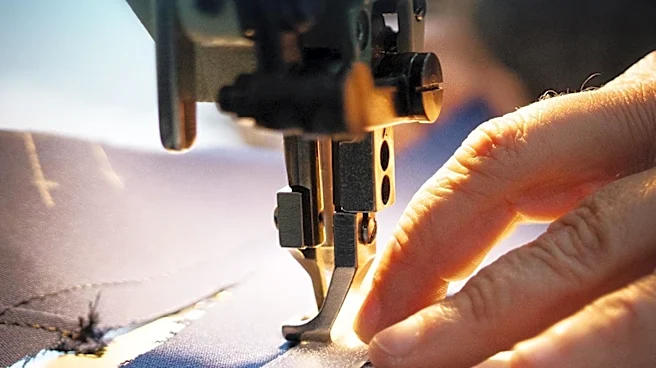






Industrial sewing machines have played a pivotal role in the manufacturing sector, revolutionizing the way clothing and textiles are produced. These machines are larger, faster, and more versatile than their domestic counterparts, making them essential for high-volume production. The invention of industrial sewing machines during the Industrial Revolution marked a significant turning point in the efficiency of clothing production, allowing manufacturers
to meet the growing demand for garments.
The Birth of Industrial Sewing Machines
The Industrial Revolution was a period of great innovation, and the invention of industrial sewing machines was one of its many breakthroughs. These machines were designed to increase the speed and efficiency of sewing, which was previously done by hand or with slower domestic machines. The introduction of industrial sewing machines allowed manufacturers to produce clothing on a much larger scale, meeting the demands of a rapidly growing population.
Industrial sewing machines were initially developed to handle the heavy fabrics used in workwear and uniforms. Their robust construction and powerful motors enabled them to sew through thick materials with ease, a task that would be challenging for domestic machines. This capability made them indispensable in factories, where speed and durability were crucial.
Technological Advancements
Over the years, industrial sewing machines have undergone significant technological advancements. Early models were simple and focused primarily on speed and durability. However, as technology progressed, manufacturers began to incorporate more sophisticated features into their machines. Modern industrial sewing machines are equipped with computerized controls, allowing for precise stitching and pattern creation.
These advancements have not only increased the efficiency of production but also expanded the range of applications for industrial sewing machines. Today, they are used in various industries, including automotive, aerospace, and furniture manufacturing, where precision and consistency are paramount.
Leading Manufacturers
Several companies have been at the forefront of industrial sewing machine manufacturing. Juki Corporation, a Japanese multinational, is one of the leading manufacturers in the industry. Known for its high-quality machines, Juki has facilities in Japan, China, and Vietnam, and markets its products globally. Union Special, an American company based in Huntley, Illinois, is another notable manufacturer. Founded in 1881, Union Special is one of the oldest sewing machine companies still in operation.
These manufacturers have contributed significantly to the evolution of industrial sewing machines, continually pushing the boundaries of technology and innovation. Their machines are used worldwide, helping industries produce high-quality products efficiently and reliably.