



The World Rally Car (WRC) specification marked a significant era in the World Rally Championship, spanning from 1997 to 2021. This period saw a fascinating evolution in rally car design, driven by changing regulations that granted manufacturers increasing freedom to innovate. Unlike their predecessors, the Group A cars, WRC vehicles did not require manufacturers to produce "homologation specials" – road-going versions built specifically to meet racing
approval. This shift allowed for a greater divergence between the rally cars and their production counterparts, leading to highly specialized machines optimized for performance on diverse terrains.
Early Regulations and Core Modifications (1997-2010)
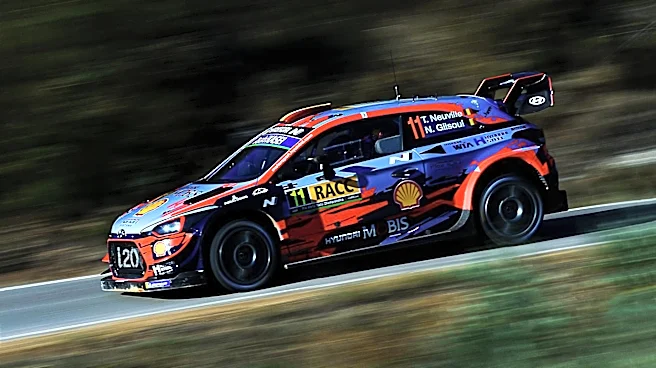
Between 1997 and 2010, the foundational regulations for World Rally Cars stipulated that they had to be based on a production car with a minimum run of 2,500 units. However, extensive modifications were permitted, transforming these base models into formidable rally machines. Engine displacement could be increased up to 2.0 liters, and forced induction, including anti-lag systems, was allowed. The addition of four-wheel drive became standard, alongside the fitment of sequential gearboxes. Suspension layouts and attachment points could be modified, and aerodynamic body alterations were common. To enhance performance, weight reduction was permitted down to a minimum of 1,230 kg, and chassis strengthening was undertaken for greater rigidity. Specific dimensions were also mandated, with a maximum width of 1,770 mm and front and rear tracks not exceeding 1,550 mm.
One of the most significant changes from the Group A era was the relaxation of homologation requirements. Manufacturers no longer needed to build road cars that mirrored all the characteristics of their WRC entries. This flexibility is evident in cars like the Peugeot 206, 307, Citroën Xsara, and Škoda Fabia. During this period, these models did not have road car variants equipped with a turbocharged petrol engine or four-wheel drive, highlighting the specialized nature of their WRC counterparts.
Power Control and Aerodynamic Freedom
To manage the immense power generated by these highly tuned engines, all forced induction cars were fitted with a 34 mm diameter air restrictor placed before the turbocharger inlet. This restrictor limited airflow to approximately 10 cubic meters per minute, with the intention of capping power output at around 220 kW (300 hp). Despite this, some WRC engines were believed to produce closer to 250–250 kW (330–340 hp). Engine development during this time focused less on achieving a high peak power output and more on creating a very wide powerband or power curve. Typically, power exceeding 220 kW (300 hp) was available from 3,000 rpm up to the 7,500 rpm maximum, with a peak of 250–250 kW (330–340 hp) occurring around 5,500 rpm. Even at 2,000 rpm, which was the engine idle speed in "stage" mode, power output was still slightly above 150 kW (200 hp).
Manufacturers were also granted more freedom to optimize aerodynamic performance. This included the integration of large brake cooling ducts within fairings that formed enlarged wheel arches, contributing to both cooling efficiency and downforce. This aerodynamic liberty allowed for more aggressive and performance-oriented body designs.
Technological Advancements and Cost-Cutting Measures
By 2004, World Rally Cars had become technological marvels, incorporating advanced systems such as ABS, electronic clutch control, paddle-shift gear changes, and traction control. They also featured three active differentials, ride height control linked with GPS, electronic dampers, and active suspension systems. These innovations significantly enhanced vehicle control and performance across varied rally conditions. In 2005, the maximum width of WRC cars was slightly increased from 1,770 mm to 1,800 mm, allowing for minor adjustments in design.
However, in an effort to curb escalating costs, new regulations were introduced in 2006. These changes mandated mechanical front and rear differentials, while the central differential was permitted to remain active. Active suspension and water injection systems were also prohibited. Further limitations were imposed on the changing of certain parts, including suspension components, steering systems, turbochargers, and gearboxes. Additionally, cars entered by a manufacturer had to use the same engine for two consecutive rallies, promoting greater reliability and strategic planning. These regulatory shifts aimed to balance technological advancement with financial sustainability within the sport.