



Mercury-Redstone 4 marked a significant milestone in the United States' journey into space. Launched on July 21, 1961, this mission was the second U.S. human spaceflight, featuring astronaut Virgil "Gus" Grissom aboard the Liberty Bell 7 spacecraft. Despite its challenges, the mission contributed valuable insights to the burgeoning field of space exploration.
Preparation and Launch
The preparation for Mercury-Redstone 4 began months before the actual launch. In January 1961,
NASA's Director of the Space Task Group, Robert Gilruth, informed Gus Grissom that he would be the primary pilot for the mission, with John Glenn as his backup. The Redstone launch vehicle, MRLV-8, arrived at Cape Canaveral on June 8, 1961, and was declared ready for the mission after a review on July 15.
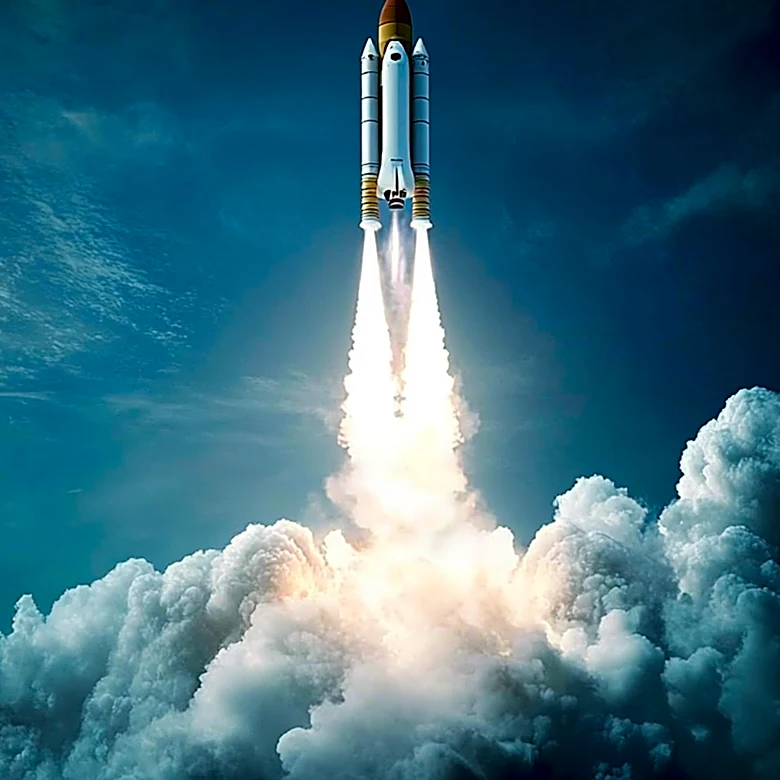
The launch was initially scheduled for July 16 but faced multiple delays due to weather conditions. On July 21, Grissom entered the Liberty Bell 7, and the spacecraft was launched at 12:20:36 UTC. The Redstone coasted for 10 seconds after engine cutoff, and Grissom experienced a sudden change in the horizon's color from light blue to jet black, marking the transition into space.
Flight and Reentry
During the flight, Grissom experienced a maximum acceleration of 6.33 g and a deceleration of 10.96 g. He observed the Earth from his window, noting landmarks such as Merritt Island and West Palm Beach. The spacecraft reached an apogee of 116 miles and a range of 299 miles.
Grissom's cabin pressure sealed off at the proper altitude, and he felt elated that the environmental control system was functioning well. The drogue parachute deployed at 21,000 feet, followed by the main parachute at 12,300 feet, ensuring a safe descent. Grissom reported his panel readings as the spacecraft reentered the atmosphere, with condensation and smoke trailing off the heatshield.
Splashdown and Aftermath
The mission concluded with a splashdown in the Atlantic Ocean. Grissom removed his oxygen hose and opened his visor, preparing for recovery. However, the hatch blew open unexpectedly, causing the capsule to take on water and sink. Grissom managed to escape safely, although the Liberty Bell 7 was lost to the ocean depths.
Despite the loss of the spacecraft, the mission was considered a success in terms of the data collected and the experience gained. The incident with the hatch led to further investigations and improvements in spacecraft design, contributing to the safety of future missions.