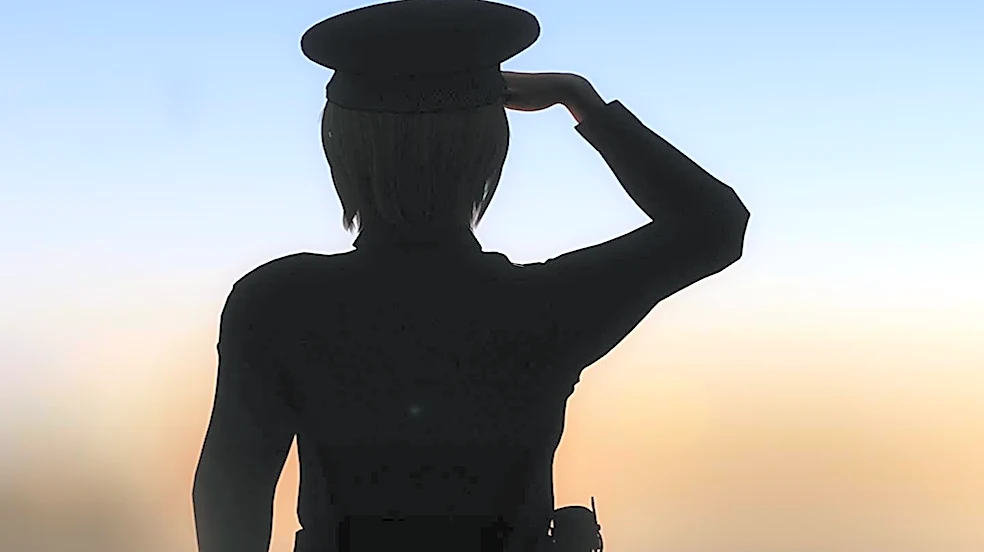




The Women Accepted for Volunteer Emergency Service, widely known as the WAVES, represented the women's branch of the United States Naval Reserve during World War II. Established on July 21, 1942, and signed into law by President Franklin D. Roosevelt on July 30, this program authorized the U.S. Navy to accept women as commissioned officers and enlisted personnel. The primary goal was to free up male officers and sailors for sea duty by having women fill
shore-based positions. Mildred H. McAfee, on leave from her role as president of Wellesley College, became the first director of the WAVES, commissioned as a lieutenant commander.
Formation and Early Growth
The legislation creating the WAVES stipulated that women could serve for the duration of the war plus six months. Initially, WAVES officers were assigned to recruiting stations across U.S. naval districts, later joined by enlisted personnel who had received recruiter training. The advertising campaign focused on patriotism and the critical need for women to enable men to serve overseas. Director McAfee emphasized maintaining a "ladylike fashion" in all advertising, aiming to appeal to conservative parents, schools, and churches, as well as the young women themselves.
By the end of 1942, the WAVES had grown to include 770 officers and 3,109 enlisted women. This rapid expansion continued throughout the war. By July 3, 1945, the ranks of the WAVES had swelled significantly, reaching a total of 86,291 members. This number included 8,475 officers, 73,816 enlisted women, and approximately 4,000 individuals who were still undergoing training.
Recruitment and Diversity Challenges
Eligibility requirements for officer candidates included an age range of 20 to 49, a college degree, or two years of college combined with two years of equivalent professional or business experience. Enlisted personnel needed to be between 20 and 35 years old, possess a high school or business diploma, or have equivalent experience. U.S. citizenship was a mandatory requirement for all applicants. The WAVES were predominantly white and middle class, representing every state, with the largest numbers coming from New York, California, Pennsylvania, Illinois, Massachusetts, and Ohio.
Despite the legislation being silent on race, the initial policy excluded African-American women. Secretary of the Navy Frank Knox had stated his opposition to enlisting Black WAVES. However, after Knox's death in April 1944, his successor, James V. Forrestal, began efforts to reform the Navy's racial policies. On July 28, 1944, Forrestal proposed accepting WAVES on an integrated basis. Although there was an initial attempt to compromise with segregated living quarters and mess facilities, President Roosevelt, under pressure and facing criticism during an election year, instructed the Navy on October 19, 1944, to accept African-American women into the WAVES. The first African-American WAVES officers, Lieutenant Harriet Ida Pickens and Ensign Frances Wills, were commissioned on December 21, 1944, with recruitment of African-American women beginning the following week. The plan for segregated quarters proved impractical due to the size of recruit companies and insufficient numbers of African-American recruits to form entire segregated units. Director McAfee successfully appealed to Forrestal, who then dropped the segregation requirement. By July 1945, about 72 African-American WAVES had completed recruit training. While training was integrated, some restrictions persisted, such as segregated living accommodations on certain bases and limitations in specialty assignments.
Assignments and Contributions
The WAVES served in 900 shore stations across the continental United States. Initially, they were prohibited from serving on ships or outside the country. However, in September 1944, Congress amended the law to allow WAVES to volunteer for service in the territories of Alaska and Hawaii, with Hawaii becoming the only overseas station permanently staffed by WAVES. Officers filled roles as doctors, attorneys, engineers, mathematicians, and chaplains. Notably, mathematician Grace Hopper was assigned to Harvard University to work on the Mark I computer project, and Elsa Gardner became the only female nautical engineer in the U.S. Navy.
Most enlisted WAVES performed jobs traditionally associated with women, such as clerical work, healthcare, or storekeeping. However, some took on roles typically held by men, including aviation machinists, aviation metalsmiths, parachute riggers, control tower operators, radio operators, yeomen, and statisticians. The Washington, D.C., area had the largest concentration of WAVES, with some 20,000 women comprising 55 percent of the Navy's personnel there. They were responsible for 75 percent of message encoding and decoding in the Office of Naval Operations, made up 70 percent of the staff in the Bureau of Naval Personnel, and handled 80 percent of the Navy's mail service in Postal Affairs. Approximately 13,000 WAVES served in the Navy Hospital Corps, and the Bureau of Aeronautics utilized 23,000 women in various capacities. By the end of the war, WAVES constituted 18 percent of naval personnel assigned to shore stations.
Demobilization and Legacy
At the war's end, the Navy established five separation centers for the demobilization of WAVES and Navy nurses. The process began on October 1, 1945, with about 9,000 WAVES separated within a month. By the end of 1946, nearly 21,000 more had been discharged. Although a small contingent of WAVES remained to assist with the Navy's overall demobilization, Vice Admiral Louis Denfeld, chief of the Bureau of Personnel, announced plans to retain a WAVE component in the Naval Reserve and a reasonable number on active duty if Congress approved. On July 30, 1948, the Women's Armed Services Integration Act was signed into law, allowing women to serve permanently in the regular Army or Navy. While this was a significant advancement, the wartime prohibition on women serving in combat roles was carried over, limiting their integration into the military for decades. Despite this, the WAVES received widespread accolades from senior personnel, with Secretary of the Navy Forrestal, Fleet Admiral King, and Fleet Admiral Nimitz all commending their discipline, skill, and contributions to naval service and morale. Their accomplishments were instrumental in securing a permanent place for women in the regular Navy.