



Utkatasana, commonly known as Chair Pose, is a standing yoga posture that has undergone significant transformation over the centuries. Originally depicted as a low squatting pose in medieval hatha yoga, it has evolved into the chair-like stance familiar to modern yoga practitioners. This article delves into the historical journey of Utkatasana, tracing its roots and examining how it has been shaped by influential figures in yoga.
Origins and Early Depictions
The name Utkatasana
is derived from the Sanskrit words "utkata," meaning wild or intense, and "asana," meaning posture or seat. This name reflects the pose's powerful nature, which has been a part of yoga practice for centuries. In the 19th century, Utkatasana was illustrated in the Sritattvanidhi, a comprehensive treatise on yoga, as a low squatting pose. This version of the pose involved the yogin squatting down onto the heels, a posture closely resembling Upaveshasana.
During this period, the pose was not widely recognized as a standing posture. Instead, it was one of many asanas practiced for its physical and meditative benefits. The squatting form of Utkatasana was part of a broader tradition of yoga that emphasized grounding and stability, qualities that were essential for meditation and spiritual practice.
Modern Transformation
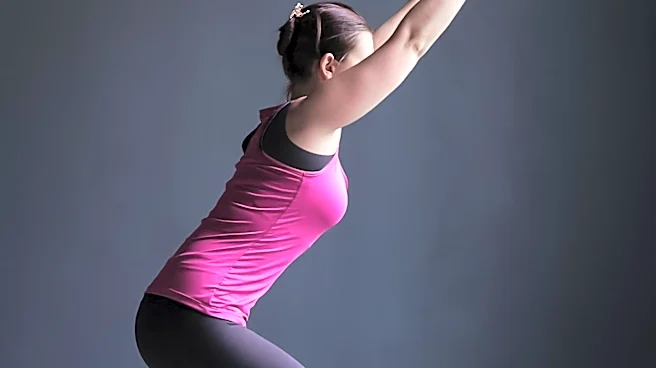
The transformation of Utkatasana into its modern chair-like form is attributed to the influential yoga teacher Krishnamacharya. Known as the father of modern yoga, Krishnamacharya played a pivotal role in popularizing yoga as a form of exercise. He reimagined Utkatasana as a standing pose, where the practitioner bends the knees and extends the arms overhead, creating a shape reminiscent of sitting in an invisible chair.
This modern interpretation of Utkatasana emphasizes strength and endurance, particularly in the legs and core. The pose requires the practitioner to engage multiple muscle groups, promoting balance and stability. As a result, Utkatasana has become a staple in many yoga sequences, valued for its ability to build physical strength and mental focus.
Influence and Variations
Utkatasana's evolution has also led to the development of several variations, each offering unique benefits. Ardha Utkatasana, for example, involves bending the knees closer to a right angle, bringing the thighs parallel to the floor. This variation increases the intensity of the pose, challenging the practitioner's strength and balance.
Another variation, Parivritta Utkatasana, introduces a twist to the pose. In this version, the practitioner presses the hands together in front of the chest and rotates the torso, bringing the lower elbow to the outside of the opposite knee. This twist enhances the pose's detoxifying effects and improves spinal flexibility.
Through its historical evolution and modern adaptations, Utkatasana has remained a powerful and dynamic pose within the yoga tradition. Its journey from a humble squat to a commanding chair pose reflects the broader transformation of yoga itself, as it continues to adapt and thrive in contemporary practice.