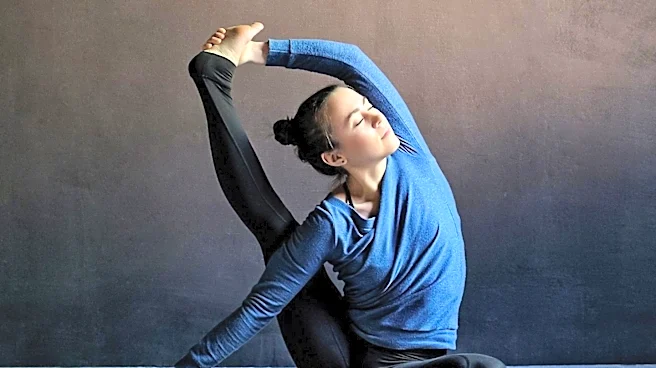







Eka Pada Rajakapotasana, or the One-legged King Pigeon Pose, is a prominent asana in modern yoga known for its elegance and flexibility. This pose has evolved over time, with its roots traced back to the teachings of Krishnamacharya and his pupils. Understanding its origins and development provides insight into its significance in contemporary yoga practice.
Historical Roots
The name Eka Pada Rajakapotasana is derived from Sanskrit, where "eka" means "one," "pada"
means "foot," "raja" means "king," "kapota" means "pigeon," and "asana" means "posture." This asana was described in the 20th century by two of Krishnamacharya's pupils, Pattabhi Jois and B. K. S. Iyengar. Both of these influential figures in the yoga world contributed to the popularization and adaptation of this pose in their respective styles.
Pattabhi Jois incorporated Eka Pada Rajakapotasana into his Ashtanga Vinyasa Yoga, emphasizing the dynamic flow and strength required to perform the pose. B. K. S. Iyengar, on the other hand, included it in his book "Light on Yoga," highlighting the alignment and precision necessary for its execution.
Modern Variations
Over the years, several variations of Eka Pada Rajakapotasana have emerged, each offering different benefits and challenges. The Yin Yoga form of the pose is known as Swan Pose, which focuses on deep, passive stretching. In Aerial yoga, the pose is adapted into the Flying Pigeon Pose, where the practitioner is supported in a hammock, allowing for a unique experience of the asana.
These variations demonstrate the adaptability of Eka Pada Rajakapotasana, making it accessible to practitioners of different levels and preferences. The pose is often used in advertising to convey qualities such as flexibility and grace, further cementing its place in popular culture.
Cultural Impact
Eka Pada Rajakapotasana has become a symbol of flexibility and elegance in the yoga community. Its presence in advertising and media highlights its aesthetic appeal and the aspirational qualities it represents. The pose's ability to open the hips and stretch the psoas muscle makes it a favorite among practitioners seeking to improve their flexibility and posture.
The evolution of Eka Pada Rajakapotasana reflects the broader trends in modern yoga, where traditional poses are adapted and modified to suit contemporary needs and preferences. As yoga continues to grow in popularity, poses like Eka Pada Rajakapotasana will likely continue to evolve, offering new ways for practitioners to explore their practice.