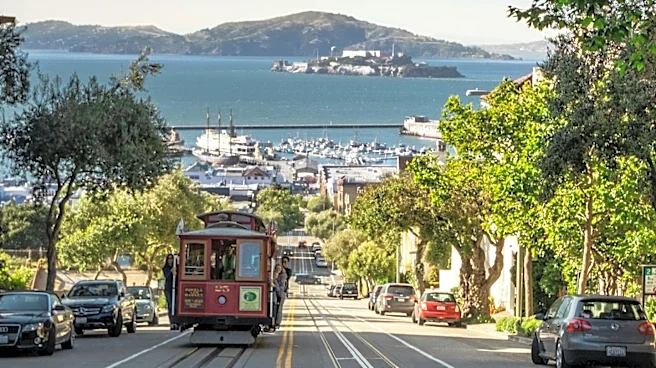





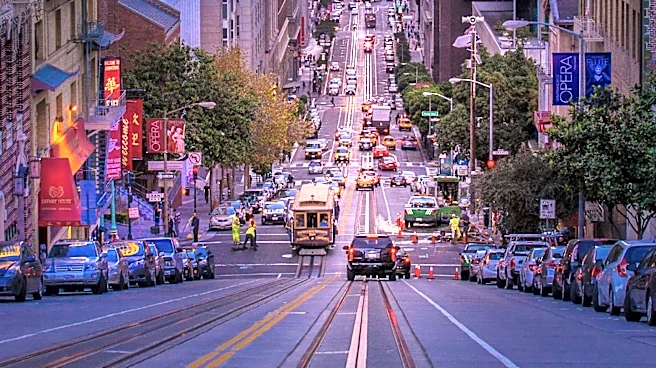
San Francisco's iconic cable cars owe their existence to a groundbreaking innovation that began service on September 1, 1873: the Clay Street Hill Railroad. This pioneering system was the first successful cable-hauled street railway in the city, fundamentally changing urban transportation by conquering the steep inclines of Nob Hill. Developed under the vision of Andrew Smith Hallidie and engineered by William Eppelsheimer, this railway introduced
a revolutionary grip-and-cable system that would soon become the global standard for cable railways. While the original tracks are no longer in operation, the Clay Street Hill Railroad remains celebrated as the prototype for modern cable street railways, with one of its original grip cars preserved as a testament to its enduring legacy.
Conquering San Francisco's Hills: The Genesis of a New System
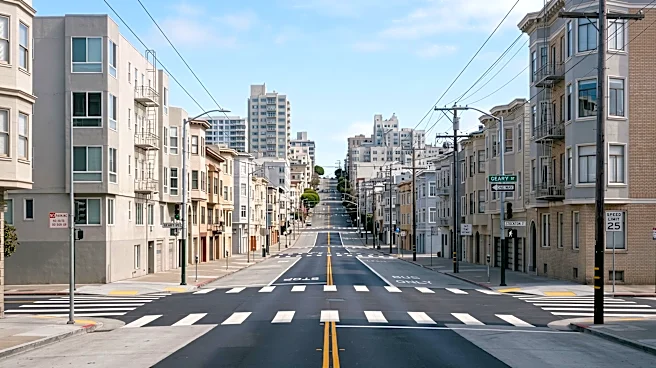
The challenge of San Francisco's formidable hills had long plagued urban transit. Traditional horse-drawn streetcars struggled with the steep grades, leading to significant strain on the animals. The Clay Street Hill Railroad was conceived to overcome this very problem. Initially, the line was even advertised to potential bond buyers as a standard horsecar line, despite the daunting prospect of a 348-foot rise over just six city blocks. This early marketing perhaps understated the radical departure the system would represent.
Andrew Smith Hallidie emerged as the main promoter of this ambitious project. While accounts vary regarding his exact role in the railway's inception, one version suggests he took over promotion when the initial backer, Benjamin Brooks, failed to secure the necessary capital. Another narrative credits Hallidie as the primary instigator, driven by a desire to alleviate the suffering of horses that toiled pulling streetcars up Jackson Street. Regardless of the precise origin story, Hallidie's leadership, combined with William Eppelsheimer's engineering expertise, was crucial in bringing this innovative transportation solution to life.
Overcoming Early Hurdles and Achieving Success
The path to operation was not without its challenges. A key requirement of the franchise was that the first run had to occur no later than August 1, 1873. Some historical accounts suggest this inaugural run actually took place a day late, on August 2. However, the city ultimately chose not to void the franchise, allowing the project to proceed. A memorable anecdote from this period recounts how the first gripman hired by Hallidie, intimidated by the steep descent from Jones Street, refused to operate the car. In response, Hallidie himself took the controls, successfully navigating the car down and back up the hill without incident, demonstrating the system's viability.
Once regular service commenced on September 1, 1873, the Clay Street line quickly proved to be a significant financial success. Its efficiency and ability to handle the city's challenging topography made it immensely popular. Within just one year of operation, the railway was transporting an impressive 3,000 passengers daily. Its success even drew the attention of dignitaries, with King Kalākaua visiting San Francisco and inspecting the new railway just months after its opening, highlighting its status as a marvel of modern engineering.
Legacy and Evolution of the Prototype System
The Clay Street Hill Railroad's influence extended far beyond its initial route. It introduced the grip-and-cable system that became the foundational model for cable railways worldwide. While the original line itself underwent several transformations, its impact was permanent. In 1888, it was absorbed into the Sacramento-Clay line of the Ferries and Cliff House Railway, becoming a component of a larger network. The line also holds the distinction of having the first section of cable route to be abandoned in San Francisco, with tracks between Larkin and Van Ness removed in 1891. Despite these changes and its eventual demolition on February 15, 1942, the Clay Street Hill Railroad's role as the pioneering prototype for modern cable street railways remains undisputed. Grip car No. 8, preserved at the San Francisco Cable Car Museum, serves as a tangible link to this crucial piece of transportation history.