






The American Library Association (ALA) established its highest honor, the Honorary Membership, in 1879, just three years after its founding. This award was conceived to recognize individuals, living citizens of any country, whose contributions to librarianship or a closely related field were so exceptional that they held lasting importance for the advancement of library service as a whole. The intention behind this award was not only to honor the individual but also
to reflect positively upon the ALA itself, underscoring the organization's commitment to recognizing excellence and significant impact within the library world.
The Inaugural Honorees of 1879
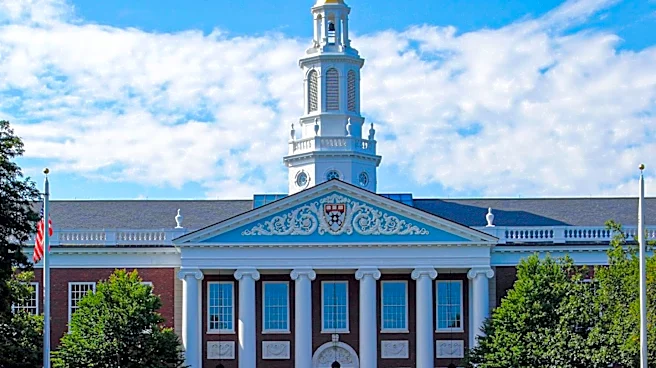
The very first Honorary Memberships were bestowed in 1879 upon two distinguished figures: Charles William Eliot and Frederick O. Prince. Charles William Eliot was the President of Harvard University at the time, a position of considerable influence in American education and intellectual life. His recognition by the ALA signaled the organization's desire to connect with and acknowledge leaders in broader academic and cultural spheres. Frederick O. Prince, the other inaugural recipient, was a trustee of the Boston Public Library. Prince's involvement extended to advocating for and overseeing the construction of the library's significant McKim Building in Copley Square, demonstrating a direct and tangible contribution to library infrastructure and public access.
Expanding the Circle of Recognition in 1895
After the initial awards, the ALA continued to selectively grant Honorary Memberships. A notable year for this recognition was 1895, when a group of individuals described as "all survivors of the Librarians Convention of 1853" were elected to honorary membership. This collective honor paid tribute to an earlier generation of library pioneers who had contributed to the field even before the formal establishment of the ALA. Among those recognized in 1895 were Willard Fiske, Daniel Coit Gilman, Edwin H. Grant, S. Hastings Grant, Reuben Aldridge Guild, Edward Everett Hale, Ezekiel A. Harris, Charles W. Jencks, and Anson Judd Upson. This act underscored the ALA's appreciation for its historical roots and the foundational work done by those who came before.
Other Notable 19th-Century Recipients
Throughout the remainder of the 19th century, other significant figures were also recognized. In 1893, Henry Barnard, a U.S. Commissioner of Education, received the honor, highlighting the intersection of library development with broader educational initiatives. Bishop John H. Vincent, the founder of the Chautauqua Institution, was awarded Honorary Membership in 1898, acknowledging his role in adult education and cultural enrichment, which often intertwined with library services. The final 19th-century recipient listed was Andrew Carnegie in 1899. Carnegie, an industrialist and philanthropist, became renowned for funding 1,681 public library buildings in 1,412 U.S. communities between 1889 and 1923. His immense impact on the physical infrastructure of public libraries across the nation made him a fitting honoree, representing the powerful influence of philanthropy on the growth of library services.