








Bethany Meilani Hamilton, an American professional surfer and writer, gained international recognition for her extraordinary resilience after surviving a severe shark attack in 2003. Born on February 8, 1990, in Lihue, Hawaii, Hamilton's life took an unexpected turn at the age of 13 when she lost her left arm. Despite this life-altering event, her unwavering determination and Christian faith propelled her back into the world of professional surfing,
inspiring millions worldwide. Her story of courage and perseverance has been documented in her autobiography, "Soul Surfer," and adapted into a feature film and a documentary.
The Shark Attack and Immediate Aftermath
On October 31, 2003, Hamilton, then 13 years old, went for a morning surf at Tunnels Beach, Kauaʻi, with her best friend Alana Blanchard and Alana's father and brother. While lying stomach-down on her surfboard, a 14-foot-long tiger shark attacked her, biting off her left arm just below the shoulder. The Blanchards quickly helped her back to shore, where Alana's father fashioned a tourniquet from a rash guard to stem the severe blood loss.
Hamilton was rushed to Wilcox Medical Center, having lost over 60% of her blood and entering hypovolemic shock. Coincidentally, her father was scheduled for knee surgery at the same hospital that morning, but Hamilton took his place in the operating room with the same doctor. The shark responsible for the attack was later identified when a family of fishermen presented photos of a 14-foot tiger shark they had caught near the attack site. Measurements of its mouth matched the bite marks on Hamilton's broken surfboard, and police officially confirmed the match in late 2004.
Remarkable Recovery and Return to Surfing
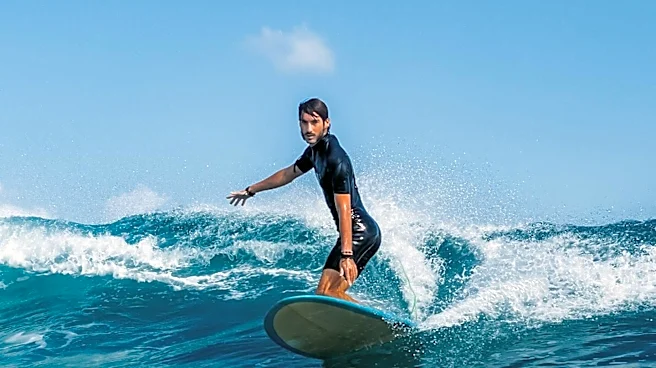
Despite the profound trauma, Hamilton's resolve to return to surfing was immediate and strong. Just 26 days after the attack, on November 26, 2003, she was back in the water. Initially, she used a custom-made board that was longer and slightly thicker than standard, featuring a handle for her right arm to aid in paddling. She also learned to compensate for the loss of her left arm by kicking more vigorously.
Her first major competition after the attack was on January 10, 2004. Over time, Hamilton transitioned to using standard competitive performance short-boards, demonstrating her complete adaptation to surfing with one arm. Her shark-bitten surfboard and the swimsuit she wore during the attack are now on display at the California Surf Museum in Oceanside, California, serving as powerful symbols of her incredible journey and triumph over adversity.
Inspiring Others Through Her Story
Hamilton's experiences quickly garnered significant media attention, leading her to share her story with a wider audience. Her 2004 autobiography, "Soul Surfer: A True Story of Faith, Family, and Fighting to Get Back on the Board," detailed the events leading up to the attack, her recovery, and her return to competition. This book was later adapted into the 2011 feature film, "Soul Surfer," further spreading her message of hope and perseverance.
Beyond her professional surfing career, Hamilton has become a motivational figure. She attributes her strength to her Christian faith and has used her platform to inspire others. A 2018 documentary, "Bethany Hamilton: Unstoppable," explores how marriage and motherhood have influenced her professional surfing career, showcasing her continued evolution both personally and professionally. Her story remains a testament to the power of the human spirit to overcome immense challenges.