



Stevie Wonder's 1972 album, *Talking Book*, stands as a pivotal work in his extensive discography, widely recognized as the beginning of his "classic period." Released on October 27, 1972, by Tamla, a Motown Records subsidiary, this album, alongside *Music of My Mind* from earlier the same year, signaled a significant shift in Wonder's artistic trajectory. It marked his transition from a youthful prodigy, often guided by Motown's head Berry Gordy,
to an independent and experimental artist. This newfound freedom allowed Wonder to explore a broader range of musical and lyrical expressions, laying the groundwork for his future groundbreaking works.
Embracing Independence and Expression
The material for *Talking Book* was largely recorded concurrently with *Music of My Mind*, reflecting a period of intense creative output for Wonder. During this time, he began to assert more artistic control, moving away from the direct musical direction previously provided by Motown. This independence was crucial for Wonder to fully articulate his personal and political viewpoints through his music. In 2000, Wonder himself reflected on the album's purpose, stating that it was less about making a specific statement and more about expressing a multitude of feelings, including his political and social perspectives, as well as the various facets of love—from its joyful beginnings to its inherent pain.
This era of increased artistic freedom allowed Wonder to delve deeper into his own creative vision, resulting in an album that was both deeply personal and universally resonant. The shift represented a maturation of his artistry, where he could infuse his compositions with a richer emotional and intellectual depth. The themes explored in *Talking Book* were a direct result of this liberation, showcasing a more complex and nuanced songwriter and musician.
The Defining Sound of Synthesizers and Keyboards
A defining characteristic of *Talking Book* is Wonder's innovative and extensive use of keyboards and synthesizers. These instruments were central to shaping the album's distinctive sound, giving it a fresh and contemporary edge. Tracks like "Maybe Your Baby" benefited from the funky textures provided by synthesizers, demonstrating Wonder's mastery in integrating electronic sounds into his soul and R&B framework. His keyboard work was not just about adding new sounds, but about creating a rich, layered sonic landscape that was unique for its time.
Beyond synthesizers, Wonder's use of the Hohner Clavinet was particularly notable. On "Big Brother," the Clavinet embellishments skillfully evoked the sound of a six-string acoustic guitar, showcasing his versatility and innovative approach to instrumentation. The Clavinet Model C's presence on the hit song "Superstition" is widely regarded as one of the definitive examples of the instrument's use in popular music. Furthermore, his note-bending harmonica work on several tracks added folk and blues influences, further diversifying the album's sonic palette. Wonder played the majority of the instruments on the album himself, though he did receive support from guest musicians such as Jeff Beck, Ray Parker Jr., David Sanborn, and Buzz Feiten.
Collaborative Innovation in Production
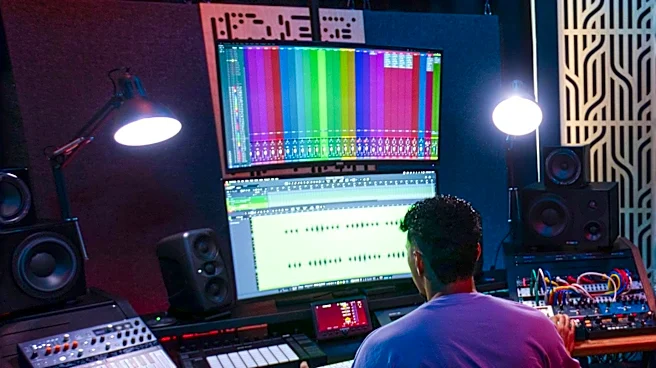
The distinctive sound of *Talking Book* was also significantly shaped by the collaborative efforts of Robert Margouleff and Malcolm Cecil. This duo worked with Wonder on four of his "classic" albums, including *Music of My Mind*, *Innervisions*, and *Fulfillingness' First Finale*, in addition to their work with other artists like the Isley Brothers. Their production technique was unconventional for the period, focusing on multiple layers of instruments such as the Clavinet, Fender Rhodes electric piano, and ARP and Moog synthesizers.
This approach diverged from the more typical use of string orchestras, which was common in music production at the time. By prioritizing electronic instruments and intricate layering, Margouleff and Cecil helped Wonder achieve a sound that was both innovative and deeply expressive. This unique production style was instrumental in giving *Talking Book* and the other albums from this period their characteristic and enduring sonic identity, solidifying Wonder's reputation as a pioneering artist who pushed the boundaries of popular music.