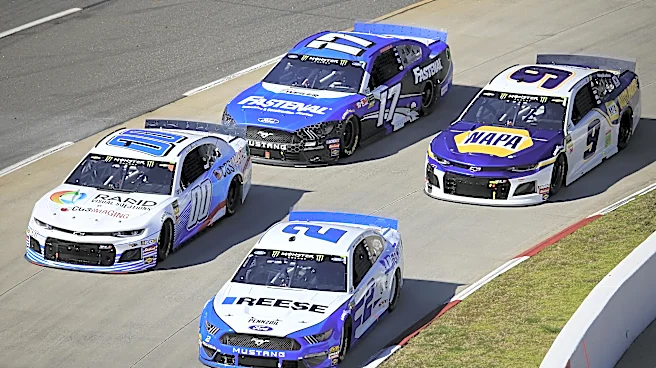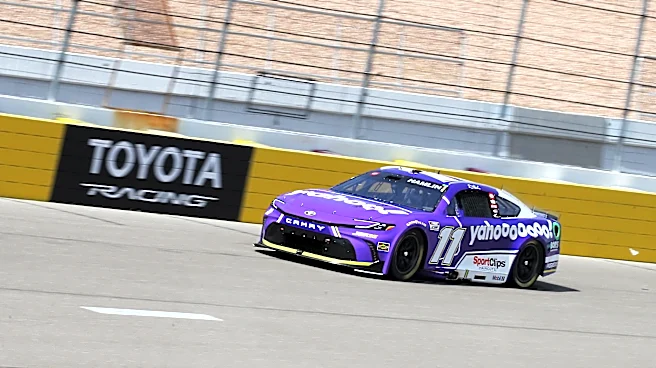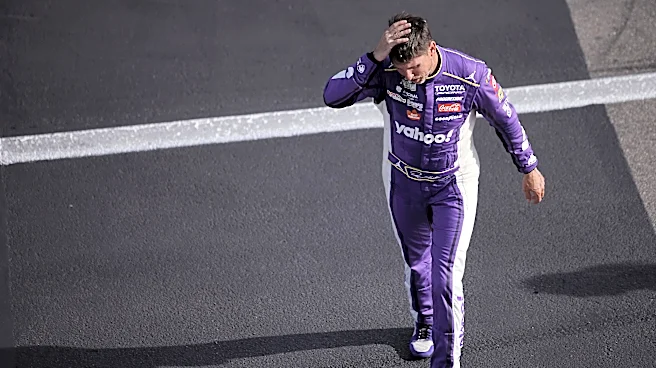


The 2008 UAW-Dodge 400, the third stock car race of the 2008 NASCAR Sprint Cup Series, was a memorable event held on March 2, 2008. This 267-lap race at Las Vegas Motor Speedway was characterized by numerous lead changes, multiple cautions, and a dramatic finish that saw Carl Edwards claim victory. However, the race's story didn't end at the checkered flag, as post-race inspections and subsequent penalties added a layer of controversy and significantly
altered the Drivers' Championship standings. The event drew a substantial television audience, reflecting its high-stakes nature and the drama that unfolded both on and off the track.
Pre-Race Preparations and Qualifying Drama
Before the main event, NASCAR conducted preseason tests at Las Vegas Motor Speedway on January 28–29. These sessions were crucial for teams to fine-tune their cars. Denny Hamlin was quickest in one morning session, while Kyle Busch topped an afternoon session. Several incidents occurred during these tests, including Regan Smith, Sam Hornish Jr., and Dario Franchitti damaging their cars. Juan Pablo Montoya recorded the fastest speed of the two days. Drivers like Carl Edwards and Greg Biffle expressed optimism about their chances, while Jimmie Johnson was considered a favorite, aiming for a historic fourth consecutive victory in a NASCAR Cup Series event.
Qualifying for the UAW-Dodge 400 was a competitive affair with 47 drivers vying for 43 spots. Kyle Busch secured his third career pole position with a time of 29.613 seconds, narrowly beating Carl Edwards, who had held the pole until Busch's final lap. Mark Martin, Jeff Gordon, and Mike Skinner rounded out the top five qualifiers. The cooler track conditions early in the session provided an advantage, as the air was denser and offered more grip. Four drivers, including A. J. Allmendinger and John Andretti, failed to qualify, while Burney Lamar withdrew before qualifying even began. Kyle Busch noted his team's confidence in their car's potential, which had been evident in practice and test sessions.
The Race Unfolds: Lead Changes and Cautions
The race began at 4:48 pm EST under sunny skies. Kyle Busch initially maintained his pole position lead. However, the race quickly became eventful. On lap 9, the first caution flag was waved after Clint Bowyer hit the wall, leading to contact with Jamie McMurray. This incident prompted most drivers to pit, though 18 chose to stay out. Carl Edwards soon challenged Kyle Busch for the lead, eventually passing him on lap 21. The lead continued to change hands frequently, with drivers like Jeff Gordon, Matt Kenseth, and Dale Earnhardt Jr. all taking turns at the front.
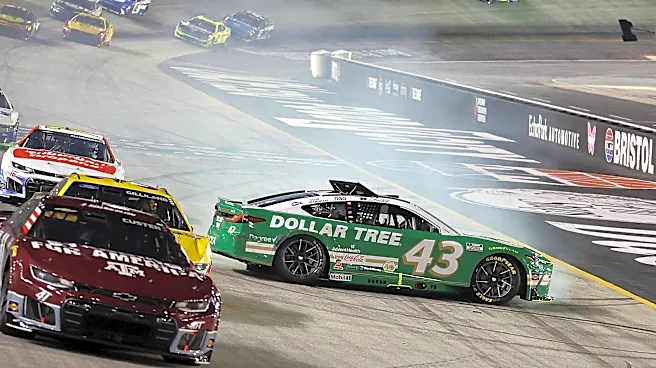
Multiple cautions punctuated the race, often due to debris or single-car incidents. On lap 48, green-flag pit stops began, and Hornish Jr. hit the wall after a tire failure, leading to another caution. Tony Stewart's race ended prematurely on lap 109 when his right-front tire burst, sending him into the wall. He sustained injuries but hoped to participate in upcoming test sessions. Later, Robby Gordon's tire blew on lap 144, causing another caution. The fifth caution occurred on lap 162 when Patrick Carpentier was squeezed into the inside wall by Ryan Newman. The sixth caution was triggered on lap 179 when Dario Franchitti ran into Scott Riggs after Riggs experienced oversteer. These incidents highlighted the challenging nature of the Las Vegas track and the intensity of the competition.
Dramatic Finish and Post-Race Controversy
The latter stages of the UAW-Dodge 400 were particularly dramatic. Carl Edwards reclaimed the lead on lap 195. The seventh caution was issued on lap 214 for debris, followed by the eighth on lap 224 when Casey Mears hit Brian Vickers, causing Vickers to spin. Dale Jarrett's spin and hit into the wall on lap 233 brought out the ninth caution. With just laps remaining, Kurt Busch's right-front tire exploded on lap 257, sending him into the wall and ending his race, triggering the tenth caution. This set up a final restart on lap 263. Edwards maintained his lead, but a chaotic sequence unfolded behind him. Dale Earnhardt Jr. spun his tires, leading to contact between Matt Kenseth and Jeff Gordon, which sent Gordon into an unprotected inside retaining wall. Gordon's radiator flew out, scattering debris and prompting a red flag to clear the track.
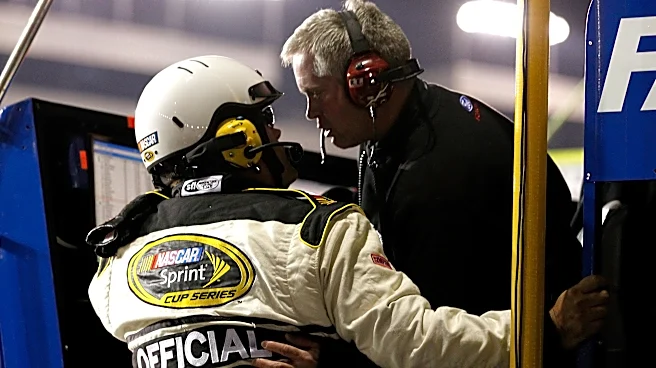
After a 17-minute delay, the race resumed for the final two laps. Carl Edwards held off Earnhardt and Biffle to secure his second consecutive victory and the ninth of his career, earning $425,675. Earnhardt finished second, followed by Biffle, Kevin Harvick, and Jeff Burton. Edwards led four times for a total of 86 laps, more than any other competitor. Despite his win, Edwards's car was found to have a problem with the lid on the oil reservoir encasement during post-race inspection. Three days later, Roush Fenway Racing received penalties for "actions detrimental to stock car racing" and a rules violation concerning a device that allowed air to pass through the car. Crew chief Bob Osborne was fined $100,000 and suspended for six races, and Edwards and car owner Jack Roush lost 100 driver and owner points. Edwards was allowed to keep the victory, but the penalty dropped him from first to seventh in the Drivers' Championship. Kyle Busch, who had been the pre-race leader, maintained his lead, 20 points ahead of Ryan Newman. Roush Fenway Racing chose not to appeal the penalties, with president Geoff Smith attributing the issue to vibration harmonics. Edwards stated the infraction was "an absolute mistake" and denied any intent to cheat. This controversial outcome underscored the strict enforcement of NASCAR's technical regulations and significantly impacted the early season standings.