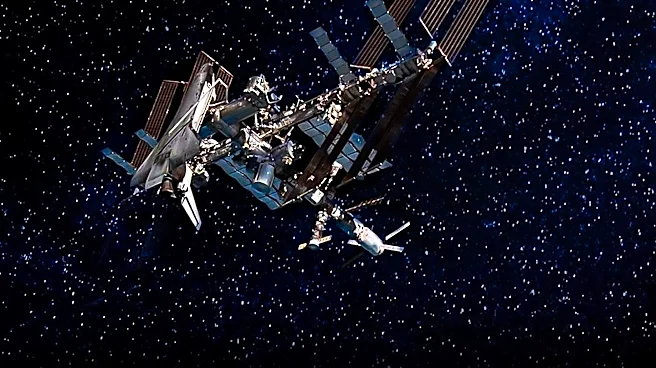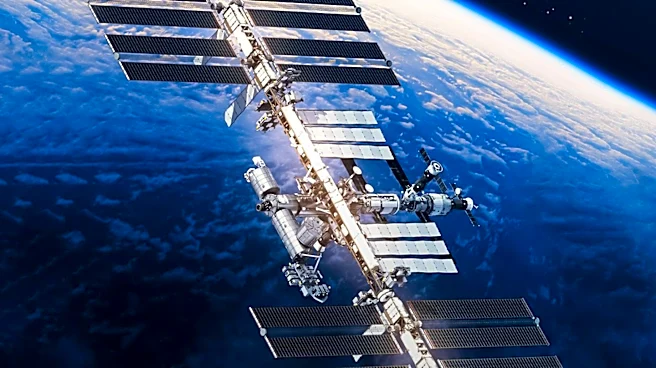



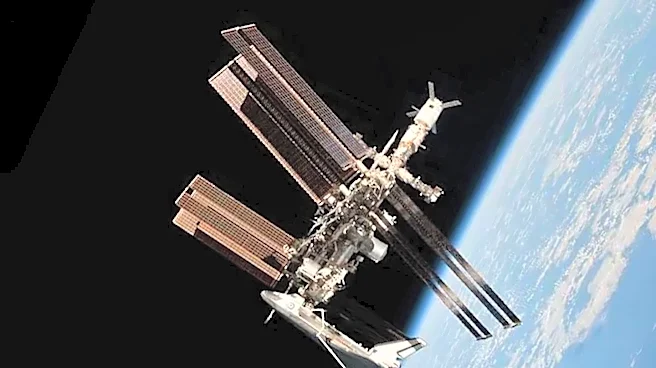

Expedition 1 marked a pivotal moment in space exploration, initiating the era of continuous human presence on the International Space Station (ISS). This groundbreaking mission saw a three-person crew reside aboard the station for 136 days, from November 2, 2000, to March 19, 2001. It set the stage for the ongoing human occupation of the ISS, a presence that continues as of 2026, demonstrating international collaboration and sustained scientific endeavor
in orbit.
The Crew and Their Preparations
The Expedition 1 crew comprised an American commander, Bill Shepherd, and two Russian cosmonauts, Yuri Gidzenko and Sergei K. Krikalev. Shepherd, a former Navy SEAL, had previously flown on three Space Shuttle missions, with his total time in space before Expedition 1 amounting to about two weeks. His selection as commander raised some questions from the Russian space agency due to his relatively limited long-duration spaceflight experience. In contrast, both Gidzenko and Krikalev were veterans of long-duration missions on the Mir space station. Krikalev, in particular, had spent over a year in space and would become the first person to visit the ISS twice, having been among the first to enter the Zarya module in 1998 during STS-88. Gidzenko, who commanded and piloted the two-day Soyuz mission to the station, had a previous 180-day stay aboard Mir.
Shepherd was only the second U.S. astronaut to launch in a Russian spacecraft, following Norman Thagard's Soyuz TM-21 flight to Mir in 1995. He anticipated that one of the primary challenges for the ISS would be ensuring the compatibility of technologies between Russian and U.S. systems. The launch of the Expedition 1 crew on October 31, 2000, from the Baikonur Cosmodrome in Kazakhstan, occurred just a week before the U.S. presidential election, which resulted in the mission receiving less attention in the United States than it might have otherwise.
Mission Highlights and Early Challenges
The official start of Expedition 1 began when the crew docked with the station on November 2, 2000, aboard the Russian Soyuz TM-31 spacecraft. During their four-and-a-half-month mission, the crew was exceptionally busy. Their primary tasks included activating various systems on board the station, unpacking equipment delivered by previous missions, and hosting three visiting Space Shuttle crews and two uncrewed Russian Progress resupply vehicles. The mission was ultimately declared a success, laying crucial groundwork for future operations.
In their initial weeks, the crew focused on activating critical life support systems and computer controls, as well as unpacking supplies. A notable early challenge was the limited electrical power, which meant the station did not have enough electricity to heat all three pressurized modules. Consequently, the Unity module remained unused and unheated for a period. The Russian uncrewed resupply spacecraft Progress M1-4 attempted to dock on November 18, but its automatic docking system failed, requiring Gidzenko to perform a manual docking using the TORU system. While manual dockings are routine, they had caused concern among flight controllers since a 1997 incident where a spacecraft collided with Mir, causing significant damage. The astronauts faced a heavy workload, with Shepherd remarking to reporters that he was "trying to pack 30 hours into an 18-hour work day." Some tasks, like activating a food warmer in Zvezda's galley, took much longer than anticipated, extending from a scheduled 30 minutes to a day and a half.
Visiting Shuttles and Station Expansion
Three Space Shuttle missions played a vital role during Expedition 1, bringing essential equipment, supplies, and key components to the station. The first, STS-97, docked in early December 2000, delivering the first pair of large U.S. photovoltaic arrays. These arrays dramatically increased the station's power capabilities fivefold, a critical step for its continued development. STS-97 also brought 17 tons of equipment, including expandable metal girders, batteries, electronics, and cooling equipment. The second visiting shuttle, STS-98, docked in mid-February 2001, delivering the US$1.4 billion research module Destiny. This addition increased the station's mass beyond that of Mir for the first time and provided a dedicated laboratory for scientific research. The final shuttle visit of the expedition, STS-102 in mid-March 2001, served primarily to exchange the Expedition 1 crew with the next long-duration crew, Expedition 2. The expedition officially concluded when the Space Shuttle Discovery undocked from the station on March 18, 2001, carrying the Expedition 1 crew back to Earth.