
The making of the 1983 James Bond film "Never Say Never Again" was marked by significant production challenges, financial difficulties, and notable tensions among key figures. This independent Bond film,
which saw Sean Connery return to the role after a twelve-year hiatus, faced hurdles that ultimately impacted its creation, from budget overruns to disagreements between the star and the producer. The complexities behind the camera paint a vivid picture of a film striving to compete with the established Eon Productions Bond series under less-than-ideal circumstances.
Financial Strain and Budget Overruns
One of the most significant issues plaguing "Never Say Never Again" was its financial management. Producer Jack Schwartzman, while acknowledged as a good businessman, was criticized by director Irvin Kershner for lacking the necessary experience as a film producer. This inexperience contributed to the production running out of money at one point, forcing Schwartzman to personally fund further shooting out of his own pocket. He later admitted that he had severely underestimated the true cost of making the film, indicating a fundamental miscalculation in the project's financial planning.
The budget for "Never Say Never Again" was $36 million. Despite the financial struggles during production, the film ultimately grossed $160 million worldwide, making it a commercial success. However, this figure was still less than the $187.5 million earned by the Eon-produced "Octopussy," which was released earlier the same year. The need for Schwartzman to inject personal funds highlights the precarious financial tightrope walked by the production team.
On-Set Tensions and Lack of Professionalism
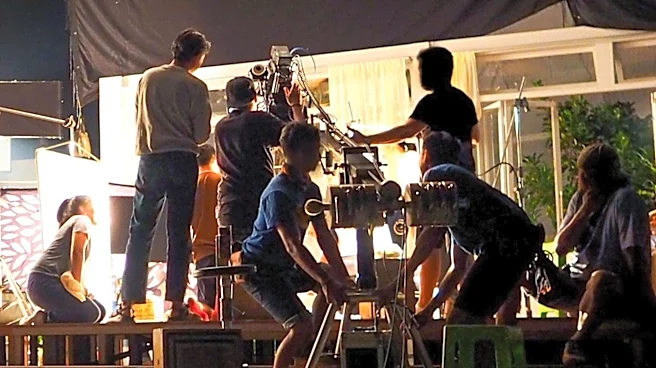
The set of "Never Say Never Again" was reportedly rife with tension, particularly between producer Jack Schwartzman and star Sean Connery. At times, their communication was so strained that they barely spoke to each other. Connery, who also took on many production duties alongside assistant director David Tomblin, was openly unimpressed with what he perceived as a lack of professionalism behind the scenes. He famously described the entire operation as a "bloody Mickey Mouse operation!" This candid remark underscores the frustration felt by the lead actor regarding the chaotic nature of the production.
Connery's return to the role of James Bond was a major draw for the film, and he negotiated a substantial fee of $3 million (equivalent to $10 million in 2025 dollars), along with casting and script approval, and a percentage of the profits. Despite his significant involvement and investment in the project, the reported lack of organizational rigor and the strained relationships on set made the filming process a challenging experience for the veteran actor. The friction between key personnel undoubtedly added to the difficulties of bringing the film to fruition.
Filming Locations and Construction Challenges
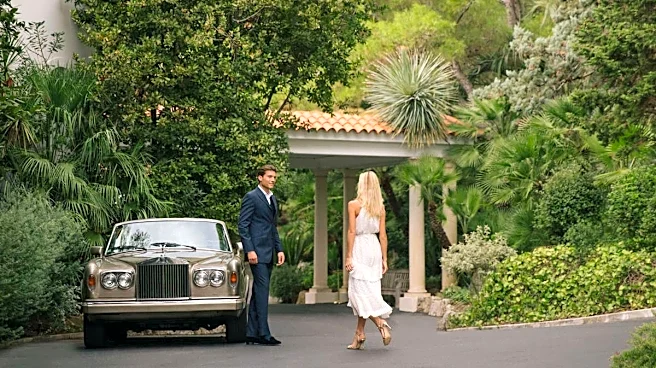
Principal photography for "Never Say Never Again" commenced on September 27, 1982, on the French Riviera, where filming continued for two months. The production then relocated to Nassau, Bahamas, in mid-November, utilizing locations such as Clifton Pier, which had also been featured in the original "Thunderball." Largo's Palmyran fortress was depicted by the historic Fort Carré in Antibes, France, while his yacht, the "Flying Saucer," was portrayed by the "Kingdom 5KR," then owned by Saudi billionaire Adnan Khashoggi.
The underwater scenes, a crucial element given the film's basis in the "Thunderball" storyline, were coordinated by Ricou Browning, who had also handled similar sequences in the 1965 "Thunderball." Interior shots and the construction of elaborate sets took place at Elstree Studios in the United Kingdom. Notably, the "Tears of Allah" underwater cavern set required three months to construct, highlighting the significant effort and time invested in creating the film's visual elements despite the overarching production difficulties. The Shrublands health spa scenes were filmed at Luton Hoo. Most of the filming concluded in the spring of 1983, with some additional shooting extending into the summer of that year.