







The Louvre, a world-renowned museum, has a long and varied history regarding public access. Far from always being the widely accessible institution it is today, its entrance conditions have undergone significant transformations over centuries. Initially, access was often restricted, favoring certain groups, but gradually, policies shifted to allow broader public engagement, reflecting changing societal views on art and cultural institutions. Understanding
these historical shifts provides insight into the museum's journey from an exclusive space to a global cultural landmark.
Early Restrictions and Privileged Access
In its nascent stages, and even into the 19th century, the Louvre was not universally open. Prior to the 1850s, artists and foreign visitors enjoyed privileged access, indicating a more exclusive approach to who could experience its collections. When the museum first opened in 1793, the French Republican calendar, which imposed ten-day "weeks" (known as *décades*), dictated specific visiting hours. The first six days of these *décades* were reserved exclusively for artists and foreigners, while the general public was only permitted entry during the last three days.
This pattern of limited public access continued even after the seven-day week was reinstated. In the early 1800s, the general public had a mere four hours of museum access per week, specifically between 2 PM and 4 PM on Saturdays and Sundays. This severely restricted schedule highlights how different the museum's operational philosophy was compared to modern standards. The focus seemed to be on providing a resource for artists and international guests, with general public viewing being a secondary consideration.
Shifting Policies and Broader Public Access
Changes began to emerge in the mid-19th century. A new regulation in 1824 still limited public access to Sundays and holidays, with other days remaining open only to artists and foreigners, except for Mondays when the museum was closed. However, a more significant shift occurred in 1855 when the museum adopted a policy of being open to the public every day except Mondays. This marked a substantial move towards greater inclusivity, making the Louvre accessible to a much wider audience on a regular basis.
For a considerable period, access to the Louvre was free. This policy persisted until 1922, when an entrance fee was introduced, though Sundays remained free. This change likely reflected evolving economic models for cultural institutions. Following its reopening after World War II in 1946, the Louvre established its current general schedule: it has been closed on Tuesdays and habitually open to the public the rest of the week, with exceptions for certain holidays. This modern schedule represents the culmination of centuries of evolving access policies, aiming to balance preservation, study, and widespread public enjoyment.
Modern Entrances and Visitor Experience
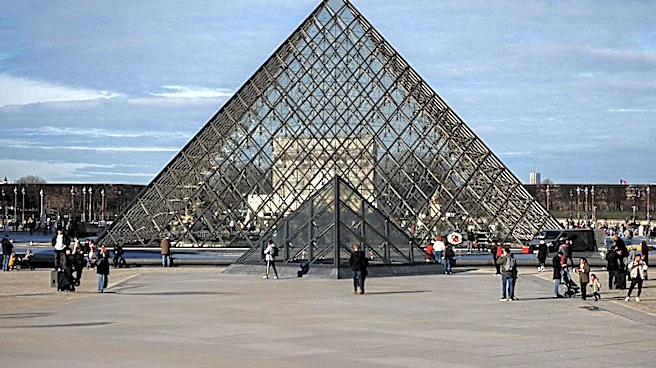
The physical entry points to the Louvre have also evolved to accommodate its growing popularity and changing visitor needs. Before the extensive Grand Louvre overhaul in the late 1980s and 1990s, the museum featured several street-level entrances. Most of these are now permanently closed, streamlining the entry process. Since 1993, the primary entrance has been the underground space located beneath the iconic Louvre Pyramid, known as the Hall Napoléon.
This central hub can be accessed directly from the Pyramid itself, from the underground Carrousel du Louvre shopping area, or, for authorized visitors, via the passage Richelieu, which connects to the nearby rue de Rivoli. In 1999, a secondary entrance was created at the Porte des Lions, situated near the western end of the Denon Wing, though this entrance is not permanently open. These modern entry systems are designed to manage the vast numbers of visitors the Louvre now attracts, ensuring a more organized and efficient experience for millions of people from around the world.