






Paratha, a celebrated flatbread from the Indian subcontinent, is a testament to culinary craftsmanship, where simple ingredients are transformed into a complex, layered delight. Its distinctive texture and flavor are not accidental but the result of specific preparation techniques, ingredient choices, and the interplay of heat and fat. Understanding the journey from basic dough to the finished, flaky paratha reveals the intricate details that make
this bread a beloved staple, enjoyed in countless variations across diverse cultures.
The Foundation: Ingredients and Dough Preparation
The journey of a paratha begins with its dough, which is typically wheat-based and unleavened. The core ingredients are atta (whole wheat flour), water, and salt. Ghee, or clarified butter, is a traditional fat used in the dough and for layering, though oil can also be substituted. While whole wheat flour is common, white flour (maida) is sometimes used, particularly for parathas intended to be more tender and flaky. The choice of flour impacts the final texture; common wheat, prevalent in the northern Indian subcontinent, contributes to the light, spongy texture characteristic of North Indian breads like paratha.Vegetables, herbs, and spices can be incorporated directly into the dough, with ajowan being a commonly used spice in plain paratha. The flour used is generally of low extraction, though high-extraction flour is occasionally employed. Some preparations even utilize resultant atta, which is the coarse byproduct of sifting atta. In commercial settings, potato flakes might be added as a binding agent, showcasing adaptations for large-scale production. The dough is kneaded by hand, a fundamental step that develops its structure before the layering process begins.
The Art of Lamination: Creating the Layers
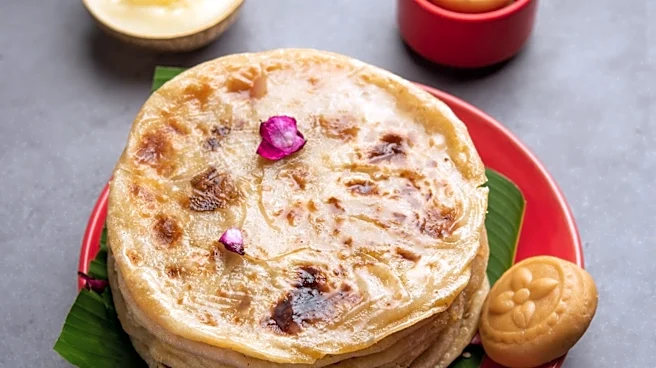
The defining characteristic of paratha is its multiple layers, achieved through a process known as lamination. After the dough is kneaded, it is rolled out and then brushed with oil or ghee. This oiled dough is then folded, and this rolling, oiling, and folding sequence is performed two or more times. This repeated action creates distinct layers within the dough. The folding can result in various shapes, most commonly a triangle with four to six layers, but also circles or squares. This lamination process is what gives paratha its soft, flaky texture, drawing parallels to puff pastry, though paratha does not rise in the same manner.For stuffed parathas, the lamination technique is often bypassed in favor of a different approach. Here, the dough is shaped into balls, a filling is enclosed within, and then the filled dough is rolled out. This method ensures the filling is evenly distributed throughout the bread. For efficiency in large-scale production, dough sheeting machines can be employed, capable of producing thousands of parathas per hour, streamlining the rolling process for both plain and stuffed varieties.
Cooking Methods and Physical Properties
Both plain and stuffed parathas are traditionally shallow-fried on a tava, a type of iron griddle, until they achieve a browned appearance. This frying can be done with or without additional ghee. Some street vendors opt to fry parathas in a shallow pan filled with oil, which results in a higher fat content in the final product. While frying is the most common method, some versions of paratha are also baked. After serving, paratha may be brushed with ghee to enhance its flavor and texture.The frying process is crucial for developing paratha's unique characteristics. It results in a slightly crispy exterior, and in the absence of leavening agents, the formation of steam within the layers is responsible for the separation of the crust and crumb. This creates the distinct layers that are visible when the paratha is cooked. Paratha is generally thicker and denser than chapati, possessing a more prominent crumb. The fat incorporated into the crumb and on its surface facilitates more thorough heat transfer, influencing the starch properties. The starch granules in paratha's crumb are notably deformed and shrunken compared to those found in chapati, contributing to its unique mouthfeel. A typical paratha measures about 15 centimeters in diameter and 3 millimeters thick, with plain versions sometimes being as thin as 2.5 millimeters, and weighs approximately 140 grams. Its sturdy texture makes it suitable for serving with thick foods, while stuffed parathas tend to have a softer texture.