






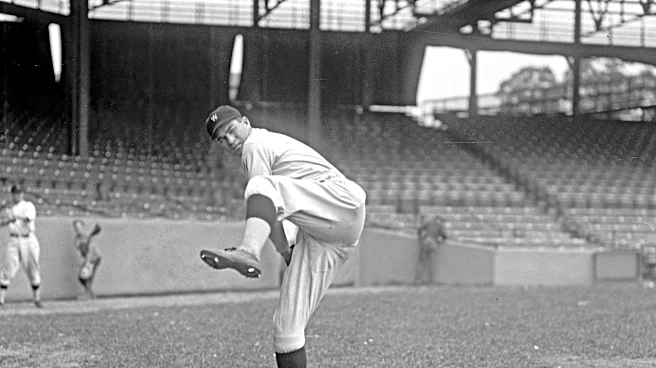
Walter Johnson, known as "the Big Train," was a towering figure in the world of baseball. His career as a pitcher for the Washington Senators spanned 21 years, during which he became one of the most celebrated players in Major League Baseball history. Johnson's powerful arm and unique pitching style made him a formidable opponent on the field, earning him a place in the National Baseball Hall of Fame.
The Early Years
Walter Johnson was born on November 6, 1887, in
Humboldt, Kansas. He was the second of six children in his family. Despite being referred to as "the Big Swede" due to his perceived ancestry, Johnson's roots were actually from the British Isles. His journey into baseball began in 1907 when he joined the Washington Senators as a rookie pitcher. Ty Cobb, a fellow baseball legend, recalled his first encounter with Johnson's fastball as a terrifying experience, describing it as a "threatening sight" that was unmatched in its speed and power.
Johnson's fastball was recorded at 91 miles per hour, a velocity that was rare for his time. His sidearm pitching motion added to the difficulty batters faced when trying to hit his pitches. Johnson's mechanics were exceptional, allowing him to generate powerful shoulder rotation and maintain excellent balance. This combination of speed and technique made him a dominant force in the league.
Achievements and Records
Throughout his career, Walter Johnson achieved numerous milestones that solidified his legacy in baseball. He won 417 games, making him the second most successful pitcher in history, only behind Cy Young. Johnson's record includes 110 shutouts, the most in baseball history, and he was known for his ability to win games with a 1-0 score, setting major league records for both wins and losses in such games.
Johnson's prowess on the mound earned him the American League pitching Triple Crown three times and the American League Most Valuable Player Award twice. His earned run average of 1.14 in 1913 was one of the lowest ever recorded, showcasing his skill in preventing runs. Despite often playing for losing teams, Johnson led the Senators to the World Series in 1924, where he became a hero by pitching four scoreless innings in the deciding game.
Legacy and Influence
Walter Johnson's impact on baseball extends beyond his records and achievements. He was known for his kindness and sportsmanship, making many friends in the sport. His reputation as a gentleman on and off the field contributed to his enduring legacy. Johnson's career set a standard for future pitchers, and his influence can be seen in the generations of players who followed.
Johnson's Hall of Fame plaque acknowledges his years with a losing team, yet his individual brilliance shone through. His ability to excel despite the challenges he faced is a testament to his talent and determination. Walter Johnson remains a symbol of excellence in baseball, and his story continues to inspire fans and players alike.