







"The Cage" holds a unique and foundational place in the history of Star Trek, serving as the very first pilot episode for what would become Star Trek: The Original Series. Filmed in late 1964 and early 1965, this initial foray into Gene Roddenberry's vision was a crucial step in bringing the iconic science fiction franchise to television screens. Despite its eventual rejection by NBC, "The Cage" laid much of the groundwork for the series, introducing
key concepts and characters, and its story would later be ingeniously integrated into the show's first season.
Production and Initial Reception
Production for "The Cage" took place at Desilu Productions' studio, now known as Culver Studios, located in Culver City, California. Filming commenced on November 27, 1964, and concluded on December 18, 1964. Following principal photography, post-production work, which included pick-up shots, editing, scoring, and the creation of special photographic and sound effects, extended until January 18, 1965. This meticulous process was necessary to bring Roddenberry's ambitious science fiction narrative to life.
Upon its completion, "The Cage" was screened for NBC in February 1965. However, the network ultimately rejected this first pilot. NBC executives reportedly found the episode "too cerebral" and felt it did not align with the adventure format they had been promised, which was described as a "Wagon Train to the stars." Despite this rejection, NBC remained sufficiently interested in the overall concept to commission a second pilot episode, "Where No Man Has Gone Before," in March 1965. This decision was reportedly influenced by Desilu management, including Lucille Ball herself.
The Story and Its Unique Elements
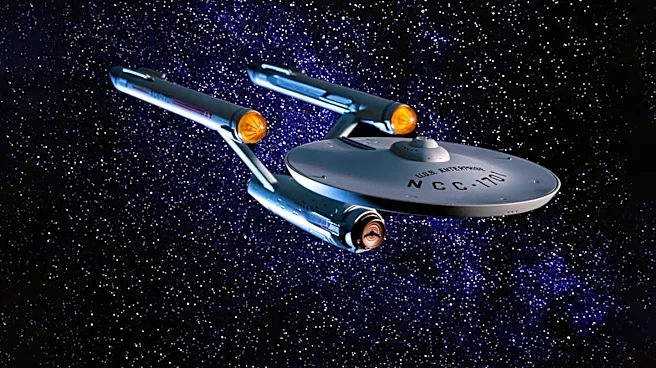
"The Cage" introduced audiences to Captain Christopher Pike, played by Jeffrey Hunter, as the commander of the U.S.S. Enterprise. The pilot's plot centered on the Enterprise crew's investigation of a far-off planet, Talos IV, which had been the site of a shipwreck eighteen years prior. Their encounter with the telepathic aliens, the Talosians, who sought a human male specimen for their menagerie, formed the core conflict. Notably, "The Cage" also introduced Mr. Spock, portrayed by Leonard Nimoy, who was the only cast member retained for the subsequent series in his original role.
The narrative explored themes of illusion versus reality, as the Talosians used their telepathic powers to create convincing illusions. Captain Pike found himself subjected to various illusory scenarios designed to tempt him and force him to mate with Vina, the sole survivor of the Columbia shipwreck, to breed a race of slaves for the dying Talosian civilization. The episode showcased the Talosians' inability to comprehend "primitive" emotions like hatred, which Pike and his crew exploited to gain an advantage. Ultimately, the Talosians concluded that humans' "unique hatred of captivity" made them unsuitable for their plans, leading to Pike's release and Vina's decision to remain on Talos IV, sustained by illusions of beauty and companionship.
From Rejection to Integration: "The Menagerie"
Despite its initial rejection, "The Cage" did not fade into obscurity. During the first season of Star Trek: The Original Series, the production faced significant challenges, particularly with the unprecedented special effects causing delays in episode completion. To address this, Gene Roddenberry devised a solution: a two-part episode titled "The Menagerie." This episode ingeniously reused a substantial amount of footage from the unaired "The Cage," creating a framing story around it.
"The Menagerie" presented a narrative set thirteen years after the events of "The Cage," in 2267, where a severely disfigured Fleet Captain Christopher Pike is brought back to Talos IV by Spock. The original footage from "The Cage" was presented as Spock's testimony during a court-martial, explaining Pike's past encounter with the Talosians. This creative repurposing allowed the original pilot to finally be seen by audiences, albeit within a new context, and earned "The Menagerie" a Hugo Award for Best Dramatic Presentation. The process of editing "The Cage" into "The Menagerie" involved disassembling the original camera negative, leading to the pilot being considered partly lost for many years until a full-color negative was rediscovered in 1987.